


Could Distributed Peer Review Better Decide Grant Funding?
The landscape of academic grant funding is notoriously competitive and plagued by lengthy, bureaucratic processes, exacerbated by difficulties in finding willing reviewers. Distributed […]

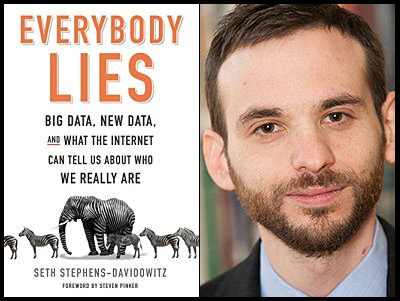
The underlying conceit of economist and data scientist Seth Stephens-Davidowitz’s work, whether in his new book, on the op-ed pages of the New York Times or in the classroom, or on campus, is that people’s search activity on a search engine reveals much more about them than do surveys, polls, or other social media

Mitigation enables people and communities to prevent disasters or at least reduce their impacts on the loss of life and property. And while mitigation is often presented as a mission for engineering, there is a wide scope for social and behavioral preparation explains veteran public policy researcher in a new paper on mitigating flooding catastrophes.
New technology has, and is, changing a lot of the mechanics of social and behavioral science research, but how much is the underlying enterprise itself changing as a result? This is a key question Ann Sloan Devlin, author of the newly released ‘The Research Experience: Planning, Conducting, and Reporting Research,’ addresses in this interview.
An award that honors enduring contribution from a political science text this year has gone to ‘ Politics in the American States.’

In a case that outrages statisticians and partisans of good government, a Greek appeals court has convicted the former president of the Hellenic Statistical Authority of violation of duty for his actions in recalculating national statistics and showing that Greece’s financial situation was much more dire than had been advertised.
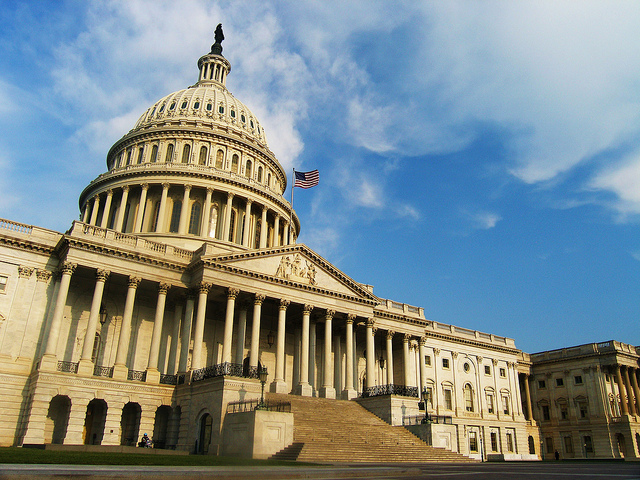
Advocates want $8 billion for NSF, and President Trump wants less than $7 billion. House appropriators seem to be navigating a path through the middle.
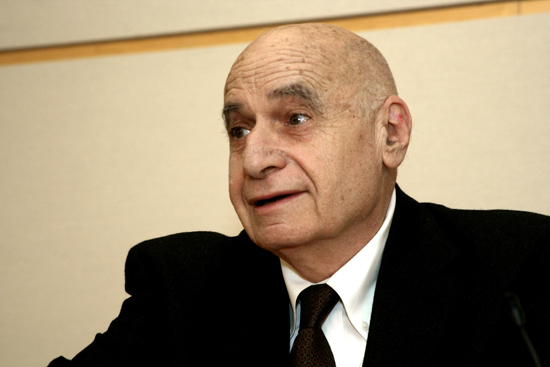
Peter Berger, a sociologist of religion, unlikely culture warrior and founder of the Institute on Culture, Religion, and World Affairs on Boston University, has died at age 88.
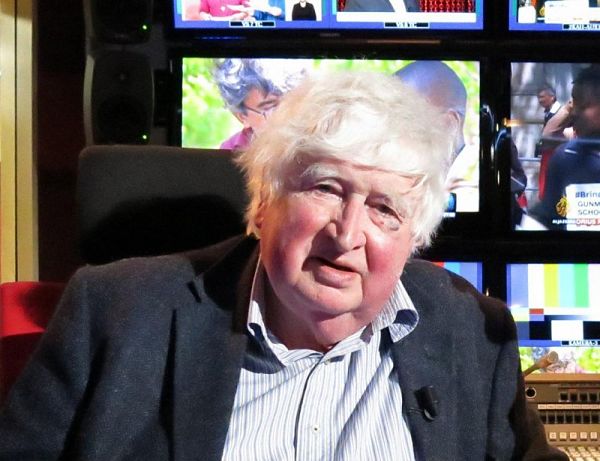
Denis McQuail, the British social scientist and foundational theorist in mass communication both through his scholarship and his hugely influential textbook ‘McQuail’s Mass Communication Theory,’ died at age 82.


As part of his 2026 budget proposal, Andy Burnham, the United Kingdom’s prime minister, has called for “good growth in every postcode.” […] The Royal Swedish Academy of Sciences has awarded this year’s Nobel Prize in Economic Sciences to the American economists Robert E. Hall […] Four Americans working in the social and behavioral sciences are among the 20 people named MacArthur Fellows this year. Recipients may be […] The following is an adapted extract from The Cultural Industries, fifth edition, by David Hesmondhalgh. The increasing presence of information technology (IT) […] Developers of AI data centers have a public trust problem. According to multiple surveys, a majority of Americans say they would oppose […] I was adding some final flourishes on the topic of ‘iatrocracy’ to my forthcoming book with Natewindé Sawadogo – Sickness and Social […]
EXPLORE
Impact

A Conversation with Diane Coyle on Bridging Media, Government and Academe
READ MORE
Economic Peaks, Troughs and This Year’s Nobelists in Economics
READ MORE

Four From Social Science World Receive 2026 MacArthur Fellowships
READ MORE
Innovation

IT Giants and Their Operations: Should We Be Concerned?
READ MORE

What We Miss When We Study Public Trust with Surveys Alone
READ MORE

AI and ‘Iatrocracy’ – A Cautionary Tale
READ MORE