


Could Distributed Peer Review Better Decide Grant Funding?
The landscape of academic grant funding is notoriously competitive and plagued by lengthy, bureaucratic processes, exacerbated by difficulties in finding willing reviewers. Distributed […]


Two scholars who investigate how the public learns about science and then chooses to trust it (or not) address that question in this hour-long webinar sponsored by the journal ‘Policy Insights from the Behavioral and Brain Sciences’ and its parent organization, the Federation of Associations in Behavioral & Brain Sciences.
n the coming year a 15-member panel created through a new federal law will examine how data, research and evaluation are currently being used in policy and program design, and how they could be.
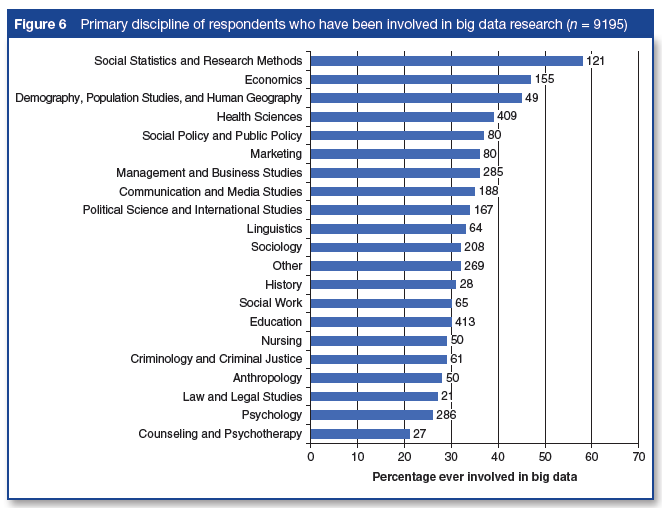
A new survey shoots down the idea that early-career researchers aresomehow more likely to be digital natives and therefore more apt to conduct computational social science than those whose PhDs were issued more than a decade ago.

Below are some of the comments and articles that have addressed the issues of academic freedom as written about in the series appearing at Social Science Space.
To help celebrate Peer Review Week 2016, the steering committee for the commemoration asked the 20+ organisations on the group to tell us how they #recognizereview and what more they hope to do in future. Their responses show a clear understanding of the importance of peer review and a firm commitment to supporting more recognition for review in future.
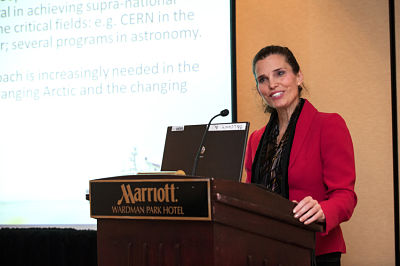
Canada’s first-ever Minister of Science spends more than a billion dollars on science projects in a busy week.
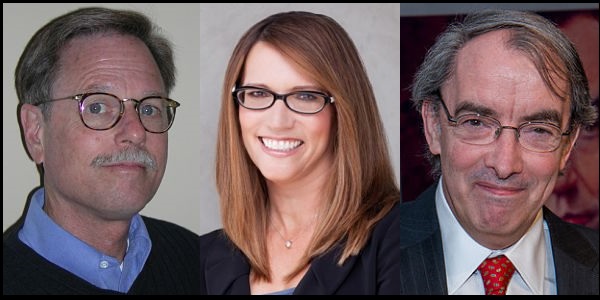
What is the future of American political parties as we known them? Do Americans even care about the candidates’ positions? Do campaign visits and television ads really turn the dial in voting. Political scientists Larry Bartels, Lynn Vavreck and Gary Jacobsen — address these and other questions about the current presidential election in this archived webinar.

Scholarly and public interest in the field of lesbian, gay, bisexual, transgender and queer studies, as well as to the vast array of research being conducted on LGBTQ lives, relationships, and communities, has moved well into the mainstream of academe, says the editor of a new award-winning encyclopedia on the subject.
Jürgen Habermas, a globally known social theorist whose explorations of democracy, validity and communication have gained new prominence in the current moment, […] People often see science as a world apart: cool, rational and untouched by persuasion or performance. In this view, scientists simply discover […] “Research impact” means different things to different people. Some refer broadly to how science changes behaviors, beliefs, or practices outside academic institutions. […] David Canter considers informal places where people socialize, suggesting they’re an arena ChatGPT and other LLMs can’no’t replicate. As someone who lives […] It’s become cliche since Clive Humbly coined it in 2006, but data is indeed the new oil. It’s a mantra repeated by […] In September 2025, The Guardian reported about a lawyer in Australia having faced sanctions due to false citations. These citations were not […]
EXPLORE
Impact

Jürgen Habermas, 1929-2026: Exponent of the Public Sphere
READ MORE

Scientists Should Keep in Mind It’s Called the ‘Marketplace of Ideas’ for a Reason
READ MORE

Survey Finds Social Scientists Feel Unsupported in Seeking Societal Impact
READ MORE
Innovation

Reaching Parts to Which AI Has No Access
READ MORE

Andrea Medina-Smith on Making Research Data More FAIR
READ MORE

A Status Check on Hallucinated Case Law Incidents
READ MORE