
Could Distributed Peer Review Better Decide Grant Funding?
The landscape of academic grant funding is notoriously competitive and plagued by lengthy, bureaucratic processes, exacerbated by difficulties in finding willing reviewers. Distributed […]
The New Year Honours, a set of awards that is part of the British honors system and presented by the reigning monarch Queen Elizabeth II, recognizes the achievements of a wide range of extraordinary people across the United Kingdom.
Sharing our findings beyond academia isn’t typically seen as part of our academic workload. This is problematic for academics who are already struggling to find time to do all the things their complex workload requires of them
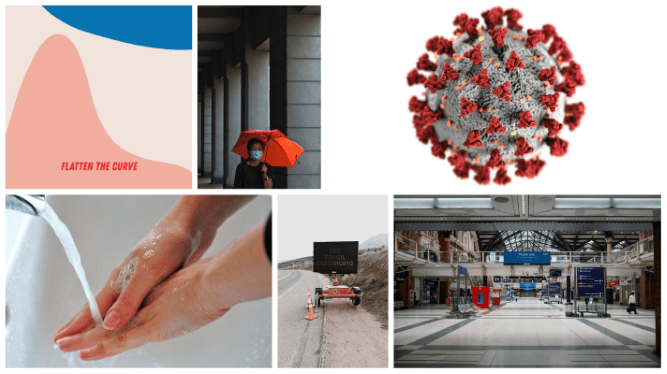
David Canter considers why the social sciences failed to influence behavior in order to stop the spread of COVID-19. The virologists had been preparing for a new virus for some years, so were already ahead of the game when they had to start creating a new vaccine. What preparations had social psychologists, sociologists or anthropologists for the inevitable emergence of a new pandemic?
Ziyad Marar, Sage’s president of global publishing, reflects on how his career and his studies of psychology, linguistics and philosophy leave him thinking a social science imagination benefits us as individuals and improves society more generally, especially in times of upheaval and reconfiguration.

As the ‘impact agenda’ weighs ever more on political scientists (and the academy as a whole), ). this should be seen less a threat to autonomy than an opportunity to rise to political science’s inherent public responsibilities.

If there is one thing that has become abundantly clear through this pandemic it is that a pandemic, like so many of the other really big and pressing issues facing us such as structural racism or climate change, are not problems to be faced by one discipline or sector alone.

Leith Mullings, an anthropologist whose work on what she dubbed the Sojourner Syndrome created a baseline understanding of the “weathering” that the amplified stresses of race, class, and inequality have on African Americans, and in particular African American women, died on Cancer on December 12.
As a precondition to receiving research funds, many research funders require applicants to state how their project will ultimately achieve impacts prior to any work being undertaken. Reflecting on a study of these impact statements made to the Science Foundation Ireland Investigators Programme, Lai Ma, argues that such statements often introduce a narrow short-term bias to considerations of impact and presents four ways impact statements could be used more productively.


Jürgen Habermas, a globally known social theorist whose explorations of democracy, validity and communication have gained new prominence in the current moment, […] People often see science as a world apart: cool, rational and untouched by persuasion or performance. In this view, scientists simply discover […] “Research impact” means different things to different people. Some refer broadly to how science changes behaviors, beliefs, or practices outside academic institutions. […] David Canter considers informal places where people socialize, suggesting they’re an arena ChatGPT and other LLMs can’no’t replicate. As someone who lives […] It’s become cliche since Clive Humbly coined it in 2006, but data is indeed the new oil. It’s a mantra repeated by […] In September 2025, The Guardian reported about a lawyer in Australia having faced sanctions due to false citations. These citations were not […]
EXPLORE
Impact

Jürgen Habermas, 1929-2026: Exponent of the Public Sphere
READ MORE

Scientists Should Keep in Mind It’s Called the ‘Marketplace of Ideas’ for a Reason
READ MORE

Survey Finds Social Scientists Feel Unsupported in Seeking Societal Impact
READ MORE
Innovation

Reaching Parts to Which AI Has No Access
READ MORE

Andrea Medina-Smith on Making Research Data More FAIR
READ MORE

A Status Check on Hallucinated Case Law Incidents
READ MORE