
Could Distributed Peer Review Better Decide Grant Funding?
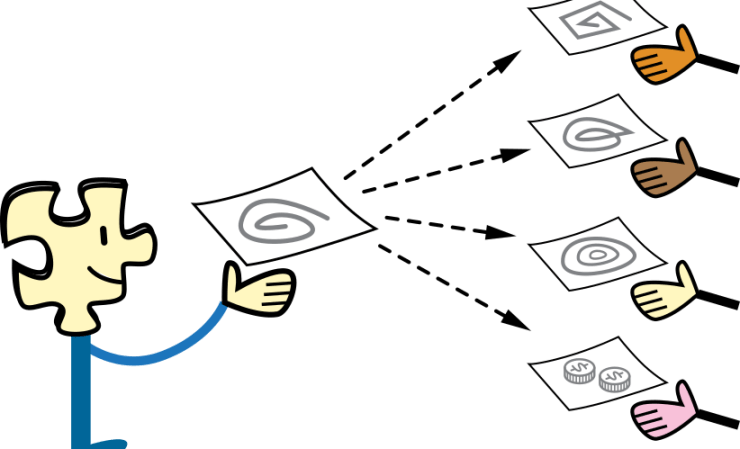
The landscape of academic grant funding is notoriously competitive and plagued by lengthy, bureaucratic processes, exacerbated by difficulties in finding willing reviewers. Distributed […]
Ziyad Marar, Sage’s president of global publishing, reflects on how his career and his studies of psychology, linguistics and philosophy leave him thinking a social science imagination benefits us as individuals and improves society more generally, especially in times of upheaval and reconfiguration.

As the ‘impact agenda’ weighs ever more on political scientists (and the academy as a whole), ). this should be seen less a threat to autonomy than an opportunity to rise to political science’s inherent public responsibilities.

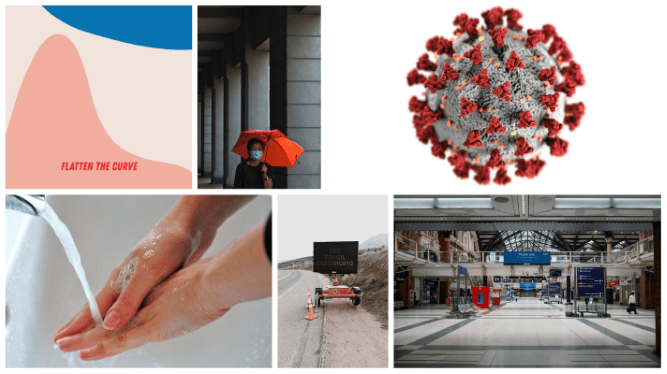
If there is one thing that has become abundantly clear through this pandemic it is that a pandemic, like so many of the other really big and pressing issues facing us such as structural racism or climate change, are not problems to be faced by one discipline or sector alone.
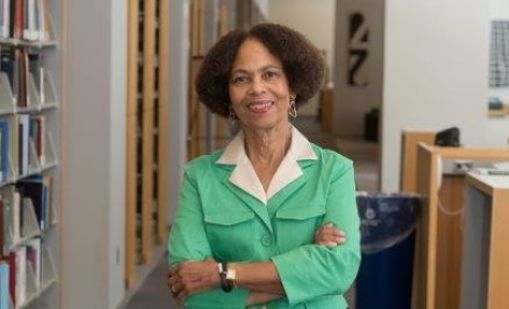
Leith Mullings, an anthropologist whose work on what she dubbed the Sojourner Syndrome created a baseline understanding of the “weathering” that the amplified stresses of race, class, and inequality have on African Americans, and in particular African American women, died on Cancer on December 12.
As a precondition to receiving research funds, many research funders require applicants to state how their project will ultimately achieve impacts prior to any work being undertaken. Reflecting on a study of these impact statements made to the Science Foundation Ireland Investigators Programme, Lai Ma, argues that such statements often introduce a narrow short-term bias to considerations of impact and presents four ways impact statements could be used more productively.

Calls to align incentives in academia to promote open research practices are not new. However, in recent years research funders are increasingly implementing policies and schemes designed to promote open science practices amongst researchers. In this post, Maria Cruz and Hans de Jonge outline details of the Dutch Research Council’s (NWO) new Open Science Fund, which they suggest is the natural next step towards a culture of open science in Dutch research.

Ellen Hutti and Jenine Harris have quantified the extent to which female authors are represented in assigned course readings. In this blog post, they emphasize that more equal exposure to experts with whom they can identify will better serve our students and foster the growth, diversity and potential of this future workforce. They also present one repository currently being built for readings by underrepresented authors that are Black, Indigenous or people of color.

As part of the Impact at UTS podcast series, staff at University of Technology Sydney spoke to researchers about how they navigate collaboration, engagement – with communities, industry and government – and impact.

The Royal Swedish Academy of Sciences has awarded this year’s Nobel Prize in Economic Sciences to the American economists Robert E. Hall […] Four Americans working in the social and behavioral sciences are among the 20 people named MacArthur Fellows this year. Recipients may be […] Euan Adie, the founder of Altmetric and later of Overton, discusses the reasons the led to Overton’s focus on showing researchers how […] The following is an adapted extract from The Cultural Industries, fifth edition, by David Hesmondhalgh. The increasing presence of information technology (IT) […] Developers of AI data centers have a public trust problem. According to multiple surveys, a majority of Americans say they would oppose […] I was adding some final flourishes on the topic of ‘iatrocracy’ to my forthcoming book with Natewindé Sawadogo – Sickness and Social […]
EXPLORE
Impact

Economic Peaks, Troughs and This Year’s Nobelists in Economics
READ MORE
Four From Social Science World Receive 2026 MacArthur Fellowships
READ MORE

Quick Insight: Euan Adie on Getting Academics Credit for Their Impact
READ MORE
Innovation

IT Giants and Their Operations: Should We Be Concerned?
READ MORE

What We Miss When We Study Public Trust with Surveys Alone
READ MORE

AI and ‘Iatrocracy’ – A Cautionary Tale
READ MORE