


Could Distributed Peer Review Better Decide Grant Funding?
The landscape of academic grant funding is notoriously competitive and plagued by lengthy, bureaucratic processes, exacerbated by difficulties in finding willing reviewers. Distributed […]

Norman B. Anderson, a clinical psychologist whose work as both a researcher and an administrator saw him serve as the inaugural director of the U.S. National Institute of Health’s Office of Behavioral and Social Sciences Research and as chief executive officer of the American Psychological Association, died on March 1.

Gloria Media, with support from Sage, has launched The Evidence, a feminist newsletter that covers what you need to know about gender […]

Based on a study of how research is cited in national and local media sources, Andy Tattersall shows how research is often poorly represented in the media and suggests better community standards around linking to original research could improve trust in mainstream media.

The author’s team is developing ways to connect policymakers with university-based researchers – and studying what happens when these academics become the trusted sources, rather than those with special interests who stand to gain financially from various initiatives.

Overall, it is best to use pie charts sparingly, especially when there is a more “digestible” alternative – the bar chart.

As he stands down from a two-year stint as the president of the Federation of Associations in Behavioral & Brain Sciences, or FABBS, Social Science Space took the opportunity to download a fraction of the experiences of cognitive psychologist Philip Rubin, especially his experiences connecting science and policy.
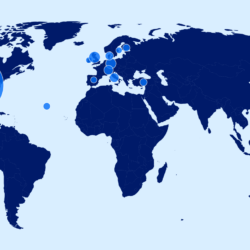
Sage Policy Profiles lets researchers easily see specific citations of their work in policy documents and then illustrate and share that work’s impact graphically.
These 10 tips will help you build your brand and the reach of your scholarship, with the goal of finding your position within the wider context of your research area and leveraging change.


Jürgen Habermas, a globally known social theorist whose explorations of democracy, validity and communication have gained new prominence in the current moment, […] People often see science as a world apart: cool, rational and untouched by persuasion or performance. In this view, scientists simply discover […] “Research impact” means different things to different people. Some refer broadly to how science changes behaviors, beliefs, or practices outside academic institutions. […] David Canter considers informal places where people socialize, suggesting they’re an arena ChatGPT and other LLMs can’no’t replicate. As someone who lives […] It’s become cliche since Clive Humbly coined it in 2006, but data is indeed the new oil. It’s a mantra repeated by […] In September 2025, The Guardian reported about a lawyer in Australia having faced sanctions due to false citations. These citations were not […]
EXPLORE
Impact

Jürgen Habermas, 1929-2026: Exponent of the Public Sphere
READ MORE

Scientists Should Keep in Mind It’s Called the ‘Marketplace of Ideas’ for a Reason
READ MORE

Survey Finds Social Scientists Feel Unsupported in Seeking Societal Impact
READ MORE
Innovation

Reaching Parts to Which AI Has No Access
READ MORE

Andrea Medina-Smith on Making Research Data More FAIR
READ MORE

A Status Check on Hallucinated Case Law Incidents
READ MORE