
Could Distributed Peer Review Better Decide Grant Funding?
The landscape of academic grant funding is notoriously competitive and plagued by lengthy, bureaucratic processes, exacerbated by difficulties in finding willing reviewers. Distributed […]

Proposals circulating to cut as much as a fifth of the budget from the Commonwealth Scientific and Industrial Research Organisation are a quick way to inflict long-term pain in Australia’s research community.
Concerns about Chinese advances and US education declines, not internecine disputes between academic disciplines, marked the Hill debut of the agency-requested budget for the National Science Foundation.

The Executive Branch’s proposed budget for NSF in the coming fiscal year will be presented to the House Appropriations Committee on Thursday. A competing spending plan that would be markedly less friendly to social, behavioral and economic science is already circulating.
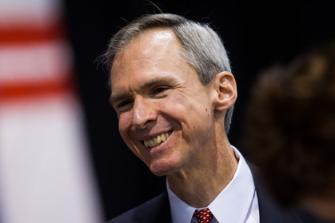
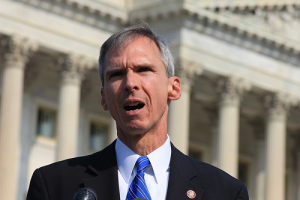
How concerned should the social science community be about the still substantial chunk of money missing from federal social science support in a hotly contested National Science Foundation reauthorization bill? According to Daniel Lipinski, the very conservative Democratic congressman whose amendment backfilled $50 million that even more conservative Republicans wanted to take away, a lot and a little.
A bill that would dramatically reduce the amount of money that the federal government spends on social science research advanced after passing in a House of Representatives subcommittee on a party-line vote this morning.
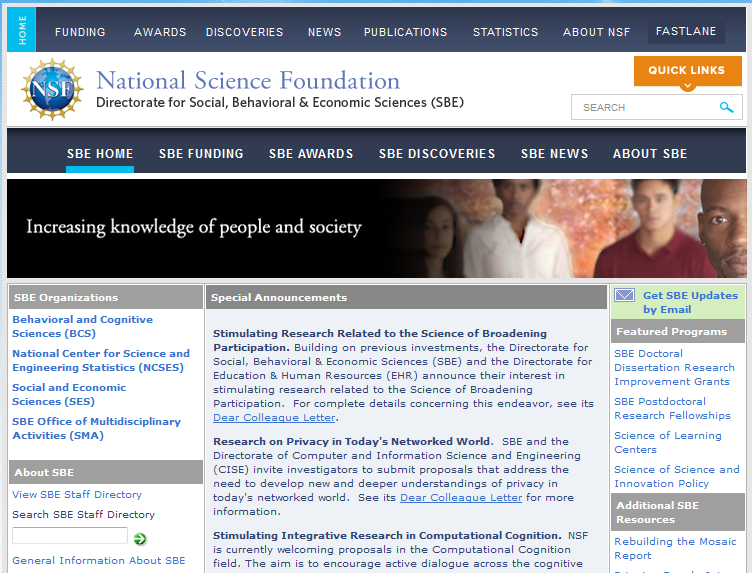
Thursday’s mark-up of a bill that nearly cuts the National Science Foundation’s social science spending in half is stirring up the academic community.
The social and behavioral component of the National Science Foundation’s budget is a small part of the total but of paramount importance to the discipline’s researchers, a relationship brought home as Congress gets ready to discuss funding.

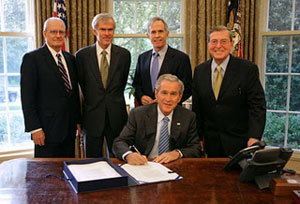
Two pieces of upcoming legislation, the Frontiers in Research, Science, and Technology bill and American COMPETES, could include some unwelcome news for social and behavioral science if certain key legislators get their way.

Jürgen Habermas, a globally known social theorist whose explorations of democracy, validity and communication have gained new prominence in the current moment, […] People often see science as a world apart: cool, rational and untouched by persuasion or performance. In this view, scientists simply discover […] “Research impact” means different things to different people. Some refer broadly to how science changes behaviors, beliefs, or practices outside academic institutions. […] David Canter considers informal places where people socialize, suggesting they’re an arena ChatGPT and other LLMs can’no’t replicate. As someone who lives […] It’s become cliche since Clive Humbly coined it in 2006, but data is indeed the new oil. It’s a mantra repeated by […] In September 2025, The Guardian reported about a lawyer in Australia having faced sanctions due to false citations. These citations were not […]
EXPLORE
Impact

Jürgen Habermas, 1929-2026: Exponent of the Public Sphere
READ MORE

Scientists Should Keep in Mind It’s Called the ‘Marketplace of Ideas’ for a Reason
READ MORE

Survey Finds Social Scientists Feel Unsupported in Seeking Societal Impact
READ MORE
Innovation

Reaching Parts to Which AI Has No Access
READ MORE

Andrea Medina-Smith on Making Research Data More FAIR
READ MORE

A Status Check on Hallucinated Case Law Incidents
READ MORE