



Could Distributed Peer Review Better Decide Grant Funding?
The landscape of academic grant funding is notoriously competitive and plagued by lengthy, bureaucratic processes, exacerbated by difficulties in finding willing reviewers. Distributed […]

The academic world has the power to transform events in redefining its social mission, by responding to this highly ambitious EU action plan with the emergence of courses that match the expectations not only of businesses but, above all, society.

David Canter reviews results of studies on the challenges of sustaining natural resources.

A report from the National Association of Scholars takes on the reproducibility crisis in science. Not everyone views the group’s motives as pure.

Effective communication is fundamental to increasing public understanding and for building the bridge between the public and the sciences. Suzi Spitzer outlines five principles of holistic science communication that can facilitate collaborative learning between scientists and the public.
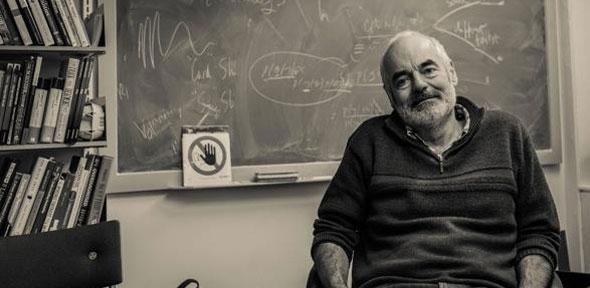
While they aren’t as unpopular as politicians or journalists, people who work with statistics come in for their share of abuse. “Figures lie and liars figure,” goes one maxim. And don’t forget, “There are three kinds of lies: lies, damned lies, and statistics.” But some people are the good guys, doing their best to combat the flawed or dishonest use of numbers. One of those good guys is the guest of this Social Science Bites podcast, David Spiegelhalter, professor of the public understanding of risk at Cambridge and current president of the Royal Statistical Society.
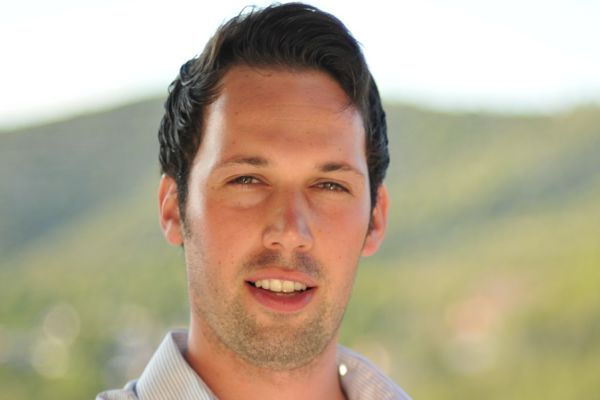
When online charitable appeals take off, social psychologist Sander van der Linden perks up. He studies ‘viral altruism,’ and in this Social Science Bites podcast he details to host David Edmonds how he studies this phenomenon.
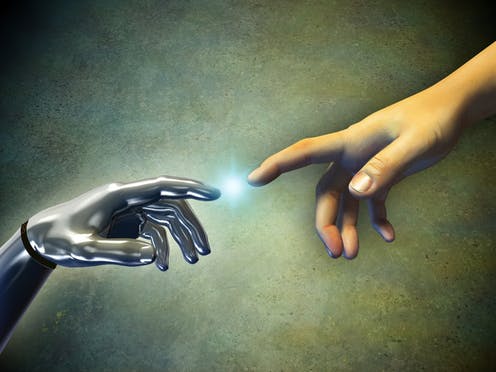
How can universities train our scientists, technologists and engineers to engage with society rather than perform as cogs in the engine of economic development? Author Richard Lachman asks for educational system to require STEM students to take art and humanities courses, not as an attempt to “broaden minds” but as a necessary discussion of morals, ethics and responsibility.
The applications of big data provide a very mixed picture about its uses and abuses, in government, academe and private industry. And while where you stand on the net impact depends, as the cliche goes, on where you sit, a panel at the recent ESRC Festival of Social Science came out qualitatively optimistic about the future.


Jürgen Habermas, a globally known social theorist whose explorations of democracy, validity and communication have gained new prominence in the current moment, […] People often see science as a world apart: cool, rational and untouched by persuasion or performance. In this view, scientists simply discover […] “Research impact” means different things to different people. Some refer broadly to how science changes behaviors, beliefs, or practices outside academic institutions. […] David Canter considers informal places where people socialize, suggesting they’re an arena ChatGPT and other LLMs can’no’t replicate. As someone who lives […] It’s become cliche since Clive Humbly coined it in 2006, but data is indeed the new oil. It’s a mantra repeated by […] In September 2025, The Guardian reported about a lawyer in Australia having faced sanctions due to false citations. These citations were not […]
EXPLORE
Impact

Jürgen Habermas, 1929-2026: Exponent of the Public Sphere
READ MORE

Scientists Should Keep in Mind It’s Called the ‘Marketplace of Ideas’ for a Reason
READ MORE

Survey Finds Social Scientists Feel Unsupported in Seeking Societal Impact
READ MORE
Innovation

Reaching Parts to Which AI Has No Access
READ MORE

Andrea Medina-Smith on Making Research Data More FAIR
READ MORE

A Status Check on Hallucinated Case Law Incidents
READ MORE