


Could Distributed Peer Review Better Decide Grant Funding?
The landscape of academic grant funding is notoriously competitive and plagued by lengthy, bureaucratic processes, exacerbated by difficulties in finding willing reviewers. Distributed […]
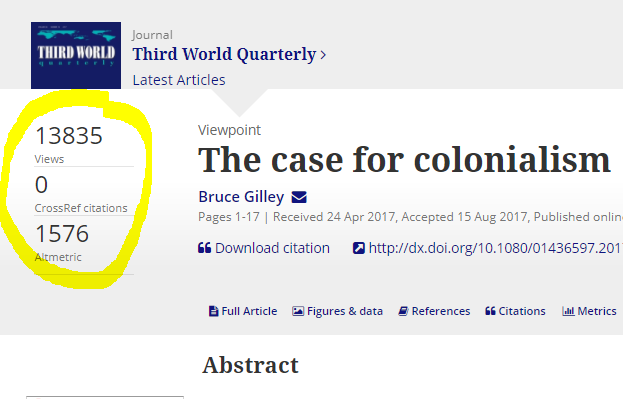
Portia Roelofs and Max Gallien cite Bruce Gilley’s defense of colonialism paper published earlier this month to illustrate how deliberately provocative articles have the capacity to hack academia, to privilege clicks and attention over rigor in research.
By one estimate of U.S. universities, there are about 300,000 fewer women students in the field of economics than there should be if sexism were not so rampant.
Where sharing industry information was once thought of as “giving away the farm,” it has since grown into its role as a commonplace technique capable of generating big results.
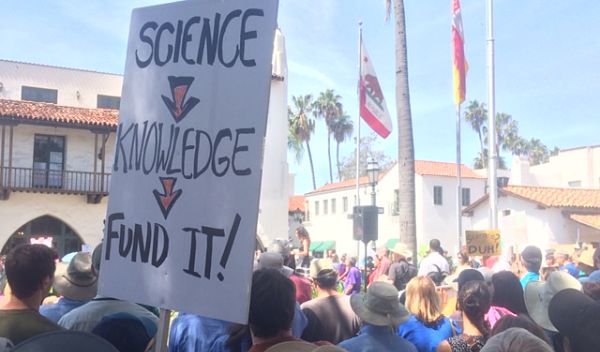
The recent global Marches for Science cast a supportive eye on science and research. And yet any discussion of support eventually comes down to money.

Britain’s Academy of Social Sciences announced today it has conferred the award of fellow on 47 leading social scientists, ranging from the […]
Social Science Space will publish the winning essays, runners-up and eight shortlisted pieces from the most recent ESRC writing competition in the next few weeks, starting with “Once more, with feeling: life as bilingual,” an essay from psychologist Wilhelmiina Toivo at the University of Glasgow.
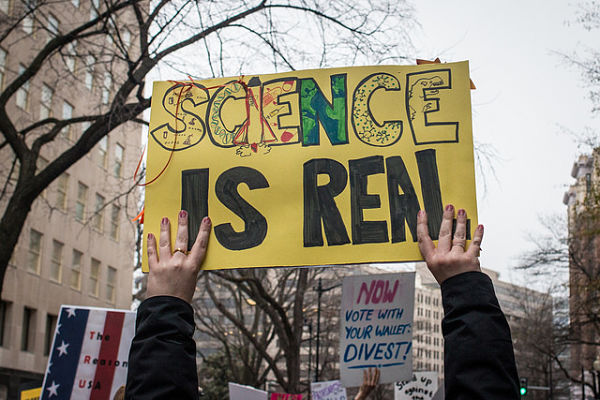
With science on the defensive for the time being, and the the fear of retribution palpable, the long-standing question of whether scientists should ever become advocates has come into sharper focus.
Our Howard Silver looks over some of the personnel changes and rhetoric coming from the White House to see what lies down the road for U.S. government support of social and behavioral science and data collection.
Jürgen Habermas, a globally known social theorist whose explorations of democracy, validity and communication have gained new prominence in the current moment, […] People often see science as a world apart: cool, rational and untouched by persuasion or performance. In this view, scientists simply discover […] “Research impact” means different things to different people. Some refer broadly to how science changes behaviors, beliefs, or practices outside academic institutions. […] David Canter considers informal places where people socialize, suggesting they’re an arena ChatGPT and other LLMs can’no’t replicate. As someone who lives […] It’s become cliche since Clive Humbly coined it in 2006, but data is indeed the new oil. It’s a mantra repeated by […] In September 2025, The Guardian reported about a lawyer in Australia having faced sanctions due to false citations. These citations were not […]
EXPLORE
Impact

Jürgen Habermas, 1929-2026: Exponent of the Public Sphere
READ MORE

Scientists Should Keep in Mind It’s Called the ‘Marketplace of Ideas’ for a Reason
READ MORE

Survey Finds Social Scientists Feel Unsupported in Seeking Societal Impact
READ MORE
Innovation

Reaching Parts to Which AI Has No Access
READ MORE

Andrea Medina-Smith on Making Research Data More FAIR
READ MORE

A Status Check on Hallucinated Case Law Incidents
READ MORE