



Could Distributed Peer Review Better Decide Grant Funding?
The landscape of academic grant funding is notoriously competitive and plagued by lengthy, bureaucratic processes, exacerbated by difficulties in finding willing reviewers. Distributed […]
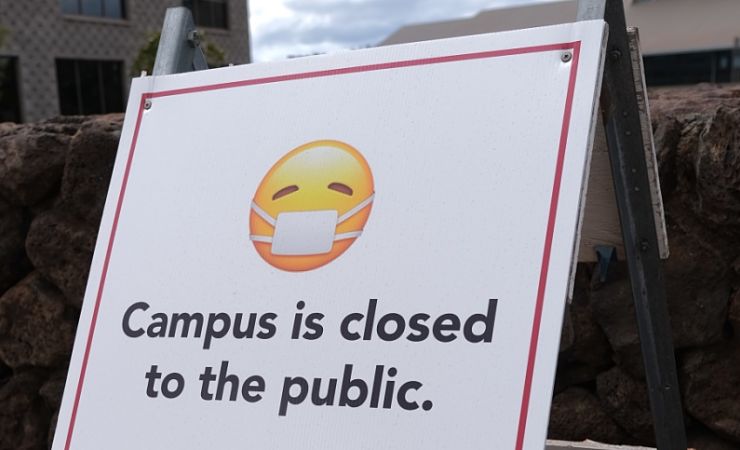
This seems, writes Daniel Nehring, to be a good time to feel pessimistic about academia in the COVID world, and to turn this pessimism into meaningful debate and effective action.
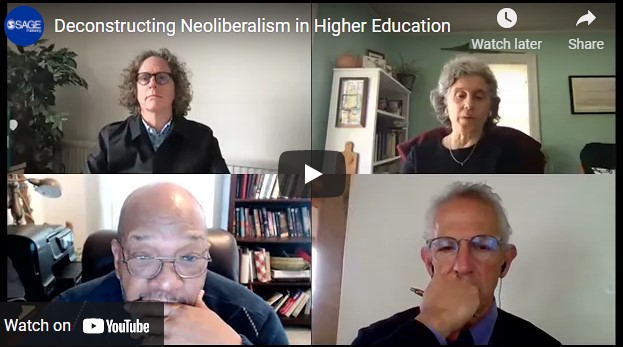
Higher education is striving to address problems such as access, inclusion, and elitism, but is a neoliberalist foundation undermining these efforts—or even the system itself? An online forum held on April 21, “Deconstructing Neoliberalism in Higher Education: How can we promote greater equity and re-professionalize the professoriate?” addressed this quandary.

In terms of the organization of academic labor, higher education is ever more sharply divided between, on the one hand, an advantaged minority in full-time, long-term employment and, on the other hand, academia’s reserve army of labor.
To what extent do the realities of social research in China live up to the favorable image created by job ads on academic recruitment sites?
At their heart, Chinese public universities are deeply parochial bureaucratic structures geared towards the party-state’s priorities for socio-economic development. In response to national and international pressures, some universities have recently begun to internationalize, with notably different degrees of enthusiasm. Others have not. You would do well to determine, the author writes, into what category a prospective employer falls.

China has become an increasingly attractive destination for Western social scientists, both for those doing research in and on China and for those looking to continue their careers with meaningful, long-term perspectives.

Sociology today, argues our Daniek Nehring, is defined by a fundamental contradiction between its everyday labor practices and its imaginary ethos.

Intellectual labor comes to be largely external to the objectives of the bureaucratic regimes that dominate universities, argues our Daniel Nehring, and academics whose careers were built on intellectual labor turn out to be deskilled workers in organizational settings indifferent to their concerns.

Jürgen Habermas, a globally known social theorist whose explorations of democracy, validity and communication have gained new prominence in the current moment, […] People often see science as a world apart: cool, rational and untouched by persuasion or performance. In this view, scientists simply discover […] “Research impact” means different things to different people. Some refer broadly to how science changes behaviors, beliefs, or practices outside academic institutions. […] David Canter considers informal places where people socialize, suggesting they’re an arena ChatGPT and other LLMs can’no’t replicate. As someone who lives […] It’s become cliche since Clive Humbly coined it in 2006, but data is indeed the new oil. It’s a mantra repeated by […] In September 2025, The Guardian reported about a lawyer in Australia having faced sanctions due to false citations. These citations were not […]
EXPLORE
Impact

Jürgen Habermas, 1929-2026: Exponent of the Public Sphere
READ MORE

Scientists Should Keep in Mind It’s Called the ‘Marketplace of Ideas’ for a Reason
READ MORE

Survey Finds Social Scientists Feel Unsupported in Seeking Societal Impact
READ MORE
Innovation

Reaching Parts to Which AI Has No Access
READ MORE

Andrea Medina-Smith on Making Research Data More FAIR
READ MORE

A Status Check on Hallucinated Case Law Incidents
READ MORE