



Could Distributed Peer Review Better Decide Grant Funding?
The landscape of academic grant funding is notoriously competitive and plagued by lengthy, bureaucratic processes, exacerbated by difficulties in finding willing reviewers. Distributed […]

Based on a study of how research is cited in national and local media sources, Andy Tattersall shows how research is often poorly represented in the media and suggests better community standards around linking to original research could improve trust in mainstream media.

In this article, Anand van Zelderen, Nicky Dries, and Elise Marescaux reflect on their decision to explore nontraditional research.

Retractions are generally framed as a negative: as science not working properly, as an embarrassment for the institutions involved, or as a flaw in the peer review process. They can be all those things. But they can also be part of a story of science working the right way: finding and correcting errors, and publicly acknowledging when information turns out to be incorrect.

Tejendra Pherali, a professor of education, conflict and peace at University College London, researches the intersection of education and conflict around the world.

In this article, Shelly Ashtar reflects on her longstanding interest in service-related work and how it connects to her research interest in customer satisfaction. Ashtar explores this topic with collaborators Galit B. Yom-Tov, Anat Rafaeli and Jochen Wirtz in “Affect-as-Information: Customer and Employee Affective Displays as Expeditious Predictors of Customer Satisfaction,” in the Journal of Service Research.

The U.S. National Science Foundation’s new Responsible Design, Development, and Deployment of Technologies (ReDDDoT) program supports research, implementation, and educational projects for multidisciplinary, multi-sector teams

The historic Hippocrates has become an iconic figure in the creation myths of medicine. What can the body of thought attributed to him tell us about modern responses to COVID?
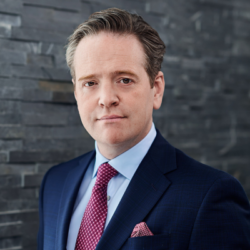
Gabriel Miller, currently the president and chief executive officer of the Canadian Federation for the Humanities and Social Sciences, has been named the president and chief executive officer of Universities Canada effective March 18.


Jürgen Habermas, a globally known social theorist whose explorations of democracy, validity and communication have gained new prominence in the current moment, […] People often see science as a world apart: cool, rational and untouched by persuasion or performance. In this view, scientists simply discover […] “Research impact” means different things to different people. Some refer broadly to how science changes behaviors, beliefs, or practices outside academic institutions. […] David Canter considers informal places where people socialize, suggesting they’re an arena ChatGPT and other LLMs can’no’t replicate. As someone who lives […] It’s become cliche since Clive Humbly coined it in 2006, but data is indeed the new oil. It’s a mantra repeated by […] In September 2025, The Guardian reported about a lawyer in Australia having faced sanctions due to false citations. These citations were not […]
EXPLORE
Impact

Jürgen Habermas, 1929-2026: Exponent of the Public Sphere
READ MORE

Scientists Should Keep in Mind It’s Called the ‘Marketplace of Ideas’ for a Reason
READ MORE

Survey Finds Social Scientists Feel Unsupported in Seeking Societal Impact
READ MORE
Innovation

Reaching Parts to Which AI Has No Access
READ MORE

Andrea Medina-Smith on Making Research Data More FAIR
READ MORE

A Status Check on Hallucinated Case Law Incidents
READ MORE