
Could Distributed Peer Review Better Decide Grant Funding?
The landscape of academic grant funding is notoriously competitive and plagued by lengthy, bureaucratic processes, exacerbated by difficulties in finding willing reviewers. Distributed […]

A disaster (which originally meant “ill-starred”, or “under a bad star”) changes the world and our view of it. Our focus shifts, […]
A traumatic event is one in which a person experiences a genuine fear of death or injury for themselves or others. However, […]
In order to reduce the spread of the virus and to protect vulnerable persons, it is strongly advised to reduce physical contact, […]
They had been sentenced, for an unknown crime, to an indeterminate period of punishment. (Camus, 1947) As Albert Camus observed in The […]
Patient A1.1, who was then still experiencing mild respiratory symptoms, attended a birthday party with nine other people. They hugged and shared […]
The biggest threat to the Territory is clear. It is not us, it’s them. Western Australian Premier Mark McGowan We live in a dangerous […]
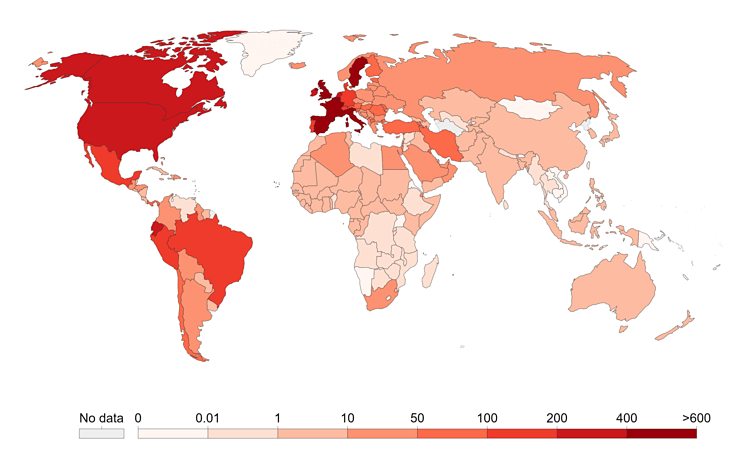
Without research in social, organizational, and behavioral sciences, argues John Haaga, as serious as the investment in biomedical research, the United States may be no better off when the next acute crisis hits.
Chris Worley, professor of organizational theory and management at Pepperdine University’s Graziadio Business School, and Claudy Jules, the head Google’s Center of Expertise on Organizational Health and Change, offer context behind their commentary, “COVID-19’s Uncomfortable Revelations About Agile and Sustainable Organizations in a VUCA World,” in the Journal of Applied Behavioral Science.


Jürgen Habermas, a globally known social theorist whose explorations of democracy, validity and communication have gained new prominence in the current moment, […] People often see science as a world apart: cool, rational and untouched by persuasion or performance. In this view, scientists simply discover […] “Research impact” means different things to different people. Some refer broadly to how science changes behaviors, beliefs, or practices outside academic institutions. […] David Canter considers informal places where people socialize, suggesting they’re an arena ChatGPT and other LLMs can’no’t replicate. As someone who lives […] It’s become cliche since Clive Humbly coined it in 2006, but data is indeed the new oil. It’s a mantra repeated by […] In September 2025, The Guardian reported about a lawyer in Australia having faced sanctions due to false citations. These citations were not […]
EXPLORE
Impact

Jürgen Habermas, 1929-2026: Exponent of the Public Sphere
READ MORE

Scientists Should Keep in Mind It’s Called the ‘Marketplace of Ideas’ for a Reason
READ MORE

Survey Finds Social Scientists Feel Unsupported in Seeking Societal Impact
READ MORE
Innovation

Reaching Parts to Which AI Has No Access
READ MORE

Andrea Medina-Smith on Making Research Data More FAIR
READ MORE

A Status Check on Hallucinated Case Law Incidents
READ MORE