


Could Distributed Peer Review Better Decide Grant Funding?
The landscape of academic grant funding is notoriously competitive and plagued by lengthy, bureaucratic processes, exacerbated by difficulties in finding willing reviewers. Distributed […]

From the COVID-19 pandemic to the war in Ukraine, misinformation is rife worldwide. Many tools have been designed to help people spot […]
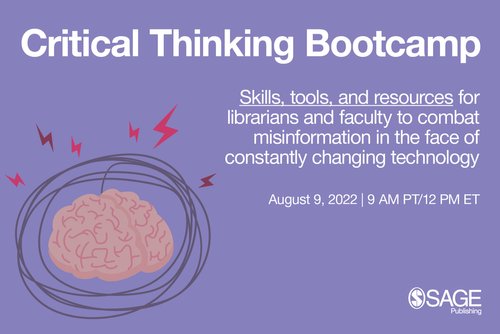
SAGE Publishing — the parent of Social Science Space – will hold its Third Annual Critical Thinking Bootcamp on August 9. Leaning more and register here

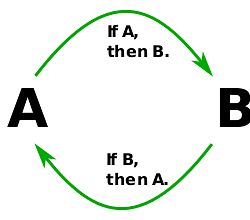
Besides our own critical faculties, is there a mathematical model that could help us unravel disinformation? Dorje C. Brody suggests there may be.

The right-wing Heritage Foundation has accused university Diversity, Equity, and Inclusion (DEI) offices of spreading anti-Semitism on campuses, but its recently issued […]
Readers of Social Science Space may recall that Dr. Jeremy Devine suddenly became the best-know psychiatry resident North America when he published […]

In the United States, government health agencies consider chronic fatigue syndrome as “a serious, chronic, complex, and multisystem disease,” rather than a psychological condition. That view is is not held everywhere.

No matter how exquisite the details, it is important to separate fact from folklore – which should not require cross examination.
David Canter considers the tragic implications of people not understanding what they are told by politicians and experts.

Four Americans working in the social and behavioral sciences are among the 20 people named MacArthur Fellows this year. Recipients may be […] Euan Adie, the founder of Altmetric and later of Overton, discusses the reasons the led to Overton’s focus on showing researchers how […] Here’s a couple of quick questions for you. What is the smallest of the eight discipline-based directorates at the United States’ National […] Developers of AI data centers have a public trust problem. According to multiple surveys, a majority of Americans say they would oppose […] I was adding some final flourishes on the topic of ‘iatrocracy’ to my forthcoming book with Natewindé Sawadogo – Sickness and Social […] How is AI changing the shape and space of higher education? Critical thinking continues to rank highly among key skills and attributes […]
EXPLORE
Impact

Four From Social Science World Receive 2026 MacArthur Fellowships
READ MORE

Quick Insight: Euan Adie on Getting Academics Credit for Their Impact
READ MORE

NSF’s Embattled SBE Directorate Shown as Agency’s Policy Heavyweight
READ MORE
Innovation

What We Miss When We Study Public Trust with Surveys Alone
READ MORE

AI and ‘Iatrocracy’ – A Cautionary Tale
READ MORE

The Critical Student: How GenAI Reshapes Critical Skills and Higher Education’s Role Preparing Students For It
READ MORE










































































