
Could Distributed Peer Review Better Decide Grant Funding?
The landscape of academic grant funding is notoriously competitive and plagued by lengthy, bureaucratic processes, exacerbated by difficulties in finding willing reviewers. Distributed […]
Reflecting on work uncovering the colonial genealogies of foundational works in the social sciences, Gurminder K Bhambra argues for a reparatory social science and highlights three challenges that any reparatory project must face in order to be successful.

Vineeta Sinha, a sociologist whose research interests range from religiosity in the Hindu Diaspora and religion-state encounters to critiques of the social sciences’ infrastructure and rethinking classical sociological theory, will deliver the Inaugural UCL Collaborative Social Science Domain’s Annual Lecture 2022.

There is no blueprint for the liberation of learning in your subject discipline. Instead, deconstructing the content and approaches that have been used over the generations is a deeply personal – and at the same time, collective process.
What can we as university professors and administrators, asks Stephanie Jirard, do to decisnormatize and decolonize our institutions?

Volunteer reviewers are one key obstacle – or ally – in seeing scholarship from indigenous authors makes into mainstream academic journals. Here are some tips to remove obstacles.

Join Dr. Marni A. Brown, Associate Professor of Sociology at Georgia Gwinnett College, Stephanie A. Jirard, Professor of Criminal Justice at Shippensburg […]
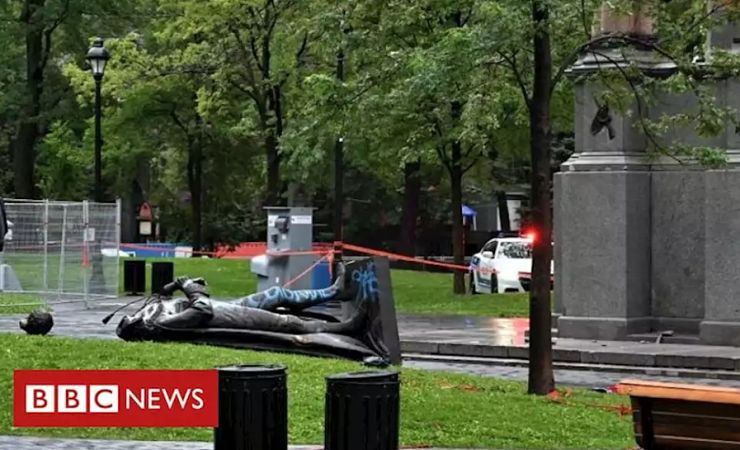
The authors call for business schools to re-evaluate the symbols we are promoting. Who are we elevating? Which ideologies? Specifically, we ask that business schools do the work to not just Indigenize (add to), but decolonize (unlearn).
As conversations around decolonization in universities are being afforded greater urgency, some key risks of this institutional capture or inertia to wider decolonization efforts are described by Rima Saini.
Jürgen Habermas, a globally known social theorist whose explorations of democracy, validity and communication have gained new prominence in the current moment, […] People often see science as a world apart: cool, rational and untouched by persuasion or performance. In this view, scientists simply discover […] “Research impact” means different things to different people. Some refer broadly to how science changes behaviors, beliefs, or practices outside academic institutions. […] David Canter considers informal places where people socialize, suggesting they’re an arena ChatGPT and other LLMs can’no’t replicate. As someone who lives […] It’s become cliche since Clive Humbly coined it in 2006, but data is indeed the new oil. It’s a mantra repeated by […] In September 2025, The Guardian reported about a lawyer in Australia having faced sanctions due to false citations. These citations were not […]
EXPLORE
Impact

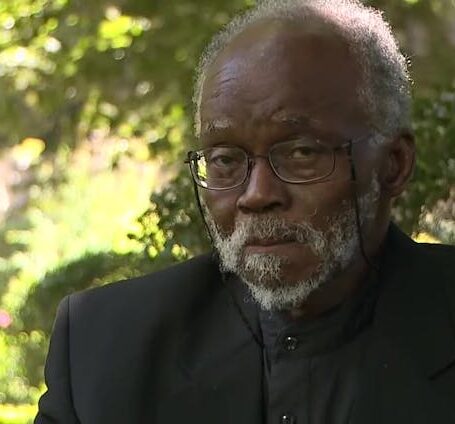
Jürgen Habermas, 1929-2026: Exponent of the Public Sphere
READ MORE

Scientists Should Keep in Mind It’s Called the ‘Marketplace of Ideas’ for a Reason
READ MORE

Survey Finds Social Scientists Feel Unsupported in Seeking Societal Impact
READ MORE
Innovation

Reaching Parts to Which AI Has No Access
READ MORE

Andrea Medina-Smith on Making Research Data More FAIR
READ MORE

A Status Check on Hallucinated Case Law Incidents
READ MORE