

Could Distributed Peer Review Better Decide Grant Funding?
The landscape of academic grant funding is notoriously competitive and plagued by lengthy, bureaucratic processes, exacerbated by difficulties in finding willing reviewers. Distributed […]

Join the American Psychological Association for a free webinar on April 26, 2021. Improvements in the openness, rigor, and reproducibility of psychological […]
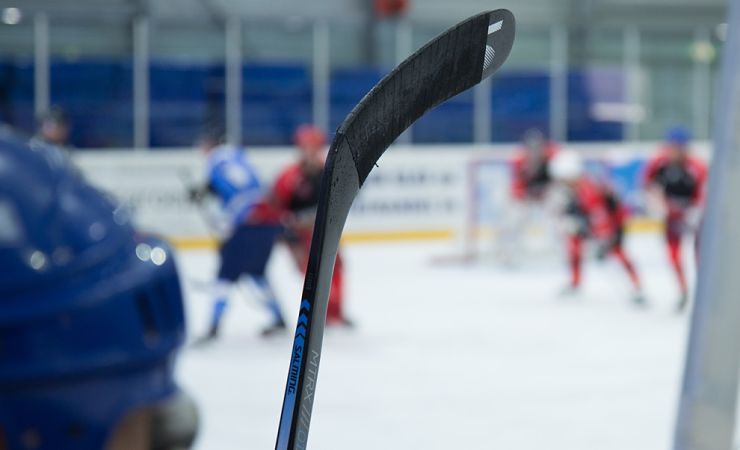
An elegant experiment mapped social discrimination -based on how foreign someone’s name sounds in a given country – among European amateur football teams.

Research from Loren Falkenberg and Elizabeth Cannon shows universities must “future proof” themselves, which happens when an institutional strategy is focused on the future while mitigating the impact of unforeseen events.

In light of cuts to UKRI’s research funding and Overseas Development Assistance program, Nicky Armstrong and Evelyn Pauls argue that these developments reflect a narrow conception of the impact of academic research on society and describe how these cuts will affect the work of the Gender, Justice and Security Hub.
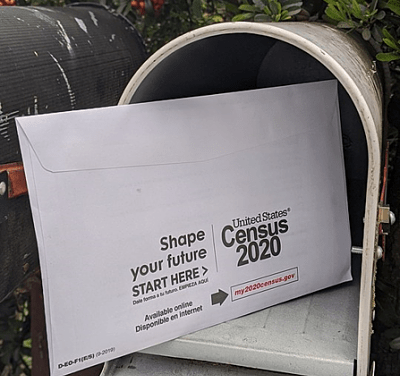
U.S. President Joe Biden announced that he would nominate Robert Santos, president of the American Statistical Association, as director of the Census Bureau.

No matter how exquisite the details, it is important to separate fact from folklore – which should not require cross examination.

One of the most heavily contested voting-policy issues in the 2020 election, in both the courts and the political arena, was the deadline […]
Correcting mistakes in light of new data and updating findings to reflect this is often considered to be a key characteristic of scientific research. Commenting on the ‘Loss-of-Confidence Project’, a study into self-correction amongst psychologists, Julia M. Rohrer, suggests that in practice self-correction of published research is, infrequent, difficult to achieve and perceived to come with reputational costs. However, by reframing and changing the static nature of academic publications, it may be possible to develop a research culture more conducive to self-correction.
People often see science as a world apart: cool, rational and untouched by persuasion or performance. In this view, scientists simply discover […] “Research impact” means different things to different people. Some refer broadly to how science changes behaviors, beliefs, or practices outside academic institutions. […] One researcher studies how war affects children, another took a literal worm’s eye view to examine rural development, while two others scrutinized […] David Canter considers informal places where people socialize, suggesting they’re an arena ChatGPT and other LLMs can’no’t replicate. As someone who lives […] It’s become cliche since Clive Humbly coined it in 2006, but data is indeed the new oil. It’s a mantra repeated by […] In September 2025, The Guardian reported about a lawyer in Australia having faced sanctions due to false citations. These citations were not […]
EXPLORE
Impact

Scientists Should Keep in Mind It’s Called the ‘Marketplace of Ideas’ for a Reason
READ MORE

Survey Finds Social Scientists Feel Unsupported in Seeking Societal Impact
READ MORE
Canada’s SSHRC Names 2025 Impact Winners
READ MORE
Innovation

Reaching Parts to Which AI Has No Access
READ MORE

Andrea Medina-Smith on Making Research Data More FAIR
READ MORE

A Status Check on Hallucinated Case Law Incidents
READ MORE