

Could Distributed Peer Review Better Decide Grant Funding?
The landscape of academic grant funding is notoriously competitive and plagued by lengthy, bureaucratic processes, exacerbated by difficulties in finding willing reviewers. Distributed […]

It has been widely recognized that poverty is a key variable to explain why over 200 million young children from low- and middle-income countries do not develop at similar levels as their non-poor peers. Time and again, our research shows that being poor often is associated with many other health and social problems that make it hard to get out of poverty.
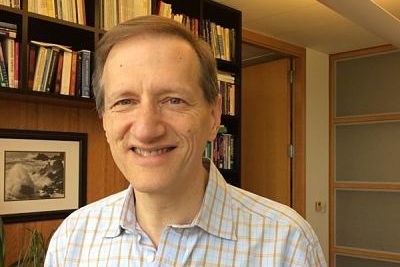
When looking at big data, says computational social scientist Gary King, “The data itself isn’t likely to be particularly useful; the question is whether you can make it useful.” In this Social Science Bites podcast, he explains more about the importance of data analysis.

The American Academy of Political and Social Science selected economist and Princeton economist Alan Krueger as the winner of the 2017 Daniel Patrick Moynihan Prize.

One of the highlights of the International Studies Association’s annual conference – assuming you weren’t boycotting the whole affair – was the annual Duckies Awards, which recognize public-facing work in the field.
We have entered an era of lifelong media education, says Michelle L. Stack. This includes an examination of how we freely share information about ourselves on social media that is then used to frame how we see others and ourselves.
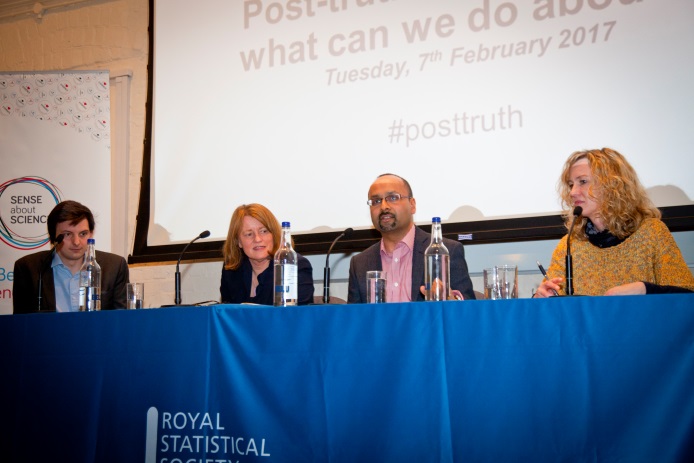
At a panel debate held by the Royal Statistical Society titled ‘Post-truth: what is it and what can we do about it,’ panelists from BuzzFeed, Sense about Science, Full Fact, the Oxford Internet Institute and the RSS debated this new phenomenon.

SAGE Publishing and the Center for Advanced Study in the Behavioral Sciences at Stanford University will present sociologist William Julius Wilson, a leader for a half century in the study of race and inequality in the United States, the 2017 SAGE-CASBS Award.

Governments around the world have found success using the burgeoning field of behavioral science to improve the efficiency of their policies and increase citizens’ well-being. We need clear guidelines on when and how to use behavioral science in policy.
People often see science as a world apart: cool, rational and untouched by persuasion or performance. In this view, scientists simply discover […] “Research impact” means different things to different people. Some refer broadly to how science changes behaviors, beliefs, or practices outside academic institutions. […] One researcher studies how war affects children, another took a literal worm’s eye view to examine rural development, while two others scrutinized […] David Canter considers informal places where people socialize, suggesting they’re an arena ChatGPT and other LLMs can’no’t replicate. As someone who lives […] It’s become cliche since Clive Humbly coined it in 2006, but data is indeed the new oil. It’s a mantra repeated by […] In September 2025, The Guardian reported about a lawyer in Australia having faced sanctions due to false citations. These citations were not […]
EXPLORE
Impact

Scientists Should Keep in Mind It’s Called the ‘Marketplace of Ideas’ for a Reason
READ MORE

Survey Finds Social Scientists Feel Unsupported in Seeking Societal Impact
READ MORE

Canada’s SSHRC Names 2025 Impact Winners
READ MORE
Innovation

Reaching Parts to Which AI Has No Access
READ MORE

Andrea Medina-Smith on Making Research Data More FAIR
READ MORE

A Status Check on Hallucinated Case Law Incidents
READ MORE