


Could Distributed Peer Review Better Decide Grant Funding?
The landscape of academic grant funding is notoriously competitive and plagued by lengthy, bureaucratic processes, exacerbated by difficulties in finding willing reviewers. Distributed […]
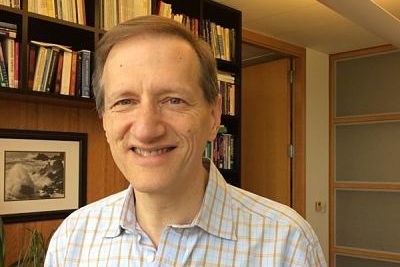
When looking at big data, says computational social scientist Gary King, “The data itself isn’t likely to be particularly useful; the question is whether you can make it useful.” In this Social Science Bites podcast, he explains more about the importance of data analysis.

The American Academy of Political and Social Science selected economist and Princeton economist Alan Krueger as the winner of the 2017 Daniel Patrick Moynihan Prize.
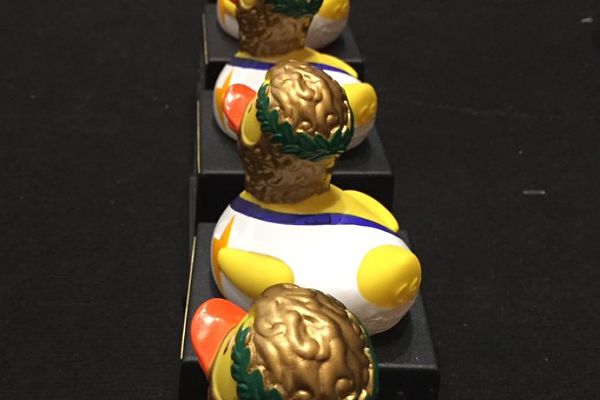
One of the highlights of the International Studies Association’s annual conference – assuming you weren’t boycotting the whole affair – was the annual Duckies Awards, which recognize public-facing work in the field.
We have entered an era of lifelong media education, says Michelle L. Stack. This includes an examination of how we freely share information about ourselves on social media that is then used to frame how we see others and ourselves.
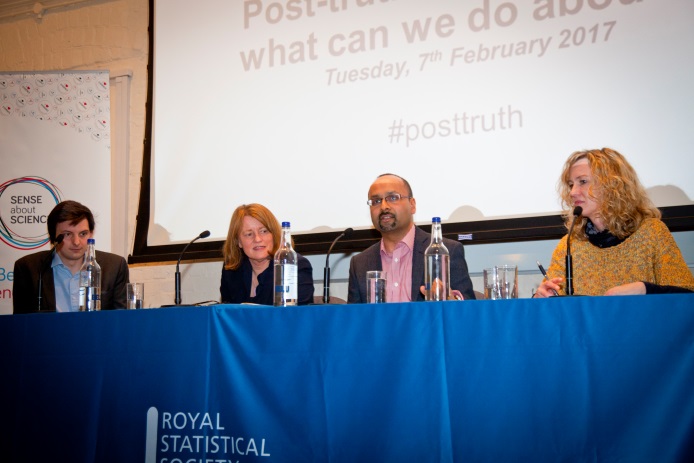
At a panel debate held by the Royal Statistical Society titled ‘Post-truth: what is it and what can we do about it,’ panelists from BuzzFeed, Sense about Science, Full Fact, the Oxford Internet Institute and the RSS debated this new phenomenon.

SAGE Publishing and the Center for Advanced Study in the Behavioral Sciences at Stanford University will present sociologist William Julius Wilson, a leader for a half century in the study of race and inequality in the United States, the 2017 SAGE-CASBS Award.
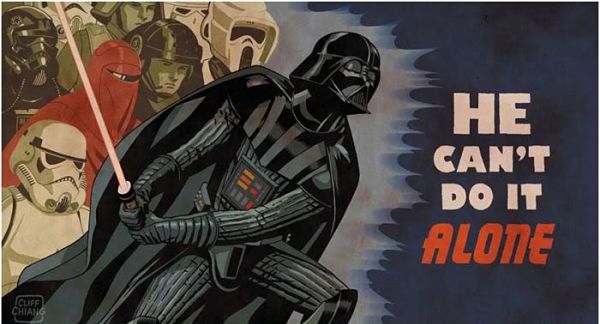
Governments around the world have found success using the burgeoning field of behavioral science to improve the efficiency of their policies and increase citizens’ well-being. We need clear guidelines on when and how to use behavioral science in policy.
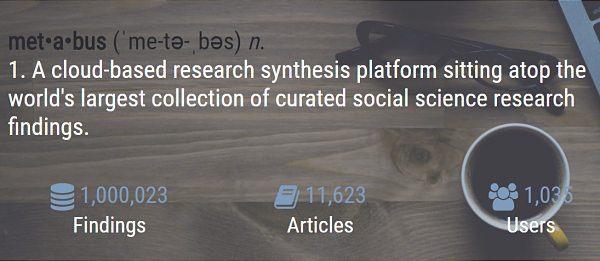
metaBUS, a free new online research tool, aims to help revolutionize social science research.
Euan Adie, the founder of Altmetric and later of Overton, discusses the reasons the led to Overton’s focus on showing researchers how […] Here’s a couple of quick questions for you. What is the smallest of the eight discipline-based directorates at the United States’ National […] Sage’s 10-Year Impact Awards recognize academic papers appearing in Sage-published journals that have achieved lasting impact. The winning papers are the most […] I was adding some final flourishes on the topic of ‘iatrocracy’ to my forthcoming book with Natewindé Sawadogo – Sickness and Social […] How is AI changing the shape and space of higher education? Critical thinking continues to rank highly among key skills and attributes […] My colleagues and I recently spoke with a group of talented, interesting students who just completed their first year of college about […]
EXPLORE
Impact

Quick Insight: Euan Adie on Getting Academics Credit for Their Impact
READ MORE

NSF’s Embattled SBE Directorate Shown as Agency’s Policy Heavyweight
READ MORE
Sage’s 10-Year Impact Awards Capture Longer-Term Significance
READ MORE
Innovation

AI and ‘Iatrocracy’ – A Cautionary Tale
READ MORE

The Critical Student: How GenAI Reshapes Critical Skills and Higher Education’s Role Preparing Students For It
READ MORE

AI Doesn’t Drive Student Cheating. It Just Hitches a Ride
READ MORE