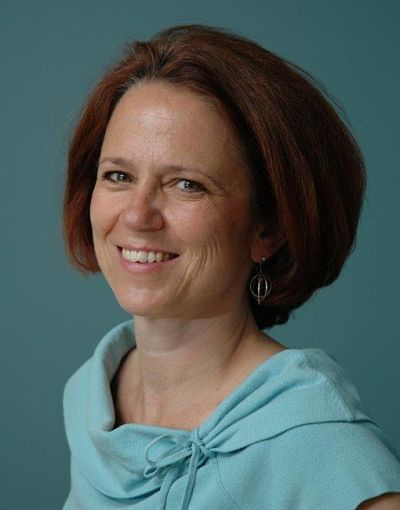




Could Distributed Peer Review Better Decide Grant Funding?
The landscape of academic grant funding is notoriously competitive and plagued by lengthy, bureaucratic processes, exacerbated by difficulties in finding willing reviewers. Distributed […]

In what he describes as the obverse of the Rhodes Must Fall campaign, Robert Dingwall argues that the secular sainthood conferred on Mary Seacole steps on historical scholarship and ignores more genuine exemplars.

A special issue of the Journal of Psychoeducational Assessment takes a comprehensive look at the history of measuring perfectionism and the strides being made in developing better ways to assess striving for excellence and its pernicious cousin, striving for perfection..
‘Are digital technologies making politics impossible?’ The inaugural Nine Dots Prize offers $100,000 for the best response as judged by leading international thinkers including Diane Coyle, Simon Goldhill, David Runciman and Saskia Sassen

Political economist Mark Blyth argues that in a highly indebted world, austerity – introduced as an ‘emergency’ measure to save the economy, to right the fiscal ship – has becomes a permanent state of affairs.

If the public institution is committed to public interest, then privatization of research and teaching cannot be allowed. Work done should be seen, heard and critiqued. Innovation in knowledge can come when people take away ideas from us, just as we did. Research should be made public, accountable and responsible. The data commons in public interest cannot be sacrificed at the altar of intellectual autonomy.

One of the first four graduates of MIT’s Department of Psychology and a pioneer for data-intensive studies of vision and cognition, Whitman Richards died on Sept. 16 at his home. He was 84.
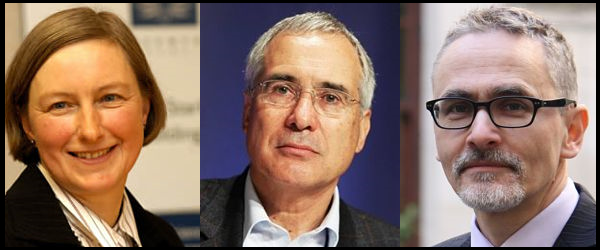
The Academy of Social Sciences has conferred the award of fellow on 83 leading social scientists, including such luminaries as Lord Stern, Nudge Unit founder David Halpern and Madeleine Atkins of HEFCE.
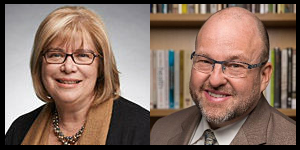
After more six years at the helm of Canada’s Federation for the Humanities and Social Sciences, Jean-Marc Mangin has stepped down. Christine Tausig Ford, formerly of Universities Canada,has been named interim executive director.


Euan Adie, the founder of Altmetric and later of Overton, discusses the reasons the led to Overton’s focus on showing researchers how […] Here’s a couple of quick questions for you. What is the smallest of the eight discipline-based directorates at the United States’ National […] Sage’s 10-Year Impact Awards recognize academic papers appearing in Sage-published journals that have achieved lasting impact. The winning papers are the most […] I was adding some final flourishes on the topic of ‘iatrocracy’ to my forthcoming book with Natewindé Sawadogo – Sickness and Social […] How is AI changing the shape and space of higher education? Critical thinking continues to rank highly among key skills and attributes […] My colleagues and I recently spoke with a group of talented, interesting students who just completed their first year of college about […]
EXPLORE
Impact

Quick Insight: Euan Adie on Getting Academics Credit for Their Impact
READ MORE

NSF’s Embattled SBE Directorate Shown as Agency’s Policy Heavyweight
READ MORE

Sage’s 10-Year Impact Awards Capture Longer-Term Significance
READ MORE
Innovation

AI and ‘Iatrocracy’ – A Cautionary Tale
READ MORE

The Critical Student: How GenAI Reshapes Critical Skills and Higher Education’s Role Preparing Students For It
READ MORE

AI Doesn’t Drive Student Cheating. It Just Hitches a Ride
READ MORE