The LSE Big Questions Lecture 2011: Organized Common Sense
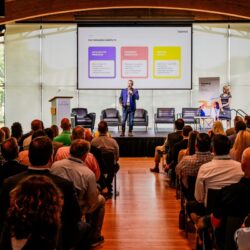
In June 2011, I was lucky enough to deliver the inaugural LSE Big Questions Lecture. I chose to lecture on whether the East was taking over the world. I felt these changes in the world matter to everyone, and they are developments with important economic ideas surrounding them. The LSE Big Questions Lecture is targeted at 14 year-old school children in a number of London’s schools — hundreds showed up on the day. The lecture itself was televised for subsequent broadcast. The runup to this lecture involved months working with a production team at LSE: these were months of planning and rehearsing, writing and rewriting, arguing and disagreeing — on analytical content and ideas, on what 14 year-olds might find useful and understandable and memorable, on the best ways to communicate different ideas in economics and facts about the world.
Why did we do this?
As an academic economist, I study growth and distribution. I write about the shifting global economy and the rise of the East. I try to make large things visible to the human eye. I want to be considered a valuable REF contributor to my department and to the LSE.
But I also believe that these are times where economic literacy matters hugely, not least in societies that continue to hold to the ideals of liberal democracies. And there are intriguing large-scale parallels between important events now and those some time ago in history.
In 1825 Michael Faraday — perhaps the world’s greatest ever experimental scientist — initiated (but did not himself give) the first of the Royal Institution of Great Britain’s Christmas Lectures. Faraday went on to deliver 19 series altogether of these annual Lectures, his last in 1860, presenting and explaining to the British public ongoing discoveries in chemistry and electricity and magnetism.
The Royal Institution Christmas Lectures have continued to the present, interrupted only by World War 2. They are delivered to a general audience, notably including young people, with the aim to inform and entertain. From their beginning, these lectures proved highly popular despite the limited nature to early 19th century organised education. Since 1966 the Royal Institution Christmas Lectures have been televised. For many British households, the Christmas Lectures constitute a highlight of annual holiday family viewing. The energy and the ingenuity that go into the lectures are impressive, not least when, say, someone like Marcus du Sautoy, in his 2006 lectures, explains abstract number theory to a teenage audience.
These Royal Institution Christmas lectures provide the strongest counter-example I know to the conceit that research ideas are too difficult to explain to and too abstruse to excite the general public. Most of us just don’t work hard enough at it. So getting to deliver something the LSE Big Questions Lecture would be a challenge. But there was more….
Read the rest at Danny Quah’s Blog