Listen: ‘Thou Shalt Commit a Social Science’
Tim Harford
Last week the Campaign for Social Science celebrated its third birthday of advocacy by kicking off a project to demonstrate the value of social science to British policymakers and members of parliament before the May 2015 general election and the spending review that will follow in the fall.
As the chair of the effort, James Wilsdon, explained to Social Science Space last week, the project will produce a smart 40-page or so report by January to both give to the decision-makers in hope of fostering a larger conversation on the impact of social science on the nation’s governance, economy and culture.
Social science has suffered from flat government spending in the last half decade, and that’s something its UK partisans are anxious to see change. “I think there’s a more enlightened position in the UK, notwithstanding that warning from W.H. Auden where he said, ‘Thou shalt not sit with statisticians nor commit a social science.’ Ziyad Marar, SAGE’s global publishing director, remarked at the central London club where the campaign marked its birthday last week. Indeed, UK social science isn’t the partisan whipping boy that it is in other counties, such as the United States “I think there are indeed many more reasons to feel a little bit more cheerful and that’s in no small part thanks to a lot of people in this very room.”
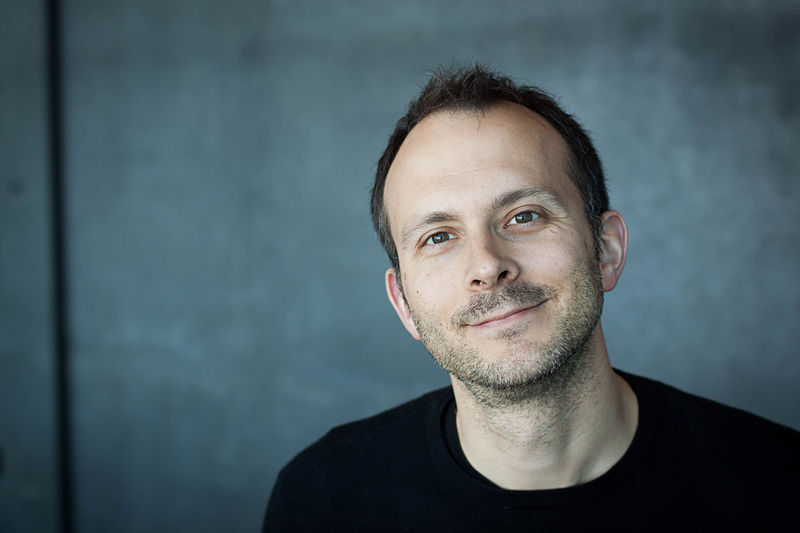
Among those present, such as Wilsdon and Ivor Crewe, who heads the Academy of Social Sciences (the parent of the Campaign for Social Science), was journalist Tim Harford – “Financial Times columnist, writer, broadcaster, and, I think one of the most thoughtful, powerful, and intelligent communicators of economic and social sciences out there anywhere in the media,” as Wilsdon introduced him.
“I’m really just a storyteller,” Harford replied, and then launched into a tale of policy and social science that ended with a cautionary moral that policy without evidence is generally poor policy.
Harford’s story – please listen to a recording of it below, road noise and all – concerns the biologist Garrett Hardin, who coined the term “tragedy of the commons” (“one of those phrases that leaps out of academia,” Harford noted) to describe what happens lots of people share in a resource and no one manages it. The word ‘tragedy’ gives an idea of what happens, Hardin theorized.
Theorized.
Harford then introduces another character into his story, Elinor Ostrom, a political scientist who studied actual “common-pool resources.”
Studied.
Without giving away too much of Harford’s tale—although as with any good storyteller it’s the telling that provides much of the charm, not just the plot—Ostrom “knew, from her own research, that [Hardin] was wrong” about the inevitability of tragedy. ““It’s not inevitable; it’s a problem, a problem that can be studied and also a problem that can be solved.”
In that vein, the Campaign’s campaign–funded in part by SAGE, which is the parent of Social Science Space—expects to present its evidence, written by a working group of at least a dozen experts drawn from key disciplines and social-science-based pursuits, is expected to be published in January 2015. Among the Campaign’s activities, it lobbies for the restoration of the post of Government Chief Social Science Advisor and the retention of large-scale longitudinal research programs, promotes social science in the media and on the web, and organizes roadshows and other events to emphasize the value of social science. The Campaign is supported by 80 institutions, including universities, learned societies, publishers and a charitable trust.