Diane Reay on Education and Class
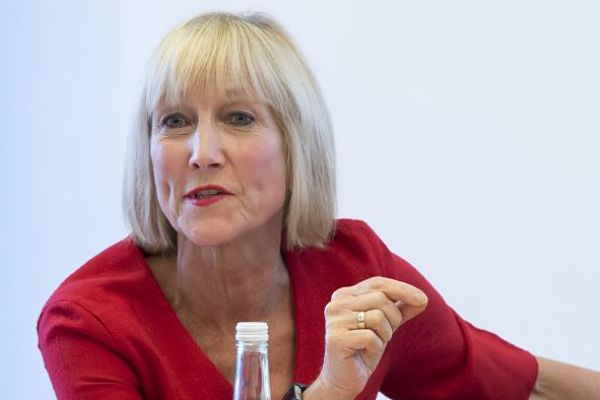
Diane Reay grew up in a council estate in a coal mining part of Derbyshire in England’s East Midlands. Those working-class roots dogged her from the start of her formal schooling.
“I had to fight not to be in the bottom set; I was told that girls like me don’t go to university,” Reay, now a renowned Cambridge University education professor, tells interviewer David Edmonds in this Social Science Bites podcast. “I think that spurred a strong interest in class inequalities and I became, like many working-class girls of my age, a primary school teacher.”
She in turn taught working-class children. Her primary motivation “was to make things better for them than it had been for me as a school pupil.”
To which, she adds, “and I failed. I failed for a whole lot of reasons, but mainly to do with poor policy and an increasing focus on performativity and competition rather than fulfilling a child’s potential.”
Those experiences in turn had a big influence on her research interests into educational inequality and embrace of social justice. Some of her specific investigations have looked at boys’ underachievement, supplementary schooling of black students, access to higher education, female management in schools, and pupil peer group cultures.
One thing has become clear to her across this research – “It’s primarily working-class children who turn out to be losers in the educational system.” Whether it’s through the worst-funded schools, least-qualified teachers, most-temporary teaching arrangements or narrowest curricula, students from working class backgrounds in the United Kingdom (and the United States) draw the shortest educational straws.
Reay, under the banner of Britain’s Economic and Social Research Council, recently directed a project explores choice in education and how that affects white, middle-class identity. Her research is qualitative, albeit at a large scale (she tells Edmonds she’s done 1,170 interviews over 25 years). “I recognize that qualitative research can’t tell us the entire story in toto. That’s why I’m always very keen to use statistical data and quantitative research to support my qualitative analysis.” Using that statistical material serves a check, too, on confirmation bias she might bring to a research question.
That said, she adds, “Some very important things can’t actually be counted. They can’t be enumerated. And they’re about the quality of the learning experience, the quality of the child’s engagement with peers in the classroom, and with curriculum. I think this focus on counting means we have a very reductive curriculum.”
That policymakers see education as solely a means of preparing young people for the labor market, and not as an end in itself, as “inherently problematic.” The perceived need to measure all outputs all the time and to focus on making future employees instead of future citizens are pernicious, Reay says, but there are policy-based remedies. She suggests, for example, mixed ability teaching, delaying assessment until children reach 16, collaborative learning and teaching critical thinking skills as counteracting some of the worst problems of the current system.
This year, Policy Press published Reay’s book Miseducation: Inequality, Education and the Working Classes, which draws from 500 of those interviews and a healthy heaping of statistical evidence supporting her conclusions. Reay is also an executive editor of British Journal of Sociology of Education, and is on the editorial boards of Cultural Sociology and the Journal of Education Policy.
To download an MP3 of this podcast, right-click HERE and save.
***
For a complete listing of past Social Science Bites podcasts, click HERE. You can follow Bites on Twitter @socialscibites and David Edmonds @DavidEdmonds100.