Higher Education’s COVID-19 Online Pivot: Students
I posted a piece on what it will mean for educators and institutions to shift online as a result of COVID-19. And most of the articles and advice out there is aimed at educators, but we should bear in mind that it is an unfamiliar experience for many students, too. One of the functions of face to face education is that it does a lot of the organizing for a student: here is a timetable, here are locations to be in, here is where the resources can be found, etc. The physical structure of a campus is also a time and planning structure. When you move online (depending on how it’s realized) a lot of that structure is removed.
This can be a benefit, if you’re not a morning person, no more having to struggle to get to that 9 a.m. lecture on a Thursday. But this increased agency brings with it increased responsibility. It also presents lots of different problems which access to campus spaces usually solves, such as do you have a place you can study? Do you have access to technology? Will others around you respect your study time? This is something we spend a lot of time thinking about at the Open University, preparing students to be distant learners.
Here are some useful links:
- Being an OU student – the OU created an open course on preparing to be a distance learner. Although it’s OU specific there is a lot of general advice in here that is useful.
- 8 ways students and staff can engage in remote collaboration – via Sue Beckingham, written by students when bad weather caused closures.
- Keep calm and carry on learning! by students – again from Sue’s students
- What Makes a Successful Online Learner? – advice from Minnesota State
- How to Become an Online Learner – EdX course from Kiron
- Student suggestions thread – from Jessie Male
- Tips for online study – Selina Griffin shares her tips from being an online student
- MOOC on Tackling Coronavirus – not really student advice, but the London School of Hygiene & Tropical Medicine probably know their stuff in this area
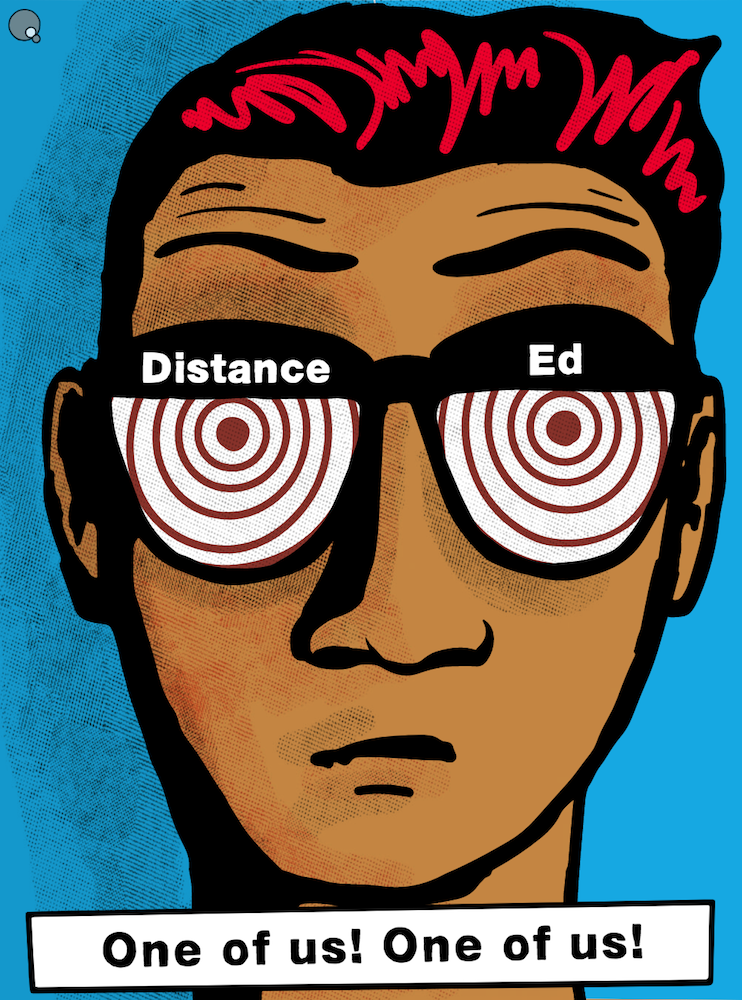
I’ve been an student as well as writing lots of courses, so my advice would be:
- Get organized! – specify a time slot every week (eg Sunday evening for 30 minutes) to plan the study you have coming up that week and other commitments. You may have to take on some of the role of being your own timetabler now. It doesn’t take long but it does pay off.
- Get agreement from those around you – if you are studying at home or in shared accommodation, let people know that when you are studying (put a big “I’m studying” sign on the door) they should respect that. No “come on, let’s go to the pub” requests.
- Get your study space sorted – if you can set up or rearrange a physical space in your home, do that. Make it comfortable. If that is not possible, then find somewhere you do feel relaxed, whether it’s the library or the nearest Starbucks. But make it feel like a good place to be.
- Engage in online discussion – studying alone can be isolating, so there will be forums for discussion, and if there aren’t try and create some (yes, even if it’s a Facebook group, Slack channel or whatever).
- Read carefully – what you need to do should be explained. But make sure you read what is actually asked of you, and not what you thought was asked of you. And..
- If unsure, ask – you are likely to need more clarification online than in a face to face setting, and you can bet if you aren’t sure, then others are in the same boat.
- Be strategic – I probably shouldn’t say this, but we know a lot of our students are strategic studiers. Particularly if you start to fall behind, then you probably don’t need to do and read everything. Determine the best path through study that will get you a grade. Any grade is better than no grade.
- Be patient – this may be new to you and your educators. Things may not work first time. It will be better if you take it in a spirit of co-exploration.
- Enjoy it – there are lots of benefits to studying online, so try to make these work for you.
Good luck everyone, welcome to the fabulous world of distance education. It was waiting for you all along.