Teaching

Watch Video: Inspiring Creativity and Curiosity When Teaching Online

March 16, 2021 4499

“What is a question that you don’t know the answer to, and that you aren’t sure has an answer at all?”

This past year has been like no other. As the pandemic hit, teachers were forced to move online and to adapt their teaching practices to the new virtual learning environment. Students and teachers settled into this routine quickly, but as time went on, it became hard to maintain the engagement that comes more easily in the classroom. Tips, tricks and tools emerged, including The Distance Learning Playbook by Douglas Fisher and Nancy Frey, but what about a more abstract approach to inspire curiosity and creativity? 

Enter Sarah Newman, Director of Art & Education at metaLAB at Harvard, and a fellow at the Berkman Klein Center for Internet & Society. Working at the intersection of research and art, her work engages with technology’s role in human experience. In addition to her art practice, she is also a facilitator and educator, and leads customized workshops that use creative materials to address interdisciplinary research problems. Newman adapted these workshops last year to work in an online setting, and has been inspiring others to teach and learn with physical materials in virtual environments.

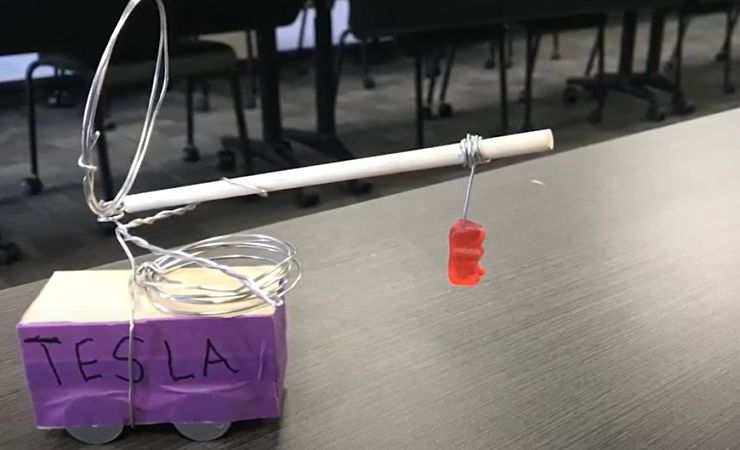
Intrigued? Watch this video, where Newman guides you through the process of setting up a similar workshop, leveraging art and design thinking to spark creativity and engagement. 

Sage, the parent of Social Science Space, is a global academic publisher of books, journals, and library resources with a growing range of technologies to enable discovery, access, and engagement. Believing that research and education are critical in shaping society, 24-year-old Sara Miller McCune founded Sage in 1965. Today, we are controlled by a group of trustees charged with maintaining our independence and mission indefinitely. 


View all posts by Sage

Related Articles

New Series Offers Quick Insights on Today’s Issues
Insights
June 9, 2026

New Series Offers Quick Insights on Today’s Issues

Read Now
Quick Insight: Mahzarin Banaji on the Bias in the Machine
Insights
June 9, 2026

Quick Insight: Mahzarin Banaji on the Bias in the Machine

Read Now
Hazel Markus: We Don’t Have to be Afraid of Difference
Recognition
June 4, 2026

Hazel Markus: We Don’t Have to be Afraid of Difference

Read Now
The Visual Authority Trap
Critical Thinking
April 30, 2026

The Visual Authority Trap

Read Now
From ‘Which Database?’ to ‘Under What Conditions?’: Teaching Critical Thinking Through Search Tool Selection in an AI Age

From ‘Which Database?’ to ‘Under What Conditions?’: Teaching Critical Thinking Through Search Tool Selection in an AI Age

A few years ago, if you asked students where they began their research, the answer was predictable: “Google” or “Google Scholar.” Today, […]

Read Now
The 3E Cycle: Establish-Examine-Evolve as a Structured Model to Foster Critical Thinking

The 3E Cycle: Establish-Examine-Evolve as a Structured Model to Foster Critical Thinking

In university classroom, I once asked my undergraduate students if a particular policy decision had strengthened or weakened the national economy. Few […]

Read Now
Beyond Fact-Checking: Making Critical Thinking an Everyday Multimodal Habit

Beyond Fact-Checking: Making Critical Thinking an Everyday Multimodal Habit

Students now encounter arguments mainly through digital feeds. These arguments are layered with music, editing, facial expressions, captions, filters, AI-generated imagery, and […]

Read Now
5 2 votes
Article Rating
Subscribe
Notify of
guest

This site uses Akismet to reduce spam. Learn how your comment data is processed.

0 Comments
Newest
Oldest Most Voted
Inline Feedbacks
View all comments