Pandemic London – and the Future of Publishing?
Last week, I spent a very pleasant evening at one of the surviving medieval churches in the City of London – the foundations of St Giles Cripplegate go back at least one thousand years, although most of the present building dates to 1304, via several restorations. The occasion was the launch of Breakable by Sue Julians, one woman’s account of everyday life in pandemic London during 2020 and 2021. I should declare an interest, as the author of a foreword, but it is a remarkable book and merits a wide readership.
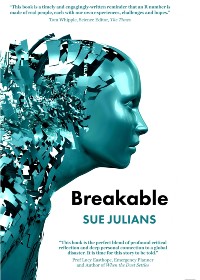
Sue is a physical therapist with a successful private practice in the City, mostly serving the staff of large financial and law firms. It is the sort of small business that was overlooked by many of the schemes that the UK government launched to sustain economic life in anticipation of an eventual end to the pandemic. Although her childhood in Scotland had been secure rather than affluent, her husband is a leading member of a well-paid profession, and she is the first to concede that her current existence is a privileged one. This, however, is part of the power of the book – if it was like this for me, she keeps asking, how was it for people who were poor, brown, black, unhoused, alone, living in overcrowded housing rather than an expensive residential district?
She describes one encounter with the police in April 2020, when her husband was reprimanded for having left their own neighborhood with a camera – his photos illustrate the book. This apparently implied that they were ‘sightseeing’ rather than taking ‘permitted exercise.’ Apparently, they should have been wearing Lycra and walking continuously rather than stopping to take photographs… Suitably chastised, they left as the police began a sweep of the adjacent park, moving on a couple who were batting a shuttlecock with their 2-year-old for not exercising properly. Sue had several such encounters but the police backed away from fining a white woman with professional authority. Others clearly had a much harder time, especially with ill-drafted laws administered by kangaroo courts.
The book is particularly moving about the impact on her children and the misery inflicted upon their lives by prolonged school closures. Sue contains her anger on the page, but the reader is left in no doubt about the feeling that underlies her words. Her house has space and resources. The neighborhood has a degree of solidarity among the well-off professionals who live in it. These assets were not shared on the other side of the city, where other people took risks to protect the laptop class like her neighbors and clients. If school closures hit my children this hard, she asks, what did it do to the ones across town? How much permanent damage will there be to the education, mental and physical health of this generation? Was it all worth it in the end?
Thinking about the book, I am also struck by the circumstances of its production. There has long been a big gulf between the behemoths of trade and academic publishing and the vanity publishers who took money from gullible authors to produce shoddy volumes with minimal care. Social and technological change have transformed this picture.
Sue struggled to find an agent or publisher in a conventional way. Given her experience as an entrepreneur, she decided to explore independent publishing. This turns out to be increasingly accessible for initial outlays that are relatively modest, at least by the standards of her class. The outsourcing of much work by large firms means that there is a pool of copy editors and designers who can create a professional-looking volume. Print-on-demand means that there is no longer a need to finance large stocks and warehouse space. Marketing is facilitated by social media and the proliferation of book groups, small literary festivals and the like – much of which all but the most prominent authors would have to do for themselves anyway. Internet bookstores can take care of the work to fulfill orders. Online intermediaries are increasingly able to support authors to commission and supervise as many or as few of these tasks as they choose.
I wonder whether this is the real future of the academic monograph. Can we imagine an ecosystem where individual academics, possibly helped by entrepreneurial intermediaries, sidestep the overheads of the big presses – commercial or university – to publish and market their own work? Is this the way to break the apparently iron laws of scale that bring short-run monographs to market at prices in excess of 100 dollars, pounds or euros, guaranteeing that the sales volume will always struggle to cover the fixed costs? Sue’s book is not an academic one, and does not pretend to be, although it should be read by any social scientist or policymaker concerned about the impact of ill-thought-out and poorly evidenced mass interventions. However, I, for one, shall also be watching its commercial fate with considerable interest.