Preventing Fatal Police Shootings: It Can Be Done – Archived Webinar
The shooting of Brenna Taylor, an emergency medical technician who was shot and killed by police officers in her own home it what was likely a botched search warrant has brought the subject of fatal shootings of citizens by police back into high relief in the United States. Every year more than 1,000 Americans die during encounters between police and citizens. And contrary to U.S. Supreme Court opinions, fatal shootings do not inevitably arise from split-second decisions; they are preventable by a broad range of interventions in systems and institutions.
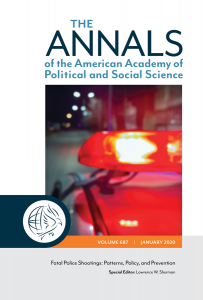
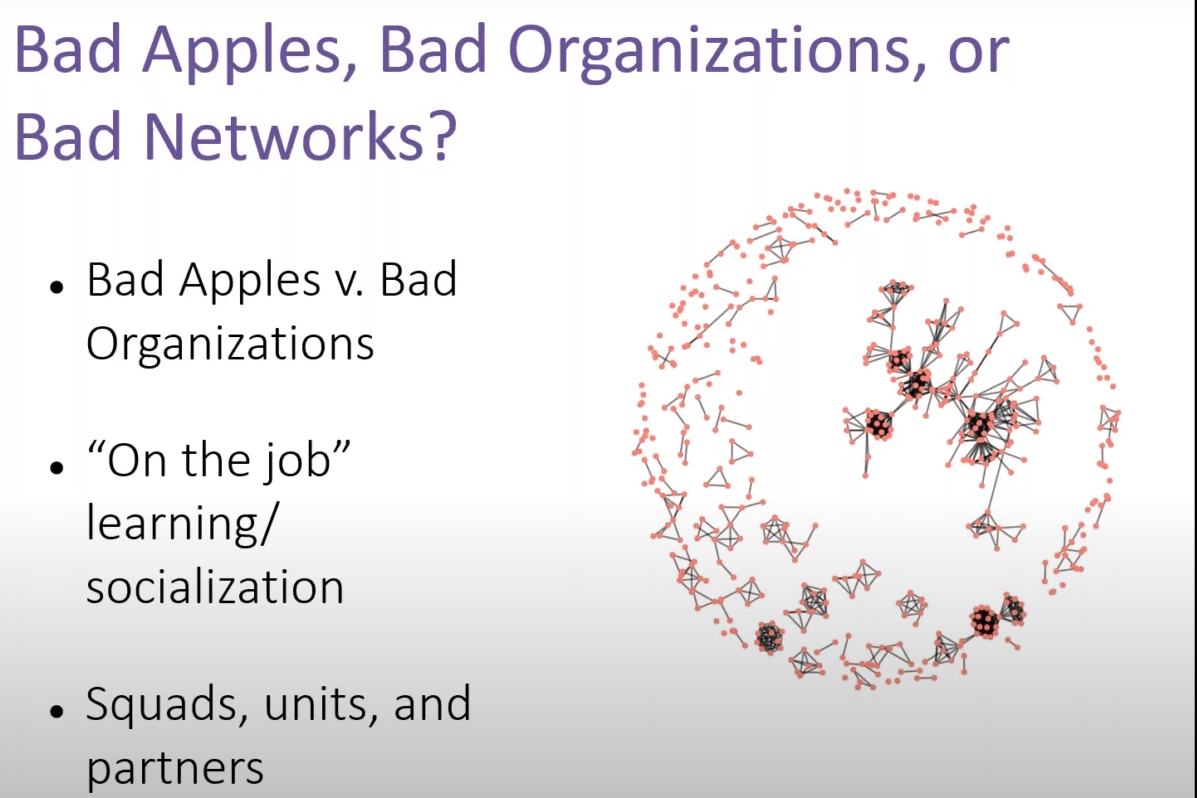
In this hour-long webinar, sponsored by Social Science Space and the American Academy of Political and Social Science, learn about the real-life experience of an academic turned police chief, how social network analysis can help predict trouble, and how a better understanding of people with psychiatric or substance issues can help defuse (or even avoid) confrontations. Hosting the webinar is Lawrence Sherman, who recently edited a volume of The ANNALS of the American Academy of Political & Social Science on this topic – it’s currently free to read. He’s joined by eminent social scientists Robin Engel, Andrew Papachristos, Harold Pollack and Linda Zhao as panelists.
Robin Engel is a criminologist and professor at the University of Cincinnati, where she is also the vice president for safety and reform. She is also the former director the University of Cincinnati’s Institute of Crime Science.
Andrew Papachristos is a professor of sociology at Northwestern University where he is also the director of the Northwestern Network and Neighborhood Initiative.
Harold Pollack is the Helen Ross Professor at the School of Social Service Administration at the University of Chicago. He is the co-founder of the University of Chicago Crime Lab and is co-director of the University of Chicago Health Lab.
Lawrence Sherman is a criminologist and police educator, founder of evidenced-based policing. He is the director of the Cambridge Center for Evidence-Based Policing at Cambridge University, where he is also the Director of the Police Executive Programme and the Director of Research at the Jerry Lee Center for Experimental Criminology. He is a former president of the American Academy of Political and Social Science. (You can listen to his 2013 Social Science Bites podcast HERE.)
Linda Zhao is currently a doctoral student in Harvard University’s Department of Sociology. She is motivated by an interest in the networks and spatial processes that relate to patterns of inequality, and has an interest in quantitative methods, computational sociology, and the social determinants of health.