The Case For Democracy In The Covid 19 Pandemic
This book, written between March and May, during ‘lockdown’ in the UK, is a spontaneous analysis of a disturbing global drama that continues to disrupt normal standards of science, public health, human rights and medical ethics in ways few people thought possible at the start of 2020.
For weeks, in the initial stages of the pandemic, governments took advice almost exclusively from like-minded epidemiologists and public health doctors. This small collection of establishment people simply disregarded entirely predictable negative impacts on so many other aspects of social life.
There was no attempt at democratic consultation, and the assumption that we live in accountable democracies, with unalienable rights, was erased with Orwellian disdain. It quickly became clear that it is impossible for citizens to challenge governments. The cherished notion of informed consent to health measures has been replaced by a slew of hastily drafted legislation which has made previously normal, innocent actions criminal offences.

The Case for Democracy includes many examples of the failure of decision-makers to understand the meaning of evidence, to balance risks of disease with multiple other risks, and to follow the advice of their own professional bodies about what to do if there is a pandemic.
However, cataloguing unfounded decision-making is not the main purpose of the book. After all, any competent person with internet access and a little determination can discover the deluge of errors, unethical laws and false reasoning for him or herself. Rather the book tries first to understand how apparently sane people could possibly think it made sense to implement such massively damaging policies, and secondly asks how we, the public, might ensure that such a disastrous episode can never happen again.
My explanation is simple: the ‘experts’ are subject to biases and errors of thought well-known to every first-year psychology student, yet none of them seem to realise it. The text-book examples of mistaken thinking include: ‘social amplification’ where new risks are falsely perceived as worse than existing dangers; ‘attentional bias’ where only very specific things are noticed while other relevant matters are ignored; and ‘confirmation bias’ in which only information that strengthens one’s prior view is valued – making it extremely difficult to assess alternatives fairly, and even harder to admit when you are wrong.
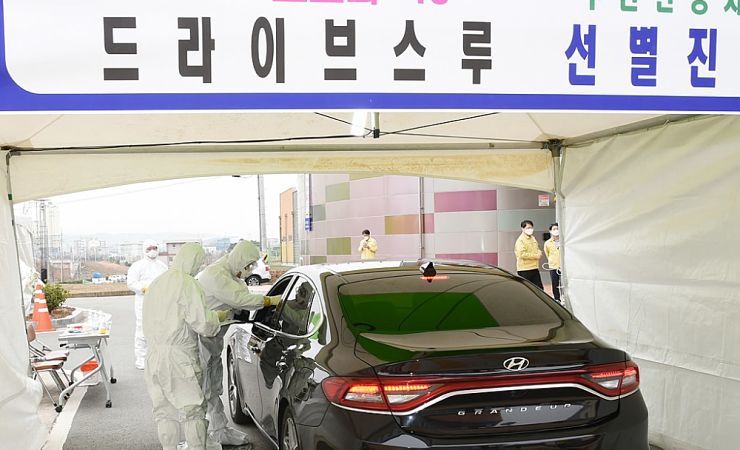
‘Group think’ amongst politicians has been ubiquitous. Apart from Sweden and South Korea, politicians right, left and centre have rushed either to copy or outdo each other, without seeming to question the sense of this. The ‘Dunning-Kruger Effect’, in which people with low ability at a task overestimate their competence while feeling superior to others has been equally widespread.
In the book, I use the notion of ‘rational field blindness’ to illuminate these elementary mistakes. Rational fields do involve evidence, logic, and science, but these factors are always selected and interpreted according to values, human instincts, linguistic classifications, and the physical and social environment. When policymakers are blind to this, their reasoning, choices, and actions inevitably become dangerously skewed and short-sighted.
These factors underpin the book’s argument for inclusive, participatory democracy: if the chief problem has been an unduly limited number of options for action, an obvious alternative is to broaden decision-making processes to include diverse voices, knowledge, values, experiences and cultures – as a practical, effective way to arrive at well-informed consensus.
The Case for Democracy is published by SAGE Publishing, which is the parent of Social Science Space.