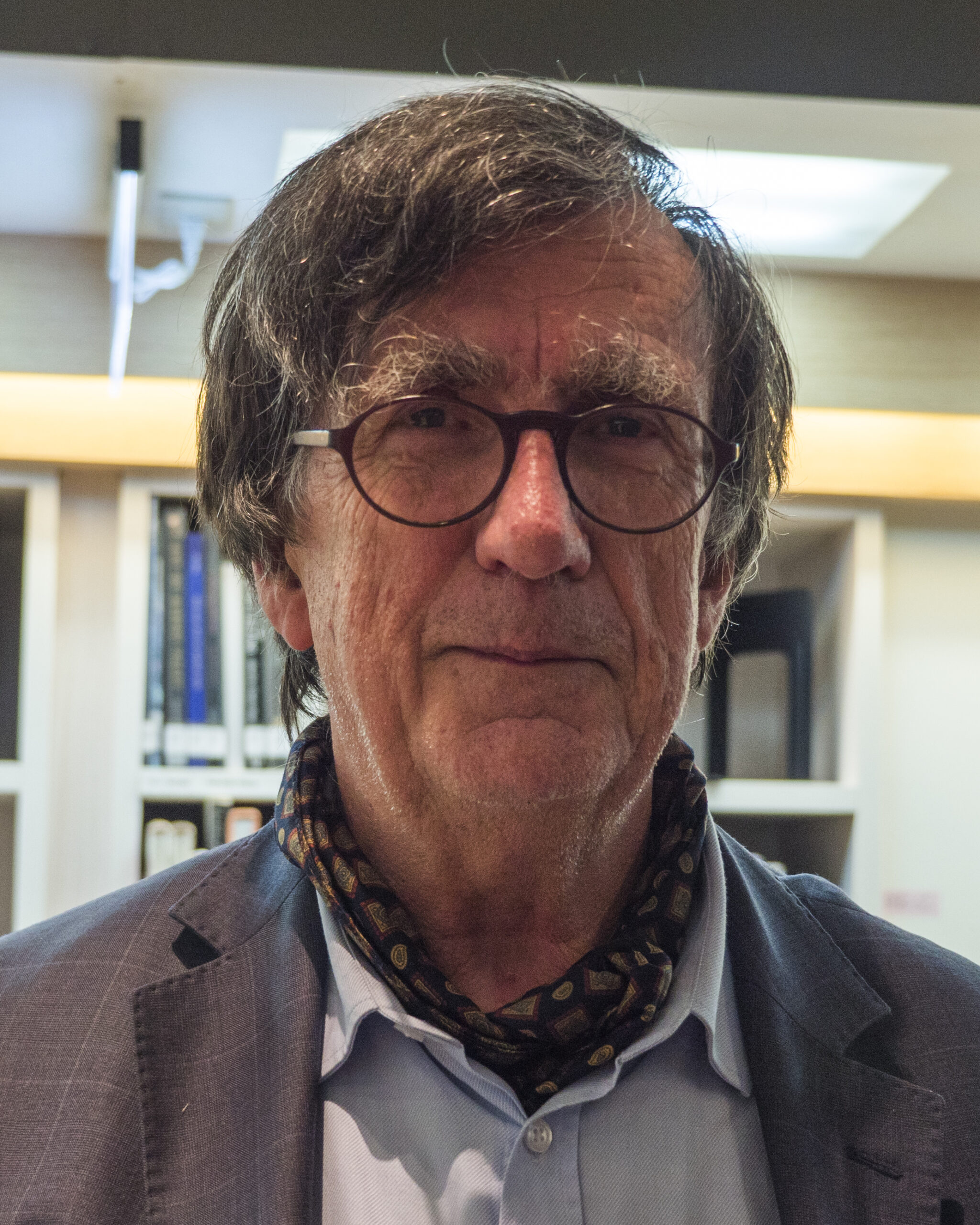
Bruno Latour, 1947-2022: France’s Least Understood Philosopher
Bruno Latour, “France’s most famous and least understood philosopher,” died of pancreatic cancer in Paris on October 9, 2022. He was 75.
Latour was a philosopher, sociologist and anthropologist whose work centered on the assertion that facts do not exist on their own, but rather are generated and advanced within society’s networks. His books often studied the epistemology of scientific knowledge and how sociological factors influenced research and the dissemination of its findings.
(Photo: Wikimedia Commons/CC BY-SA 4.0)
His 1979 book, Laboratory Life: the Social Construction of Scientific Facts, co-written with Steve Woolgar, took an ethnographic approach to studying scientists in a laboratory setting to determine how the scientific method is observed. Building on this body of work, his 1988 book The Pasteurization of France analyzed the social forces at work which led to the propagation of Louis Pasteur’s theories.
He was an advocate for trust in science and clarifying the process to increase the public’s trust in institutions. In an interview with The New York Times in 2018, he stated “facts remain robust only when they are supported by a common culture, by institutions that can be trusted, by a more or less decent public life, by more or less reliable media.”
Latour was born in in 1947 in Beaune, France to a family of winemakers. He studied at the University of Dijon beginning in 1966, and completed his doctorate in theology from the University of Tours in 1975. He taught at the Centre de sociologie de l’innovation at the École des Mines in Paris from 1982 to 2006, when he went to Sciences Po Paris until retiring in 2017.
Over the course of his career, Latour published over 20 books, collaborated on art exhibitions and launched international lecture series. He was the 2013 recipient of the Holberg Prize for his broad-ranging contributions to the analysis of modernity, the 2021 Kyoto Prize winner in the “Thought and Ethics” category and received the French Légion d’Honneur in 2012.
Later in life, his interests also included political ecology and climate change, which increased his fame in France. His friend, Patrice Maniglier, stated “It is to history that Latour owes this belated favor. It took nothing less than a cosmic event: global warming.”
He is survived by his wife, Chantal, their children — Chloé and Robinson — and three grandchildren.