



Could Distributed Peer Review Better Decide Grant Funding?
The landscape of academic grant funding is notoriously competitive and plagued by lengthy, bureaucratic processes, exacerbated by difficulties in finding willing reviewers. Distributed […]
Researchers whose work has made a real difference to society or the economy, ranging from detailing the true numbers of modern slavery to transforming how we teach about sexuality, were celebrated at the ESRC’s sixth annual Impact Prize awards ceremony at the Royal Society on today.
The winners of the annual ESRC Celebrating Impact Prize will be announced Wednesday in an afternoon ceremony at the Royal Society. The Impact awards, now in their sixth year, are awarded to ESRC-funded social science researchers or ESRC associates who have achieved impact through outstanding research, collaborative partnerships, engagement or knowledge exchange activities.
A new report from Britain’s Campaign for Social Science, Positive Prospects: Careers for Social Scientists and Why Data and Number Skills Matter, argues that at least for the social sciences, graduates in the United Kingdom can find work and will make as much as the body of physical science and technology graduates that are held up as the most marketable.
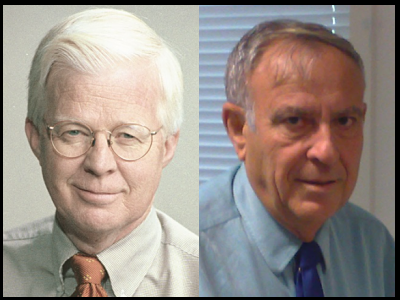
Barry Bosworth, the Robert V. Roosa Chair in International Economics at the Brookings Institution, and Danny Pfeffermann, director of Israel’s Central Bureau of Statistics, will receive the 2018 Julius Shiskin Memorial Award for Economic Statistics.
How do firms transform big data and why do firms differ in their abilities to create value from big data? in a research article that tries to find answers to these questions. Jing Zeng and Keith Glaister find “it is not the data itself, or individual data scientists, that generate value creation opportunities. Rather, value creation occurs through the process of data management.”

There is no doubt that good communications and framing research for your audience is important to influencing policy and having impact. But shouldn’t we be aiming higher than producing and packaging research that simply meets the demands of policy actors? James Georgalakis argues that research and researchers need to challenge dominant paradigms and expose inconvenient truths.

Tina Basi and Mona Sloane argue that REF 2021 offers the opportunity to frame a discussion on the purpose of universities that is less focused on economics and more focused on people and public engagement, returning closer to the Humboldtian model of higher education.
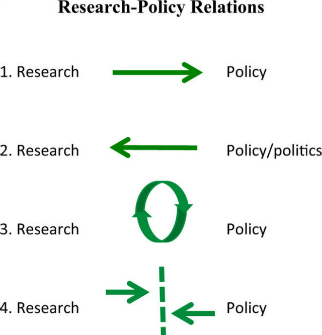
Christina Boswell and Katherine Smith set out four different approaches to theorizing the relationship between knowledge and policy and consider what each of these suggests about approaches to incentivising and measuring research impact.
Jürgen Habermas, a globally known social theorist whose explorations of democracy, validity and communication have gained new prominence in the current moment, […] People often see science as a world apart: cool, rational and untouched by persuasion or performance. In this view, scientists simply discover […] “Research impact” means different things to different people. Some refer broadly to how science changes behaviors, beliefs, or practices outside academic institutions. […] David Canter considers informal places where people socialize, suggesting they’re an arena ChatGPT and other LLMs can’no’t replicate. As someone who lives […] It’s become cliche since Clive Humbly coined it in 2006, but data is indeed the new oil. It’s a mantra repeated by […] In September 2025, The Guardian reported about a lawyer in Australia having faced sanctions due to false citations. These citations were not […]
EXPLORE
Impact

Jürgen Habermas, 1929-2026: Exponent of the Public Sphere
READ MORE

Scientists Should Keep in Mind It’s Called the ‘Marketplace of Ideas’ for a Reason
READ MORE

Survey Finds Social Scientists Feel Unsupported in Seeking Societal Impact
READ MORE
Innovation

Reaching Parts to Which AI Has No Access
READ MORE

Andrea Medina-Smith on Making Research Data More FAIR
READ MORE

A Status Check on Hallucinated Case Law Incidents
READ MORE