


Could Distributed Peer Review Better Decide Grant Funding?
The landscape of academic grant funding is notoriously competitive and plagued by lengthy, bureaucratic processes, exacerbated by difficulties in finding willing reviewers. Distributed […]
Canada’s Social Science and Humanities Research Council, now in its 40th year, handed out five Impact Prizes earlier this month to honor those showing the potential and applicability of government-funded research and exploration.

Valeria Izzi asks, when it comes to research for development, can we really have it all? Or are we setting the bar so high that researchers will be discouraged from even trying – instead embellishing their proposals with enough impact, partnership, and co-production jargon to win funding, before getting on with research as usual?

The president of the Social Science Research Council argues that that proliferation of data, data sharing and collaboration across private, government, and academic sectors requires a stewardship that social science can, at least in part, provide.
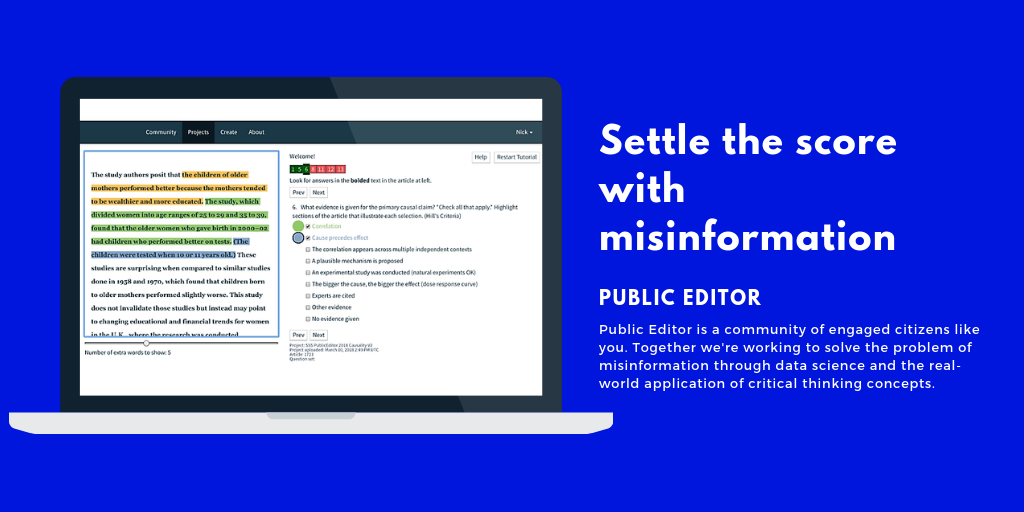
Sociologist Nick Adams’ TagWorks methodology is being used to rate — and in turn improve — the most shared news stories of the day via a new tool called PublicEditor.
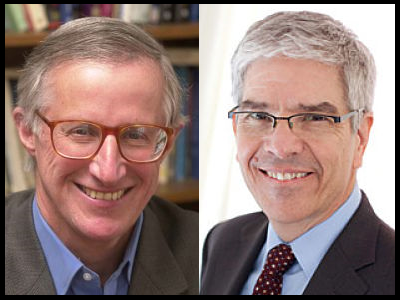
Two academics who have integrated what might have once seemed like non-economic externalities into economic models have been awarded the 2018 Nobel Prize in economics. The winners are William D. Nordhaus of Yale University, cited for integrating climate change into macroeconomic analysis, and Paul M. Romer of New York University’s Stern School of Business, cited doing the same with technological innovations.

Five people with backgrounds in social, behavioral or data science were among 25 named in the 2018 class of MacArthur Foundation fellows. The fellowship and grant program, sometimes referred to as the “genius grant,” awards exceptionally creative people with $625,000 – no strings attached — in expectation that based on their track record they will achieve something important in the future.

Walter Laquer, who fled the Holocaust, experienced the birth of Israel, founded the ‘Journal of Contemporary History,’ and was an unflinching sentinel against terrorism and an authoritarian Russia, died on September 30. He was 97.

The longtime director of the Royal Geographical Society, Rita Gardner CBE, will be the new chief executive of the United Kingdom’s Academy of Social Sciences. She fills the vacancy created by the retirement of Stephen Anderson after more than 10 years.

The Royal Swedish Academy of Sciences has awarded this year’s Nobel Prize in Economic Sciences to the American economists Robert E. Hall […] Four Americans working in the social and behavioral sciences are among the 20 people named MacArthur Fellows this year. Recipients may be […] Euan Adie, the founder of Altmetric and later of Overton, discusses the reasons the led to Overton’s focus on showing researchers how […] The following is an adapted extract from The Cultural Industries, fifth edition, by David Hesmondhalgh. The increasing presence of information technology (IT) […] Developers of AI data centers have a public trust problem. According to multiple surveys, a majority of Americans say they would oppose […] I was adding some final flourishes on the topic of ‘iatrocracy’ to my forthcoming book with Natewindé Sawadogo – Sickness and Social […]
EXPLORE
Impact
Economic Peaks, Troughs and This Year’s Nobelists in Economics
READ MORE

Four From Social Science World Receive 2026 MacArthur Fellowships
READ MORE

Quick Insight: Euan Adie on Getting Academics Credit for Their Impact
READ MORE
Innovation
IT Giants and Their Operations: Should We Be Concerned?
READ MORE

What We Miss When We Study Public Trust with Surveys Alone
READ MORE

AI and ‘Iatrocracy’ – A Cautionary Tale
READ MORE