

Could Distributed Peer Review Better Decide Grant Funding?
The landscape of academic grant funding is notoriously competitive and plagued by lengthy, bureaucratic processes, exacerbated by difficulties in finding willing reviewers. Distributed […]

The challenge of infusing the social sciences into what are generally viewed as biomedical issues has been a long and difficult one, as the recent WHO report on Ebola demonstrates. Oddly, this lesson has been learned many times before, but keeps getting forgotten.
‘Don’t judge a book by its cover – federal funding for odd or frivolous sounding research pays enormous societal, health, security, and economic dividends to the American taxpayer,’ argues a member of the steering committee for the Golden Goose Award.
A new report looking at the role of metrics in analyzing British academe finds, ‘A lot of the things we value most in academic culture resist simple quantification, and individual indicators can struggle to do justice to the richness and diversity of our research.’
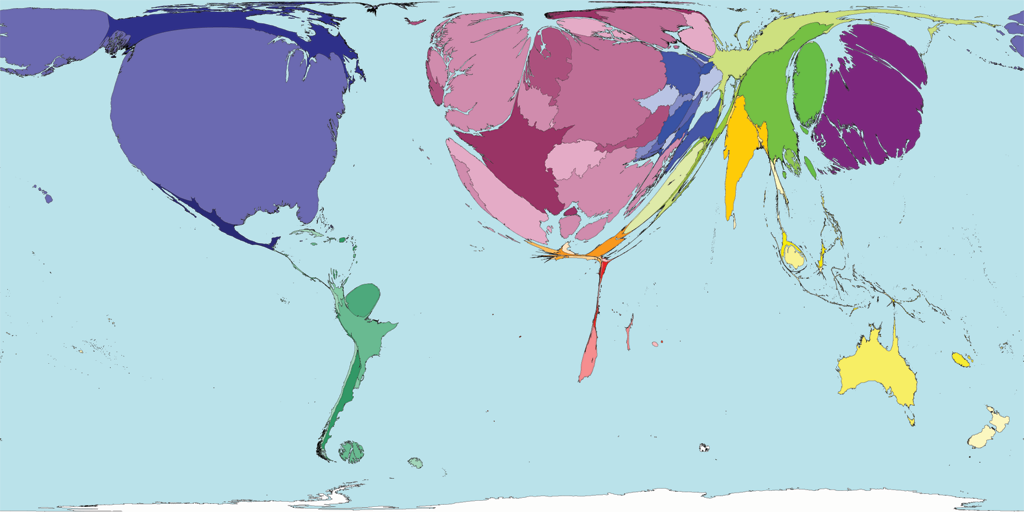
There is less research in the global south than in the north, but Laura Czerniewicz notes that there’s actually more than quick metrics capture and that perceptions of ‘science. and research outputs must be broadened.

Learning coach explains the “complexity of teaching” in his installment of a series detailing the contributions social science makes in everyday lives.
A professor of politics who reached millions with his and his team’s analysis of the Scottish independence referendum, a psychologist who helped […]
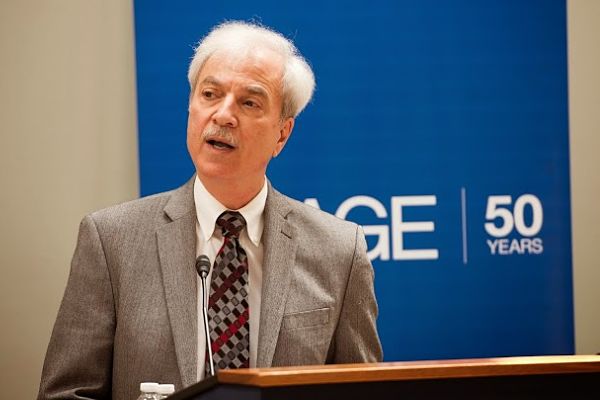
Historian and social justice professor Michael Reisch used the example of the case of Freddie Gray in his own home of Baltimore to show how much social science could add to examinations of poverty.
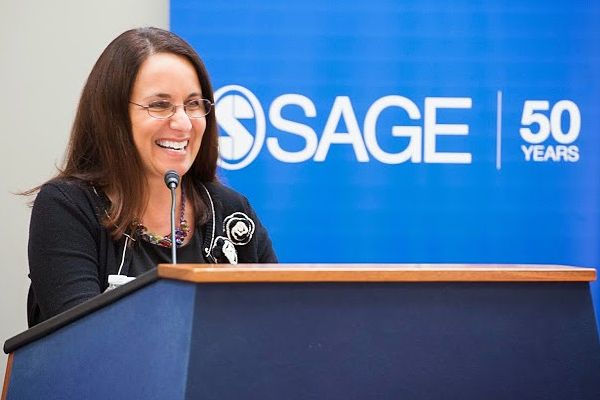
The fourth speaker in this series is Claire M. Renzetti, chair of the Department of Sociology at the University of Kentucky. Here she talks about the Violence Against Women Act of 1994, the same year that she agreed to be the founding editor of the international, interdisciplinary journal ‘Violence Against Women’.

Jürgen Habermas, a globally known social theorist whose explorations of democracy, validity and communication have gained new prominence in the current moment, […] People often see science as a world apart: cool, rational and untouched by persuasion or performance. In this view, scientists simply discover […] “Research impact” means different things to different people. Some refer broadly to how science changes behaviors, beliefs, or practices outside academic institutions. […] David Canter considers informal places where people socialize, suggesting they’re an arena ChatGPT and other LLMs can’no’t replicate. As someone who lives […] It’s become cliche since Clive Humbly coined it in 2006, but data is indeed the new oil. It’s a mantra repeated by […] In September 2025, The Guardian reported about a lawyer in Australia having faced sanctions due to false citations. These citations were not […]
EXPLORE
Impact

Jürgen Habermas, 1929-2026: Exponent of the Public Sphere
READ MORE

Scientists Should Keep in Mind It’s Called the ‘Marketplace of Ideas’ for a Reason
READ MORE

Survey Finds Social Scientists Feel Unsupported in Seeking Societal Impact
READ MORE
Innovation

Reaching Parts to Which AI Has No Access
READ MORE

Andrea Medina-Smith on Making Research Data More FAIR
READ MORE

A Status Check on Hallucinated Case Law Incidents
READ MORE