


Could Distributed Peer Review Better Decide Grant Funding?
The landscape of academic grant funding is notoriously competitive and plagued by lengthy, bureaucratic processes, exacerbated by difficulties in finding willing reviewers. Distributed […]

As governments seek practical metrics for determining if their research funding is money wisely spent, the quest for ‘impact’ takes on great importance. Drawing from the Australian experience, Stephen Taylor addresses several key measurement principles.

A new report produced by the Digital Science team explores the types of evidence used to demonstrate impact in REF2014 and pulls together guidance from leading professionals on good practice.
From the ashes of the aborted American Teen Survey arose one of the most important longitudinal surveys in the social and and behavioral arsenal, the National Longitudinal Study of Adolescent to Adult Health. This is a story of government spending gone terribly right!
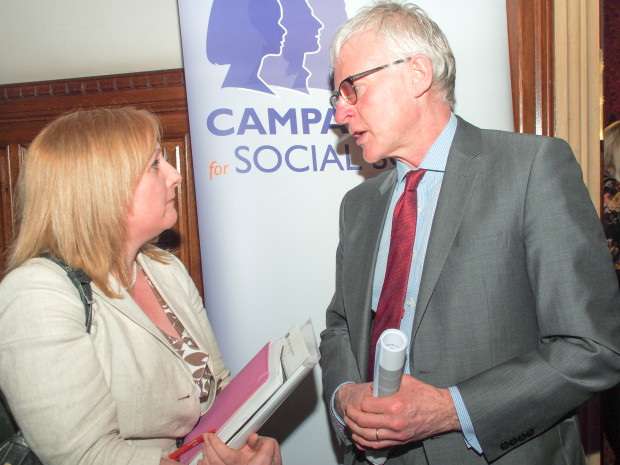
A new booklet in a series of releases by Britain’s Academy of Social Sciences highlights the important role that social and behavioral scientists have in the global fight against dementia.

John Urry, a sociologist probably best known for his work on mobilities but whose gaze also lit on issues ranging from tourism to energy use, from social change to complexity theory, died suddenly on March 18.

There are some cherished myths about diversity that aren’t supported by the research evidence. While these myths are appealing on a societal level, says Alice H, Eagly, it’s a mistake to allow distortions to remain unchallenged.

After a breakthough at a poster session for a discipline not her own, a senior academic offered the evidence that led President Obama to loosen up the regulatory yoke that was scaring researchers into the scariest life forms on Earth.
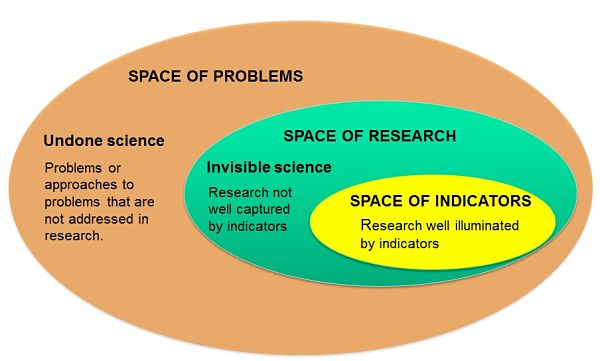
Science and technology systems are routinely monitored and assessed with indicators created to measure the natural sciences in developed countries. Ismael Ràfols and Jordi Molas-Gallart urge the creation of indicators that better reflect research activities and contributions in ‘peripheral’ spaces.

The Royal Swedish Academy of Sciences has awarded this year’s Nobel Prize in Economic Sciences to the American economists Robert E. Hall […] Four Americans working in the social and behavioral sciences are among the 20 people named MacArthur Fellows this year. Recipients may be […] Euan Adie, the founder of Altmetric and later of Overton, discusses the reasons the led to Overton’s focus on showing researchers how […] The following is an adapted extract from The Cultural Industries, fifth edition, by David Hesmondhalgh. The increasing presence of information technology (IT) […] Developers of AI data centers have a public trust problem. According to multiple surveys, a majority of Americans say they would oppose […] I was adding some final flourishes on the topic of ‘iatrocracy’ to my forthcoming book with Natewindé Sawadogo – Sickness and Social […]
EXPLORE
Impact
Economic Peaks, Troughs and This Year’s Nobelists in Economics
READ MORE

Four From Social Science World Receive 2026 MacArthur Fellowships
READ MORE

Quick Insight: Euan Adie on Getting Academics Credit for Their Impact
READ MORE
Innovation
IT Giants and Their Operations: Should We Be Concerned?
READ MORE

What We Miss When We Study Public Trust with Surveys Alone
READ MORE

AI and ‘Iatrocracy’ – A Cautionary Tale
READ MORE