


Could Distributed Peer Review Better Decide Grant Funding?
The landscape of academic grant funding is notoriously competitive and plagued by lengthy, bureaucratic processes, exacerbated by difficulties in finding willing reviewers. Distributed […]

Everyone has experience being human, and so findings in social science coincide with something that we have either experienced or can imagine experiencing. The result is that social science all too often seems like common sense.

A quick overview of the Finch Report on Open Access, and useful links.


The claim that real politics is messier than the statistics are capable of capturing is obviously correct. But the implied corollary – that the government shouldn’t go out of its way to support it – doesn’t follow.

Racially integrated schools offer a number of benefits for students: they are able to expand their cultural outlooks, gain new friends, learn about those who are different, and get better educations at schools with better resources than they would otherwise attend. However, students may struggle with making friends, interacting across racial lines, developing an ethnic identity and with academic achievement

Last week we heard the sad news that Professor Elinor Ostrom has died. Her profound contributions to scholarship have been told often since she became the first woman and the first political scientist ever to receive the Nobel Prize for Economics.
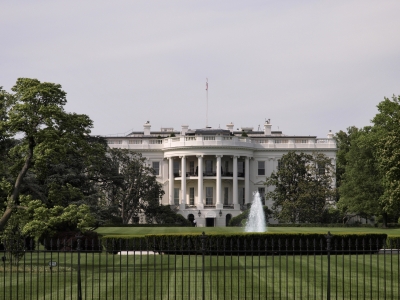
On May 9, the House of Representatives adopted a provision that would preclude the National Science Foundation (NSF) from supporting research in the field of political science.

Recently, the US House of Representatives passed off an amendment offered by Representative Jeff Flake (R-AZ) that would prohibit funding for the Political Science Program with the National Science Foundation. If enacted into law, this amendment would set an extraordinary and disturbing precedent in which Congress chooses which scientific disciplines should be funded and not funded within the NSF’s research portfolio.

People often see science as a world apart: cool, rational and untouched by persuasion or performance. In this view, scientists simply discover […] “Research impact” means different things to different people. Some refer broadly to how science changes behaviors, beliefs, or practices outside academic institutions. […] One researcher studies how war affects children, another took a literal worm’s eye view to examine rural development, while two others scrutinized […] David Canter considers informal places where people socialize, suggesting they’re an arena ChatGPT and other LLMs can’no’t replicate. As someone who lives […] It’s become cliche since Clive Humbly coined it in 2006, but data is indeed the new oil. It’s a mantra repeated by […] In September 2025, The Guardian reported about a lawyer in Australia having faced sanctions due to false citations. These citations were not […]
EXPLORE
Impact

Scientists Should Keep in Mind It’s Called the ‘Marketplace of Ideas’ for a Reason
READ MORE

Survey Finds Social Scientists Feel Unsupported in Seeking Societal Impact
READ MORE
Canada’s SSHRC Names 2025 Impact Winners
READ MORE
Innovation

Reaching Parts to Which AI Has No Access
READ MORE

Andrea Medina-Smith on Making Research Data More FAIR
READ MORE

A Status Check on Hallucinated Case Law Incidents
READ MORE