Political Science Serving the Public Interest

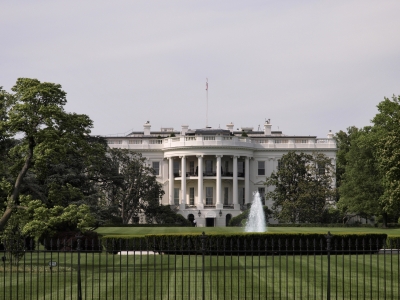
Image courtesy of vitasamb2001
On May 9, the House of Representatives adopted a provision that would preclude the National Science Foundation (NSF) from supporting research in the field of political science. We believe the important public benefits of this research and the critical role played by the NSF’s annual contribution of about $11m per year to political science research.
The mission of the NSF is “to promote the progress of science; to advance the national health, prosperity, and welfare; and to secure the national defense”—the same concerns that guide members of Congress.
Since its creation in 1965, the NSF’s political science program has made substantial contributions to all of these key concerns. In recent years, the NSF has funded research on some of our leading security issues: What are the factors that lead to international conflict? What are the causes of terrorism? What are the causes of civil war and state failure? Is nuclear proliferation stoppable? Do economic sanctions work?
The NSF has also supported political science research directly related to national prosperity. What are the political factors that lead to excessive spending by state or national governments, or to economic growth, high levels of unemployment or high levels of inflation? How do political factors contribute to trade wars, migration or citizen unrest and violence? What are the characteristics of governments that make them more or less attractive for direct investment by firms? What can be done to make the government more accountable and efficient?
NSF-funded political science research has also enhanced national welfare by enriching our understanding of American civic life and democracy. Who votes and why? How can the government better engage and respond to citizens? How can the mechanics of our democracy be improved to better represent citizens’ wishes and desires?
In the floor debate on the defunding amendment, the political science program was criticized because a large proportion of its grants go to a small number of universities, but in fact current recipients of NSF political science funding are from 81 different institutions. Just as importantly, the users of the findings work in hundreds of institutions—at colleges and universities, but also in government agencies, think tanks, news organizations, and citizens’ groups. One example is the American National Election Study which has provided data on American elections to thousands of researchers, journalists and policymakers.
Another common objection to political science research is that similar research is conducted by journalists, consultants and policy analysts without public support. This other work is important, but much of it depends on political science research to apply the principles of scientific inquiry to the subject of politics to produce the data and scientific analysis that become the raw material that others then interpret.
Journalists may ask who is going to win the next election, but a political scientist asks about the factors that drive voter choice and electoral outcomes. A policy analyst may ask how quickly U.S. troops can be drawn down in Afghanistan, but a political scientist wants to know what factors contribute most to successful counterinsurgency strategies. The answers to the specific questions of the journalist and analyst are ultimately based on the more comprehensive perspective that the political scientist brings.
We believe that every dollar of federal funding should be seriously scrutinized. The NSF political science program has been committed to the same standards of rigorous, evidence-based scholarship as have the rest of the foundation’s programs. The work it has supported has made major contributions to our understanding of America’s democracy and its place in the world. The research has promoted understanding on vital issues important to Congress, including national security, economic prosperity, and the health of American civic life. We deeply appreciate the generous support provided by Congress for NSF-funded political science research in previous budgets, and we strongly encourage that support to continue.
Signed,
John Coleman, Chair, Department of Political Science, University of Wisconsin
Timothy Colton, Chair, Department of Government, Harvard University
Evelyne Huber, Chair, Department of Political Science, University of North Carolina
John Huber, Chair, Department of Political Science, Columbia University
Taeku Lee, Chair, Travers Department of Political Science, University of California, Berkeley
Jeffrey Lewis, Chair, Department of Political Science, University of California, Los Angeles
Nolan McCarty, Chair, Department of Politics, Princeton University
Josiah Ober, Chair, Department of Political Science, Stanford University
Karen Remmer, Chair, Department of Political Science, Duke University
Charles Shipan, Chair, Department of Political Science, University of Michigan
Susan Stokes, Chair, Department of Political Science, Yale University