

Could Distributed Peer Review Better Decide Grant Funding?
The landscape of academic grant funding is notoriously competitive and plagued by lengthy, bureaucratic processes, exacerbated by difficulties in finding willing reviewers. Distributed […]
A move by an association of STEM publishers to offer a bespoke category of open-access licenses for scholarly work has stirred up proponents of the existing Creative Commons system.
Academic publishing creates incentives to simplify results, cull aberrations and focus on the exciting — often to the detriment of good research. Could more open access allows us to be good and boring?
A year after the Office of Science and Technology Policy told the U.S. government to open up publicly funded research to the public for free, the first of 21 agencies covered has begun its program.
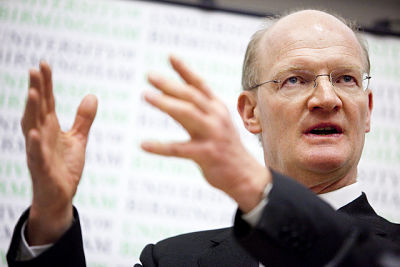
Now that Greg Clark, has begun his tenure as the new UK minister for universities, science, and cities, the London School of Economics Impact of Social Science blog asked for further reflections on the positions taken by previous minister, David Willetts. David Prosser of the Research Libraries UK covers the dramatic influence Willetts had on open access legislation and momentum in the UK.

What does the Facebook emotional contagion study really tells us about research ethics? Perhaps, argues Robert Dingwall, that its time to deregulate public social science.
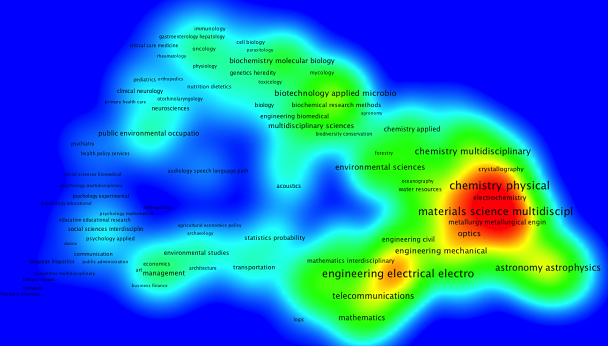
A new study investigates whether there is a possible open access citation advantage across all fields.

China’s apparent reluctance to publish it social science and humanities scholarship openly is less about what it lets out, argues Michael Hockx, and more about what opening up might let in.

It’s time for a broader dialogue about how we connect the aims of the social science enterprise to our system of journals, argues the editor of Administrative Science Quarterly.
Jürgen Habermas, a globally known social theorist whose explorations of democracy, validity and communication have gained new prominence in the current moment, […] People often see science as a world apart: cool, rational and untouched by persuasion or performance. In this view, scientists simply discover […] “Research impact” means different things to different people. Some refer broadly to how science changes behaviors, beliefs, or practices outside academic institutions. […] David Canter considers informal places where people socialize, suggesting they’re an arena ChatGPT and other LLMs can’no’t replicate. As someone who lives […] It’s become cliche since Clive Humbly coined it in 2006, but data is indeed the new oil. It’s a mantra repeated by […] In September 2025, The Guardian reported about a lawyer in Australia having faced sanctions due to false citations. These citations were not […]
EXPLORE
Impact

Jürgen Habermas, 1929-2026: Exponent of the Public Sphere
READ MORE

Scientists Should Keep in Mind It’s Called the ‘Marketplace of Ideas’ for a Reason
READ MORE

Survey Finds Social Scientists Feel Unsupported in Seeking Societal Impact
READ MORE
Innovation

Reaching Parts to Which AI Has No Access
READ MORE

Andrea Medina-Smith on Making Research Data More FAIR
READ MORE

A Status Check on Hallucinated Case Law Incidents
READ MORE