


Could Distributed Peer Review Better Decide Grant Funding?
The landscape of academic grant funding is notoriously competitive and plagued by lengthy, bureaucratic processes, exacerbated by difficulties in finding willing reviewers. Distributed […]

The possible retraction of a high profile paper in the medical sciences offers a teachable moment about replication, peer review, cognitive bias and the beauty and beastliness that can be science.
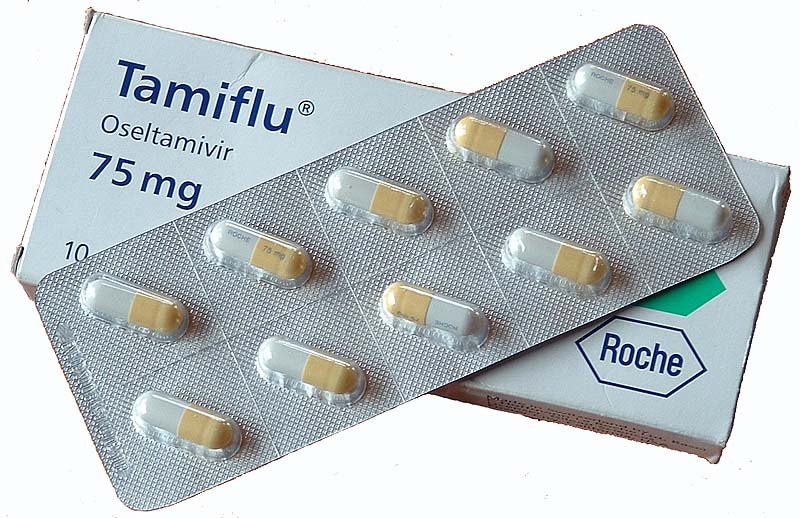
No one expected Tamiflu to be a wonder drug, but indications are that it’s moderately useful in fighting a serious public health threat. But that message was lost last week in an ill-starred rush to beat up on ‘wicked’ Big Pharma, argues Robert Dingwall.
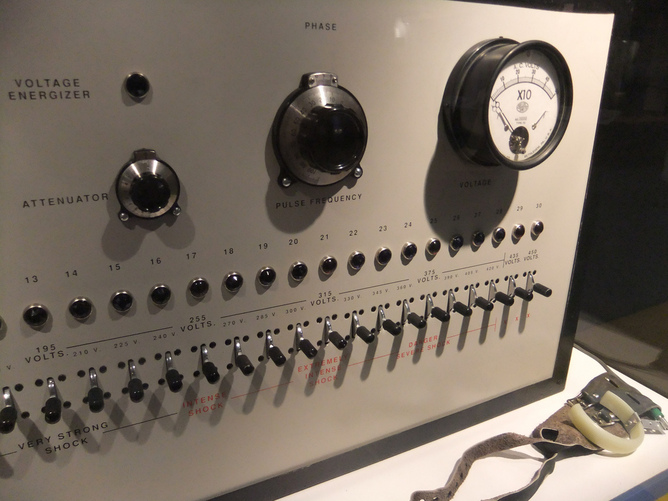
In synthesizing the results of many of Stanley Milgram’s obedience trial experiments, modern-day researchers find the scary takeaways that have long accompanied the work don’t really hold up as strongly as once assumed..
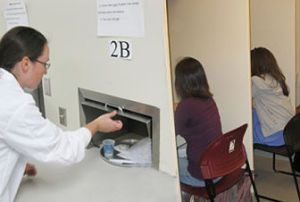
Applying ethics to social science research can raise as many issues as it answers. A new set of guidelines on which Robert DIngwall consulted gives clarity in some cases like manipulation of images and duplicate publication but leaves some other controversies unsettled.

Where should we draw the line between normal data gathering about university students–with the intent of helping them, of course–and outright intrusiveness?

Back in the summer, John Holmwood, the current BSA President, sent me an email about impact and research ethics. Various contingencies have […]

Survey researchers are increasingly unable to get people to respond to surveys. This is a real worry because nonresponse can lead to biased research and because nonresponse poses a significant threat to the federal statistical system in its entirety.

The controversy over BBC journalists’ use of a student tour group linked to the London School of Economics should not be allowed to go away quietly.
Jürgen Habermas, a globally known social theorist whose explorations of democracy, validity and communication have gained new prominence in the current moment, […] People often see science as a world apart: cool, rational and untouched by persuasion or performance. In this view, scientists simply discover […] “Research impact” means different things to different people. Some refer broadly to how science changes behaviors, beliefs, or practices outside academic institutions. […] David Canter considers informal places where people socialize, suggesting they’re an arena ChatGPT and other LLMs can’no’t replicate. As someone who lives […] It’s become cliche since Clive Humbly coined it in 2006, but data is indeed the new oil. It’s a mantra repeated by […] In September 2025, The Guardian reported about a lawyer in Australia having faced sanctions due to false citations. These citations were not […]
EXPLORE
Impact

Jürgen Habermas, 1929-2026: Exponent of the Public Sphere
READ MORE

Scientists Should Keep in Mind It’s Called the ‘Marketplace of Ideas’ for a Reason
READ MORE

Survey Finds Social Scientists Feel Unsupported in Seeking Societal Impact
READ MORE
Innovation

Reaching Parts to Which AI Has No Access
READ MORE

Andrea Medina-Smith on Making Research Data More FAIR
READ MORE

A Status Check on Hallucinated Case Law Incidents
READ MORE