



Could Distributed Peer Review Better Decide Grant Funding?
The landscape of academic grant funding is notoriously competitive and plagued by lengthy, bureaucratic processes, exacerbated by difficulties in finding willing reviewers. Distributed […]

Remember when Barbie made the stereotypical ‘Math is hard!’ comment? That sentiment is real, and unchecked it can be contagious. Luckily, however, math anxiety can be cured.

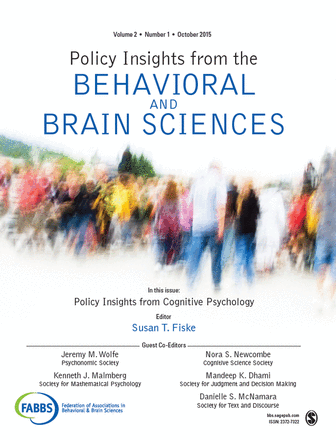
Putting down your phone is merely the first step in banishing distractions while you drive, according to research in the journal ‘Policy Insights from the Behavioral and Brain Sciences.’ In fact, asking Siri to do something at a remove is pretty darned dangerous, too.

Gendered language shapes how we think about the appropriate roles for men and women, especially when we are children and just beginning to form our understanding of the world. That might not sound like a problem, but it can reinforce stereotypes we are trying to tear down.

Remember the admonition to ‘show your work’ in math class? Focusing on where you went wrong – instead of hurrying to what is right – may be a great way to actually learn something, so it’s a shame more teachers don’t do that.

There’s a lot of handwringing over the STEM gap in US education, and new paper in the ‘Policy Insights from the Behavioral and Brain Sciences’ finds that how STEM is taught underlies some of the challenges. But cognitive science may offer some help

Mankind has long been looking for a magic solution to staving off mental decline as we age. One solution examined in the new issue of the journal ‘Policy Insights from the Behavioral and Brain Sciences’ may be just in front of our reading glasses.

How interventions are designed matter as much as what they do. In that vein, Harvard researchers Erin Frey and Todd Rogers have identified four pathways through which behavior change interventions can achieve long-term impact.
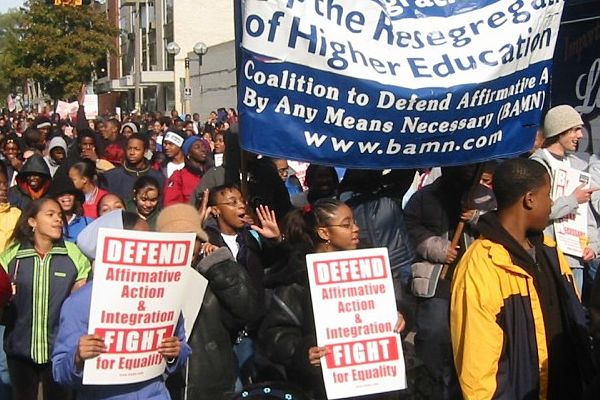
Stereotype threat occurs when an individual is afraid of confirming a negative stereotype about a group to which he or she belongs and, in a cruel irony, performs worse because of it. Research shows the phenomenon is real and can sabotage affirmative action.

Jürgen Habermas, a globally known social theorist whose explorations of democracy, validity and communication have gained new prominence in the current moment, […] People often see science as a world apart: cool, rational and untouched by persuasion or performance. In this view, scientists simply discover […] “Research impact” means different things to different people. Some refer broadly to how science changes behaviors, beliefs, or practices outside academic institutions. […] David Canter considers informal places where people socialize, suggesting they’re an arena ChatGPT and other LLMs can’no’t replicate. As someone who lives […] It’s become cliche since Clive Humbly coined it in 2006, but data is indeed the new oil. It’s a mantra repeated by […] In September 2025, The Guardian reported about a lawyer in Australia having faced sanctions due to false citations. These citations were not […]
EXPLORE
Impact

Jürgen Habermas, 1929-2026: Exponent of the Public Sphere
READ MORE

Scientists Should Keep in Mind It’s Called the ‘Marketplace of Ideas’ for a Reason
READ MORE

Survey Finds Social Scientists Feel Unsupported in Seeking Societal Impact
READ MORE
Innovation

Reaching Parts to Which AI Has No Access
READ MORE

Andrea Medina-Smith on Making Research Data More FAIR
READ MORE

A Status Check on Hallucinated Case Law Incidents
READ MORE