


Could Distributed Peer Review Better Decide Grant Funding?
The landscape of academic grant funding is notoriously competitive and plagued by lengthy, bureaucratic processes, exacerbated by difficulties in finding willing reviewers. Distributed […]

Noting that one candidate has been claiming the upcoming U.S. presidential vote is ‘rigged,’ our Washington-based blogger takes a look at the ways that past presidential elections have been less than clear-cut, and that ways in which the system bent to accommodate a peaceful transfer of power.

As part of our series on academic freedom, Dylan Kerrigan discusses the wider implications of the financialisation of academic knowledge production by considering academic book publishing. He asks if the success of academic books is best measured by economic or non-economic criteria, by its impact on the business sector or its veracity, by ideological myth-making or evidence.

Addressing the consequences of the “prolonged period of uncertainty” in the three months since the Brexit vote, the Academy of Social Sciences and Campaign for Social Science recommend immediate steps the government should take to support UK science and ensure the “long-term health of research is kept to the fore” during the negotiation process.
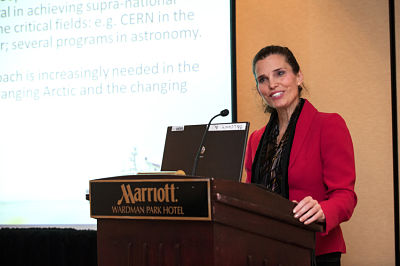
Canada’s first-ever Minister of Science spends more than a billion dollars on science projects in a busy week.

An introduction to a series of short essays exploring contemporary issues of academic freedom from a range of perspectives, focusing both on British and international trends.

Perhaps the solution to conflicting spending priorities, write Rod Lamberts and Will J. Grant, is simply to acknowledge that people will always have conflicting priorities, and think about how best to live alongside each other: mythical, homogeneous pub-goer and irrelevant, out-of-touch academic alike.
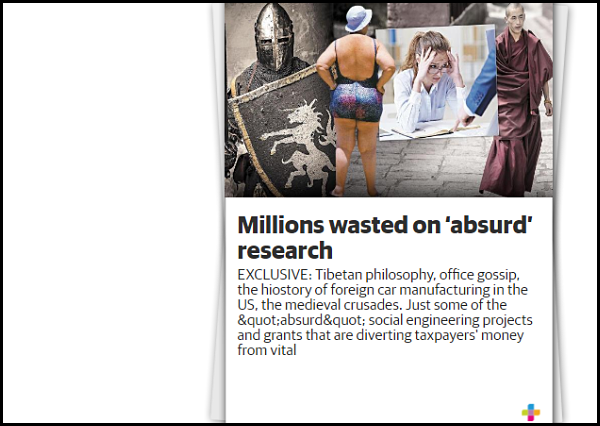
Shonkily researched assertions are okay if you enjoy the safe patronage of a major news organisation, argues Rob Brooks. But know, he adds, you would never get away with such abject laziness, or such contempt for professional disinterest in a grant proposal to a federal funding body.

The new report of the REF from Lord Stern hopefully may shift the spotlight away from individual researchers themselves and onto the organizational practice of their universities, argues Richard Watermeyer.


Jürgen Habermas, a globally known social theorist whose explorations of democracy, validity and communication have gained new prominence in the current moment, […] People often see science as a world apart: cool, rational and untouched by persuasion or performance. In this view, scientists simply discover […] “Research impact” means different things to different people. Some refer broadly to how science changes behaviors, beliefs, or practices outside academic institutions. […] David Canter considers informal places where people socialize, suggesting they’re an arena ChatGPT and other LLMs can’no’t replicate. As someone who lives […] It’s become cliche since Clive Humbly coined it in 2006, but data is indeed the new oil. It’s a mantra repeated by […] In September 2025, The Guardian reported about a lawyer in Australia having faced sanctions due to false citations. These citations were not […]
EXPLORE
Impact

Jürgen Habermas, 1929-2026: Exponent of the Public Sphere
READ MORE

Scientists Should Keep in Mind It’s Called the ‘Marketplace of Ideas’ for a Reason
READ MORE

Survey Finds Social Scientists Feel Unsupported in Seeking Societal Impact
READ MORE
Innovation

Reaching Parts to Which AI Has No Access
READ MORE

Andrea Medina-Smith on Making Research Data More FAIR
READ MORE

A Status Check on Hallucinated Case Law Incidents
READ MORE