

Could Distributed Peer Review Better Decide Grant Funding?
The landscape of academic grant funding is notoriously competitive and plagued by lengthy, bureaucratic processes, exacerbated by difficulties in finding willing reviewers. Distributed […]
Each year, NYU researchers analyze New York State Medicaid, New York City Department of Education, and New York City subsidized housing data to discover new patterns of family experiences and outcomes and inform new approaches to fighting poverty, reducing inequality, and expanding opportunity in our communities.
Do sociology graduate students need to publish more today than they did a generation ago to get a faculty position? Do assistant professors need to publish more to get tenure?

Although the budgets released by the administration of U.S President Donald Trump have been seen more as gestures than serious spending plans, […]
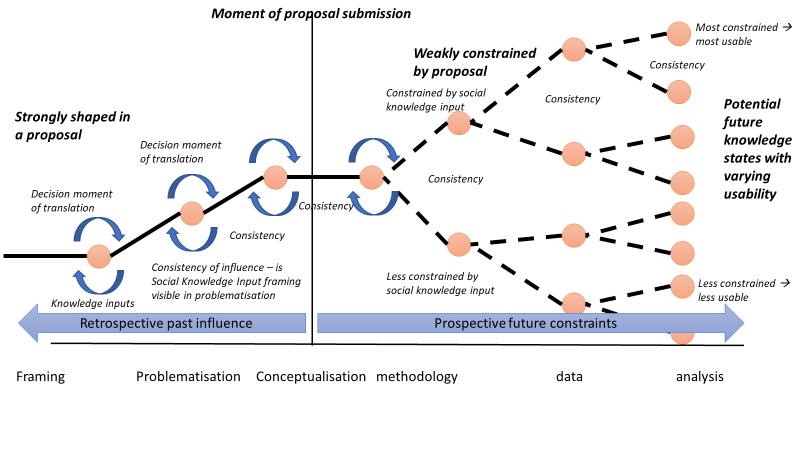
UK Research and Innovation, Britain’s main research funding body, is scrapping separate impact sections from all grant applications. Paul Benneworth and Julia Olmos Peñuela argue how impact statements can produce meaningful statements of the potential future impact of research and set out a framework for assessing these claims.
The National Science Foundation, the premiere funder of basic social and behavioral research in the United States, will see a 2.5% increase in funding in the upcoming fiscal year.

The National Science Foundation (NSF) will be accepting applications for the Science and Technology Studies (STS) Program. With an estimated program funding of 6,200,000 (to be awarded among 40 different researchers), this is an opportunity worth considering.

The National Academy of Medicine has launched the Healthy Longevity Global Competition, a multiyear, multimillion-dollar international competition seeking breakthrough innovations to extend human health and function later in life.

Funders from private industry — which represent two-thirds of funding in medical research, for example — can go great lengths to suppress the publication of findings which appear unfavorable. How can academic freedom be protected with this monumental funding shift?
Jürgen Habermas, a globally known social theorist whose explorations of democracy, validity and communication have gained new prominence in the current moment, […] People often see science as a world apart: cool, rational and untouched by persuasion or performance. In this view, scientists simply discover […] “Research impact” means different things to different people. Some refer broadly to how science changes behaviors, beliefs, or practices outside academic institutions. […] David Canter considers informal places where people socialize, suggesting they’re an arena ChatGPT and other LLMs can’no’t replicate. As someone who lives […] It’s become cliche since Clive Humbly coined it in 2006, but data is indeed the new oil. It’s a mantra repeated by […] In September 2025, The Guardian reported about a lawyer in Australia having faced sanctions due to false citations. These citations were not […]
EXPLORE
Impact

Jürgen Habermas, 1929-2026: Exponent of the Public Sphere
READ MORE

Scientists Should Keep in Mind It’s Called the ‘Marketplace of Ideas’ for a Reason
READ MORE

Survey Finds Social Scientists Feel Unsupported in Seeking Societal Impact
READ MORE
Innovation

Reaching Parts to Which AI Has No Access
READ MORE

Andrea Medina-Smith on Making Research Data More FAIR
READ MORE

A Status Check on Hallucinated Case Law Incidents
READ MORE