



Could Distributed Peer Review Better Decide Grant Funding?
The landscape of academic grant funding is notoriously competitive and plagued by lengthy, bureaucratic processes, exacerbated by difficulties in finding willing reviewers. Distributed […]

So if markets are truly good for English higher education, as many seem to think, should we follow that train of thought to its logical conclusions?
The House approved the fiscal year 2018 National Defense Authorization Act and a security “minibus” that included fiscal year 2018 appropriations for the Departments of Defense, Energy and Homeland Security. The House departed for its August recess, while the Senate plans to stay in session for the first two weeks of August.
The US attorney general has been mocked for wanting to bring back a discredited drug-prevention program from the Reagan era. But have evidence-based researchers created a modern-day version that might actually perform as promised?
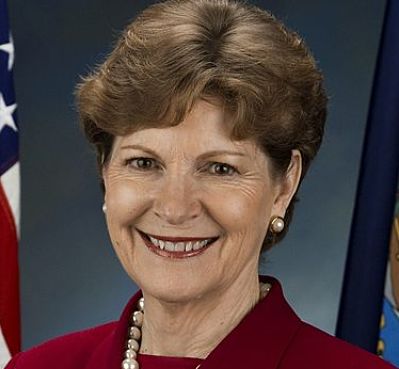
The U.S. Senate Apropriations Committee calls for a National Science Foundation budget just a hair below what the House has asked for. Both houses’ requests are far above what the president has requested.

American labor law and social programs were developed in an age where workers labored for a company and could plan to be there for years, if not a lifetime. The velocity of the gig economy’s expansion has left policymakers far behind, says economist Alan Kruger, and he’d like to bring them up to speed.

The recently resigned head of the U.S. Census Bureau will head the umbrella organization that serves as an advocate and liaison to federal statistical organizations.
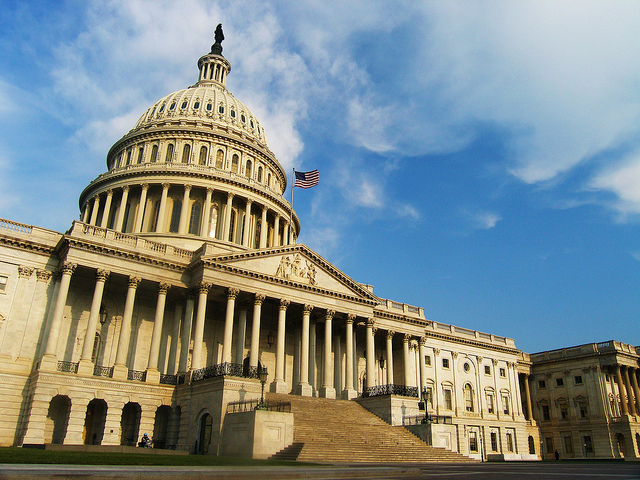
Advocates want $8 billion for NSF, and President Trump wants less than $7 billion. House appropriators seem to be navigating a path through the middle.

Britain’s recent general election has been the first step towards a long-overdue public debate on the social consequences of austerity and growing socio-economic inequality. What does this sea change mean for British academia?

Jürgen Habermas, a globally known social theorist whose explorations of democracy, validity and communication have gained new prominence in the current moment, […] People often see science as a world apart: cool, rational and untouched by persuasion or performance. In this view, scientists simply discover […] “Research impact” means different things to different people. Some refer broadly to how science changes behaviors, beliefs, or practices outside academic institutions. […] David Canter considers informal places where people socialize, suggesting they’re an arena ChatGPT and other LLMs can’no’t replicate. As someone who lives […] It’s become cliche since Clive Humbly coined it in 2006, but data is indeed the new oil. It’s a mantra repeated by […] In September 2025, The Guardian reported about a lawyer in Australia having faced sanctions due to false citations. These citations were not […]
EXPLORE
Impact

Jürgen Habermas, 1929-2026: Exponent of the Public Sphere
READ MORE

Scientists Should Keep in Mind It’s Called the ‘Marketplace of Ideas’ for a Reason
READ MORE

Survey Finds Social Scientists Feel Unsupported in Seeking Societal Impact
READ MORE
Innovation

Reaching Parts to Which AI Has No Access
READ MORE

Andrea Medina-Smith on Making Research Data More FAIR
READ MORE

A Status Check on Hallucinated Case Law Incidents
READ MORE