

Could Distributed Peer Review Better Decide Grant Funding?
The landscape of academic grant funding is notoriously competitive and plagued by lengthy, bureaucratic processes, exacerbated by difficulties in finding willing reviewers. Distributed […]

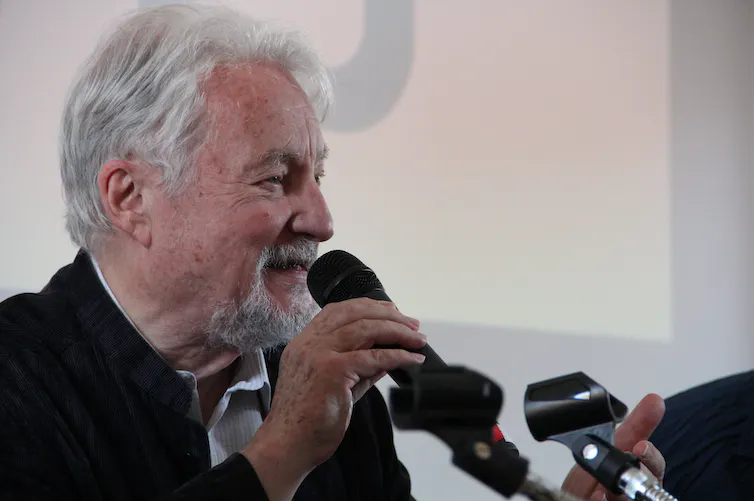
In this brief, crisply written memoir, “In a Flight of Starlings: The Wonders of Complex Systems,” Parisi takes the reader on a journey through his scientific life in the realm of complex, disordered systems, from fundamental particles to migratory birds. He argues that science’s struggle to understand and master the universe’s complexity, and especially to communicate it to an ever-more skeptical public, holds the key to humanity’s future well-being.

The Covid-19 pandemic seems to be subsiding into a low-level endemic respiratory infection – although the associated pandemics of fear and action […]
The post-mortems on national governments’ management of the COVID-19 pandemic are getting under way. Some European countries have completed theirs, with rapid […]

The new film ‘Oppenheimer’ offers several interesting views of the scientific endeavor that resonate as much in the social sciences and the humanities as in the physical sciences.

The generalist degree has a big part to play in the emerging higher education landscape for graduates. Humanities, social science, general science, technology and creative industries fields such as design can deliver adaptable, flexible mindsets.

As a math professor who teaches students to use data to make informed decisions, I am familiar with common mistakes people make when dealing with numbers. The Dunning-Kruger effect is the idea that the least skilled people overestimate their abilities more than anyone else. This sounds convincing on the surface and makes for excellent comedy. But in a recent paper, my colleagues and I suggest that the mathematical approach used to show this effect may be incorrect.

The idea that the poor are impoverished morally as well as materially, that they lack humanity as well as means, has a long history.
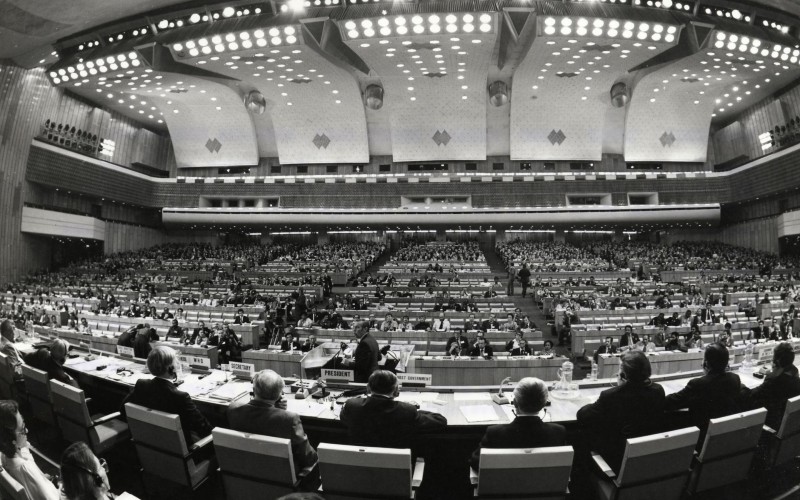
Robert Dingwall argues that the World health Organization has become a top-down, command-and-control approach, based on a narrow scientific base and the preferences, or prejudices, of a few major donors, that has failed to deliver in times of crisis.

Jürgen Habermas, a globally known social theorist whose explorations of democracy, validity and communication have gained new prominence in the current moment, […] People often see science as a world apart: cool, rational and untouched by persuasion or performance. In this view, scientists simply discover […] “Research impact” means different things to different people. Some refer broadly to how science changes behaviors, beliefs, or practices outside academic institutions. […] David Canter considers informal places where people socialize, suggesting they’re an arena ChatGPT and other LLMs can’no’t replicate. As someone who lives […] It’s become cliche since Clive Humbly coined it in 2006, but data is indeed the new oil. It’s a mantra repeated by […] In September 2025, The Guardian reported about a lawyer in Australia having faced sanctions due to false citations. These citations were not […]
EXPLORE
Impact

Jürgen Habermas, 1929-2026: Exponent of the Public Sphere
READ MORE

Scientists Should Keep in Mind It’s Called the ‘Marketplace of Ideas’ for a Reason
READ MORE

Survey Finds Social Scientists Feel Unsupported in Seeking Societal Impact
READ MORE
Innovation

Reaching Parts to Which AI Has No Access
READ MORE

Andrea Medina-Smith on Making Research Data More FAIR
READ MORE

A Status Check on Hallucinated Case Law Incidents
READ MORE