

Could Distributed Peer Review Better Decide Grant Funding?
The landscape of academic grant funding is notoriously competitive and plagued by lengthy, bureaucratic processes, exacerbated by difficulties in finding willing reviewers. Distributed […]


What can we as university professors and administrators, asks Stephanie Jirard, do to decisnormatize and decolonize our institutions?
This post several collects resources that have appeared on Social Science Space centered on trans issues, including a webinar recording on the state of trans studies occasioned by the 2021 publication of The SAGE Encyclopedia of Trans Studies.
There is no shortage of disciplines and industries rife with sexism. The STEM fields – science, technology, engineering and mathematics – are particularly well known for their misogynistic […]
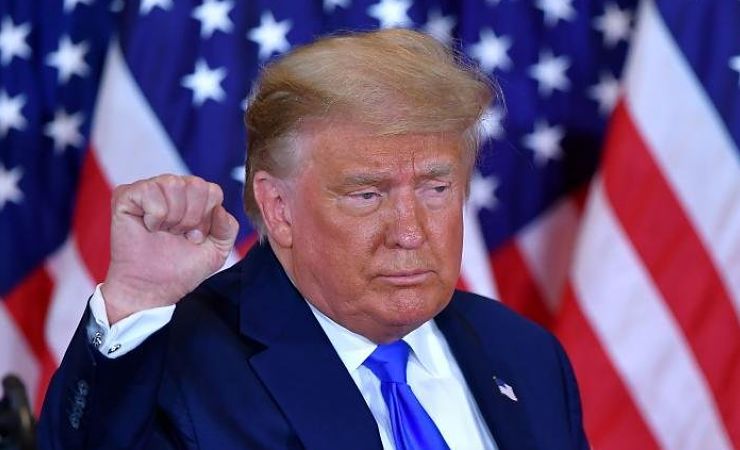
How can we ensure that, when power shifts again, the U.S. government remains fundamentally grounded in empirical reality and committed to pursuing policies that are informed by the best available science?

We all want stuff, but in our overdeveloped, fast-paced culture we seldom challenge ourselves to ask ourselves the one important question: how much is enough?

In academia gender bias is often figured in terms of research productivity and differentials surrounding the academic work of men and women. Alesia Zuccala and Gemma Derrick posit that this outlook inherently ignores a wider set of variables impacting women, and that attempts to achieve cultural change in academia can only be realised, by acknowledging variables that are ultimately difficult to quantify.
While the dominant model of open access using article processing charges lowers financial barriers for readers, it has erected a new paywall at the other end of the pipeline, blocking access to publication for less-privileged authors.
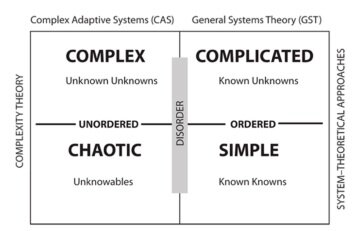
Cyrill Walters investigated the current styles of leadership in South African higher education institutions and has developed a model of the primary competencies leaders need.
Jürgen Habermas, a globally known social theorist whose explorations of democracy, validity and communication have gained new prominence in the current moment, […] People often see science as a world apart: cool, rational and untouched by persuasion or performance. In this view, scientists simply discover […] “Research impact” means different things to different people. Some refer broadly to how science changes behaviors, beliefs, or practices outside academic institutions. […] David Canter considers informal places where people socialize, suggesting they’re an arena ChatGPT and other LLMs can’no’t replicate. As someone who lives […] It’s become cliche since Clive Humbly coined it in 2006, but data is indeed the new oil. It’s a mantra repeated by […] In September 2025, The Guardian reported about a lawyer in Australia having faced sanctions due to false citations. These citations were not […]
EXPLORE
Impact

Jürgen Habermas, 1929-2026: Exponent of the Public Sphere
READ MORE

Scientists Should Keep in Mind It’s Called the ‘Marketplace of Ideas’ for a Reason
READ MORE

Survey Finds Social Scientists Feel Unsupported in Seeking Societal Impact
READ MORE
Innovation

Reaching Parts to Which AI Has No Access
READ MORE

Andrea Medina-Smith on Making Research Data More FAIR
READ MORE

A Status Check on Hallucinated Case Law Incidents
READ MORE