Could Distributed Peer Review Better Decide Grant Funding?
The landscape of academic grant funding is notoriously competitive and plagued by lengthy, bureaucratic processes, exacerbated by difficulties in finding willing reviewers. Distributed […]

Companies with a better understanding of climate change, the authors argue, have realized the need to plan actions beyond the business level.

If there is one thing that has become abundantly clear through this pandemic it is that a pandemic, like so many of the other really big and pressing issues facing us such as structural racism or climate change, are not problems to be faced by one discipline or sector alone.
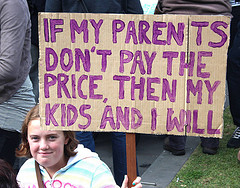
Climate change is undermining human health globally in other profound ways. It’s a risk multiplier, exacerbating our vulnerability to a range of health threats.

The president of research4impact offers a real-life example of how social science researchers teamed with a climate change nonprofit find a way to create more engaged members and a more stable membership.

Niall McLoughlin is a PhD candidate in psychology and arts scholar at the University of Bath, as well as an associate with Climate Outreach. In this shortlisted essay from the ESRC Better Lives Writing Competition, in which PhD students who have received money from the ESRC write short essays about how their research leads too better lives, McLoughlin discusses the psychological catastrophe that accompanied the natural disaster of the 2015 Cumbrian floods and what that might teach us for addressing climate change.
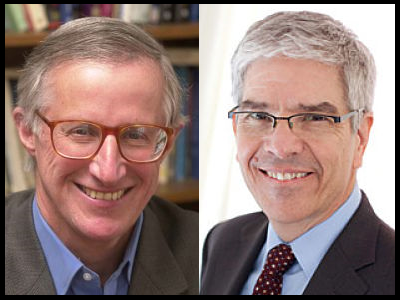
Two academics who have integrated what might have once seemed like non-economic externalities into economic models have been awarded the 2018 Nobel Prize in economics. The winners are William D. Nordhaus of Yale University, cited for integrating climate change into macroeconomic analysis, and Paul M. Romer of New York University’s Stern School of Business, cited doing the same with technological innovations.
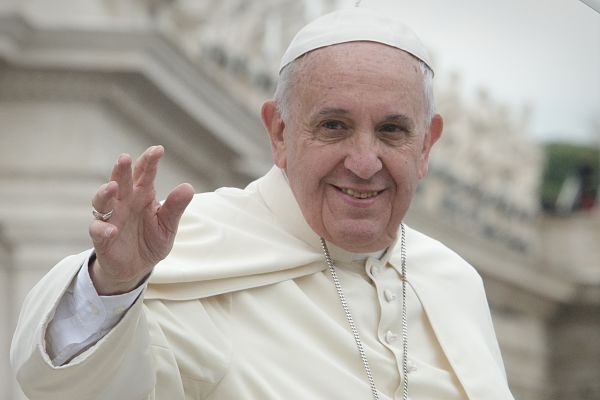
In his recent encyclical that made waves for addressing climate change, notes our blogger Michelle Stack, Pope Francis also spoke about the current emphasis on education as a consumer product that focuses on “self-interested pragmatism.”
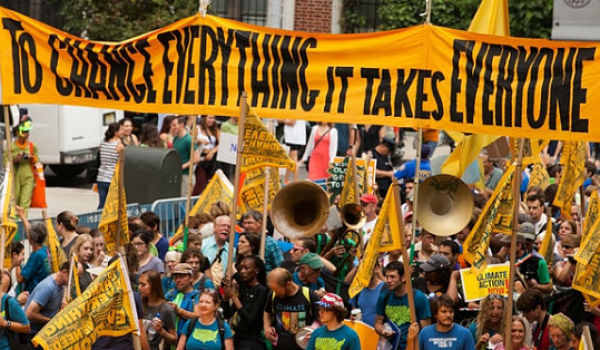
To move forward on climate change, argues Andy Hoffman, we have to disengage from fixed battle on one scientific front and seek approaches that engage people who are undecided about climate change on multiple social and cultural fronts.


Jürgen Habermas, a globally known social theorist whose explorations of democracy, validity and communication have gained new prominence in the current moment, […] People often see science as a world apart: cool, rational and untouched by persuasion or performance. In this view, scientists simply discover […] “Research impact” means different things to different people. Some refer broadly to how science changes behaviors, beliefs, or practices outside academic institutions. […] David Canter considers informal places where people socialize, suggesting they’re an arena ChatGPT and other LLMs can’no’t replicate. As someone who lives […] It’s become cliche since Clive Humbly coined it in 2006, but data is indeed the new oil. It’s a mantra repeated by […] In September 2025, The Guardian reported about a lawyer in Australia having faced sanctions due to false citations. These citations were not […]
EXPLORE
Impact

Jürgen Habermas, 1929-2026: Exponent of the Public Sphere
READ MORE

Scientists Should Keep in Mind It’s Called the ‘Marketplace of Ideas’ for a Reason
READ MORE

Survey Finds Social Scientists Feel Unsupported in Seeking Societal Impact
READ MORE
Innovation

Reaching Parts to Which AI Has No Access
READ MORE

Andrea Medina-Smith on Making Research Data More FAIR
READ MORE

A Status Check on Hallucinated Case Law Incidents
READ MORE