


Could Distributed Peer Review Better Decide Grant Funding?
The landscape of academic grant funding is notoriously competitive and plagued by lengthy, bureaucratic processes, exacerbated by difficulties in finding willing reviewers. Distributed […]

University of KwaZulu-Natal Professor Emeritus William Mark Freund, the economic, social, political, and development historian, died suddenly at his home in Durban, […]
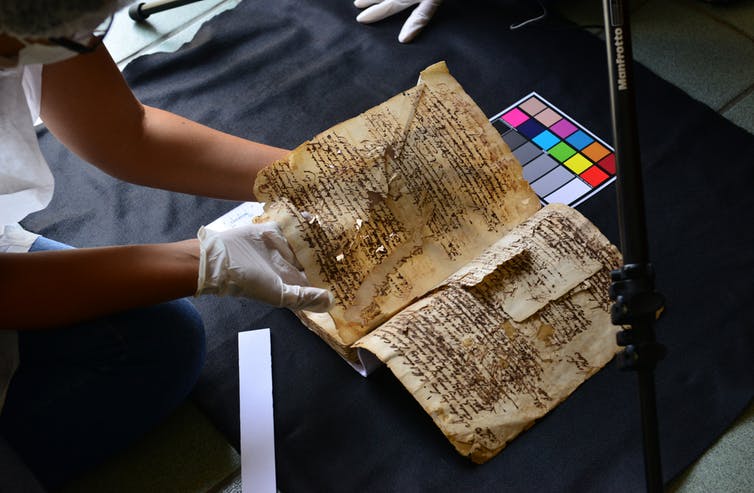
Paper documents are still priceless records of the past, even in a digital world. Primary sources stored in local archives throughout Latin America, for example, describe a centuries-old multiethnic society grappling with questions of race, class and religion.
However, paper archives are vulnerable to…

Census 2020 is far from the first census to set off bitter political fights. One hundred years ago, results from Census 1920 initiated a decadelong struggle about how to allocate a state’s seats in Congress. The political arguments were so bitter that Congress eventually decided they would not use Census 1920 results.
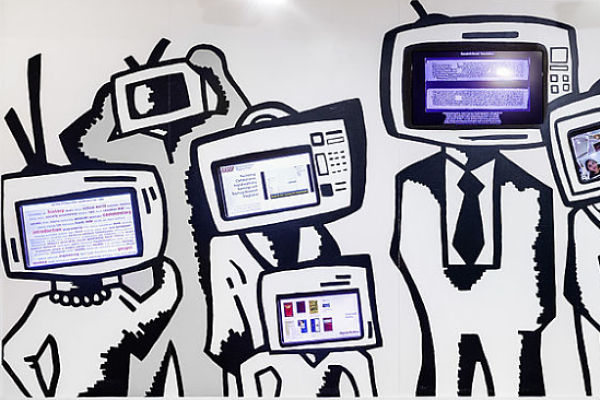
Today, and into the future, consulting archival documents increasingly means reading them on a screen. This brings with it opportunity — imagine being able to search for keywords across millions of documents, leading to radically faster search times — but also challenge, as the number of electronic documents increases exponentially.

Walter Laquer, who fled the Holocaust, experienced the birth of Israel, founded the ‘Journal of Contemporary History,’ and was an unflinching sentinel against terrorism and an authoritarian Russia, died on September 30. He was 97.
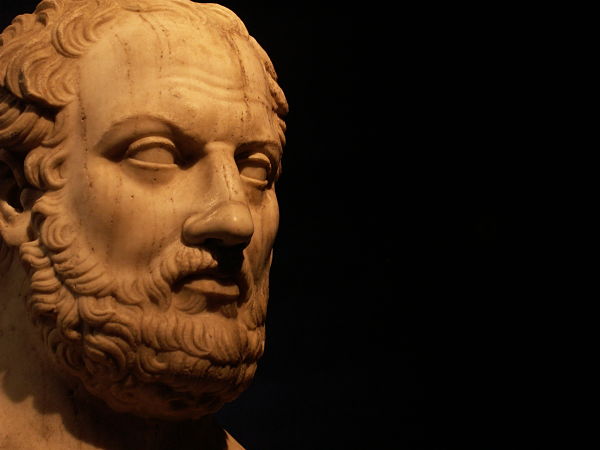
The claim that Thucydides’ account of the past is useful is often extended to historiography in general, rather than just to his specific – and idiosyncratic – approach. And that, suggests Neville Morley, may be the real trap of Thucydides.
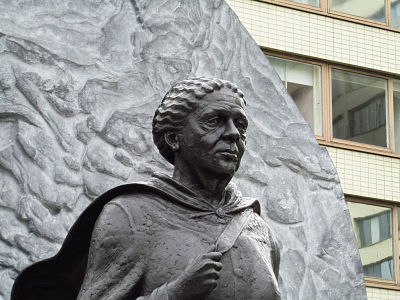
In what he describes as the obverse of the Rhodes Must Fall campaign, Robert Dingwall argues that the secular sainthood conferred on Mary Seacole steps on historical scholarship and ignores more genuine exemplars.
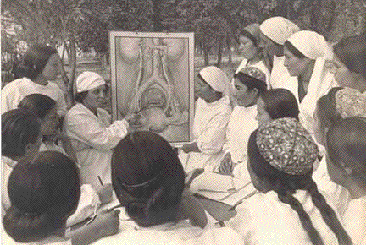
One of the benefits of ostensibly narrow academic pursuits is how their resulting scholarship can inform the work of more widely lauded popularizers and public intellectuals.

Jürgen Habermas, a globally known social theorist whose explorations of democracy, validity and communication have gained new prominence in the current moment, […] People often see science as a world apart: cool, rational and untouched by persuasion or performance. In this view, scientists simply discover […] “Research impact” means different things to different people. Some refer broadly to how science changes behaviors, beliefs, or practices outside academic institutions. […] David Canter considers informal places where people socialize, suggesting they’re an arena ChatGPT and other LLMs can’no’t replicate. As someone who lives […] It’s become cliche since Clive Humbly coined it in 2006, but data is indeed the new oil. It’s a mantra repeated by […] In September 2025, The Guardian reported about a lawyer in Australia having faced sanctions due to false citations. These citations were not […]
EXPLORE
Impact

Jürgen Habermas, 1929-2026: Exponent of the Public Sphere
READ MORE

Scientists Should Keep in Mind It’s Called the ‘Marketplace of Ideas’ for a Reason
READ MORE

Survey Finds Social Scientists Feel Unsupported in Seeking Societal Impact
READ MORE
Innovation

Reaching Parts to Which AI Has No Access
READ MORE

Andrea Medina-Smith on Making Research Data More FAIR
READ MORE

A Status Check on Hallucinated Case Law Incidents
READ MORE