
Could Distributed Peer Review Better Decide Grant Funding?
The landscape of academic grant funding is notoriously competitive and plagued by lengthy, bureaucratic processes, exacerbated by difficulties in finding willing reviewers. Distributed […]
There’s a rankings mania affecting institutions of higher education. But just because it’s a mania, does that make bad?

As we continue to examine the role of ranking in the academic world, it’s worth noting that by 2040 it’s expected that a quarter of the Times Higher Education top 200 will be schools in Asia.

Awareness and prestige of universities is increasingly being driven by their exposure on online platforms. But what does that really mean? Fernando Rosell-Aguilar explores that question.

Affective judgments lead us to focus on individual tragedies while blinding us to large-scale tragedy. How can knowing this help us craft the best responses?
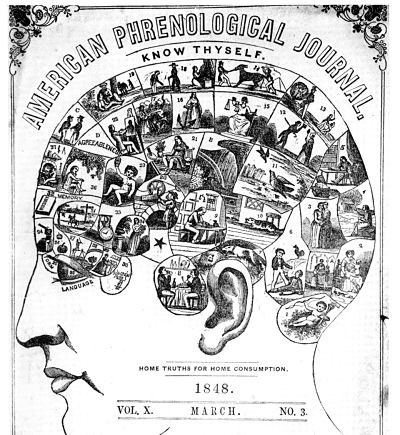
In marketing and in nontraditional education the words and concepts of neuroscience are appropriated with abandon. In many cases, despite the veneer of research respectability this suggests, the results are anything but scientific.
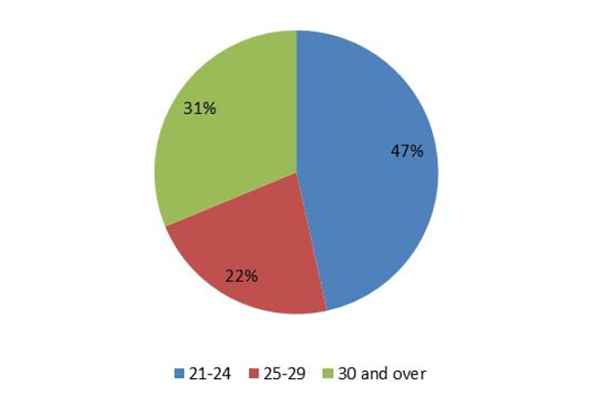
In an article from The Conversation’s ‘Hard Evidence’ series, Lancaster’s Jill Johnes looks at the numbers and finds the more mature undergraduate population has grown slowly, but with a spike this year.
Academics already tend to have a bone to pick with the Myers Briggs Type Indicator as anything other than a parlor game. Nonetheless, while the personality test has a hold on the popular imagination it shouldn’t enter the workplace.

Even in the austere and potentially lonely world of of the online course, students respond best when they feel they’re part of the family, new research finds.


Jürgen Habermas, a globally known social theorist whose explorations of democracy, validity and communication have gained new prominence in the current moment, […] People often see science as a world apart: cool, rational and untouched by persuasion or performance. In this view, scientists simply discover […] “Research impact” means different things to different people. Some refer broadly to how science changes behaviors, beliefs, or practices outside academic institutions. […] David Canter considers informal places where people socialize, suggesting they’re an arena ChatGPT and other LLMs can’no’t replicate. As someone who lives […] It’s become cliche since Clive Humbly coined it in 2006, but data is indeed the new oil. It’s a mantra repeated by […] In September 2025, The Guardian reported about a lawyer in Australia having faced sanctions due to false citations. These citations were not […]
EXPLORE
Impact

Jürgen Habermas, 1929-2026: Exponent of the Public Sphere
READ MORE

Scientists Should Keep in Mind It’s Called the ‘Marketplace of Ideas’ for a Reason
READ MORE

Survey Finds Social Scientists Feel Unsupported in Seeking Societal Impact
READ MORE
Innovation

Reaching Parts to Which AI Has No Access
READ MORE

Andrea Medina-Smith on Making Research Data More FAIR
READ MORE

A Status Check on Hallucinated Case Law Incidents
READ MORE