



Could Distributed Peer Review Better Decide Grant Funding?
The landscape of academic grant funding is notoriously competitive and plagued by lengthy, bureaucratic processes, exacerbated by difficulties in finding willing reviewers. Distributed […]

It took decades for behavioral economics to break into the mainstream. Now, after just a few years of “bias,” “anchoring” and “nudge,” […]

Gavin Moodie has looked at how printing first challenged then changed–for the better–higher education. Here he suggests more modern forms of technological advancement likely will result in the same.

The perceived importance of a scientific paper should reflect the deepest wisdom of the scientific community, argues Nikolaus Kriegeskorte, rather than the judgments of three anonymous peer reviewers. So where does that leave ‘impact factor’?
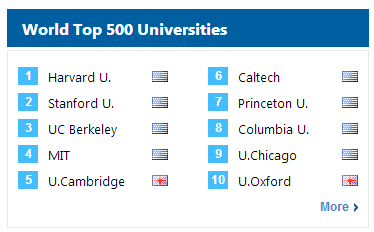
Other nations looking at successful American universities and seeing the invisible hand of the marketplace at work should take a closer look at the arm attached to that hand, argues Steve C. Ward.

Australia allocates around A$9 billion a year of taxpayers’ money for research, but how do we know if that money is being spent wisely?

Another cherished myth bites the dust. The makers of the new movie “Lucy” aside, we already use all of of brain, and not just a tenth of it.

What does the Facebook emotional contagion study really tells us about research ethics? Perhaps, argues Robert Dingwall, that its time to deregulate public social science.

Facebook’s unannounced study using its users’ newsfeeds offers a case study in research ethics: where did it lie of the spectrum from ‘ho harm, no foul’ or to an unacceptable violation of participants’ rights? Ethicist David Hunter examines.

The Royal Swedish Academy of Sciences has awarded this year’s Nobel Prize in Economic Sciences to the American economists Robert E. Hall […] Four Americans working in the social and behavioral sciences are among the 20 people named MacArthur Fellows this year. Recipients may be […] Euan Adie, the founder of Altmetric and later of Overton, discusses the reasons the led to Overton’s focus on showing researchers how […] The following is an adapted extract from The Cultural Industries, fifth edition, by David Hesmondhalgh. The increasing presence of information technology (IT) […] Developers of AI data centers have a public trust problem. According to multiple surveys, a majority of Americans say they would oppose […] I was adding some final flourishes on the topic of ‘iatrocracy’ to my forthcoming book with Natewindé Sawadogo – Sickness and Social […]
EXPLORE
Impact

Economic Peaks, Troughs and This Year’s Nobelists in Economics
READ MORE

Four From Social Science World Receive 2026 MacArthur Fellowships
READ MORE

Quick Insight: Euan Adie on Getting Academics Credit for Their Impact
READ MORE
Innovation

IT Giants and Their Operations: Should We Be Concerned?
READ MORE

What We Miss When We Study Public Trust with Surveys Alone
READ MORE

AI and ‘Iatrocracy’ – A Cautionary Tale
READ MORE