

Could Distributed Peer Review Better Decide Grant Funding?
The landscape of academic grant funding is notoriously competitive and plagued by lengthy, bureaucratic processes, exacerbated by difficulties in finding willing reviewers. Distributed […]

Like it or loathe it, publishing in highprofile journals is the fast track to prestigious positions in academia. Yet somehow, in the search to understand why women’s scientific careers often fail to thrive, the role of academic writing has received little scrutiny. So to examine the representation of women within academic writing, Ione Fine, Alicia Shen, Jason Webster & Yuichi Shoda review 166,000 articles (between 2005-2017) to see how many are by women.

The shortlist for the Online Achievement in International Studies (OAIS) Awards, otherwise known as the Duckies, has been announced. This year’s awards ceremony will feature talks by three expert bloggers on their craft.
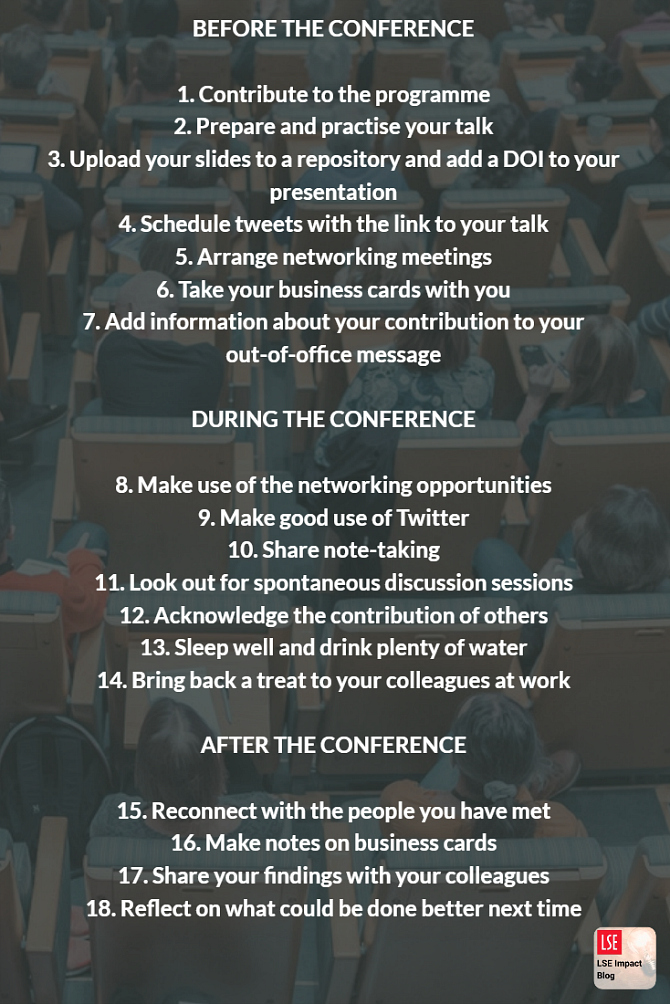
Going to an academic conference is an exciting opportunity to connect with like-minded individuals and exchange stimulating ideas. However, to make the most of a conference requires a lot of hard work before, during, and after the meeting itself. Marta Teperek provides a checklist of things to do at each of these stages.
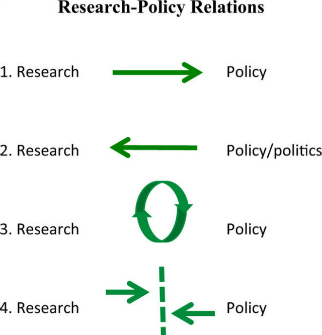
Christina Boswell and Katherine Smith set out four different approaches to theorizing the relationship between knowledge and policy and consider what each of these suggests about approaches to incentivising and measuring research impact.

In the first of what will be a monthly series, SAGE Publishing will open up articles in a specific area of public […]

Anna-Sigrid Keck and colleagues designed a structured doctoral program focused on transdisciplinary research and compared students’ publication patterns to students in traditional programmes. While rates of productivity were broadly similar, citation rates were found to be higher for transdisciplinary students, as were indicators of collaboration such as co-authorship.
Usha Haley shares findings of a recent Academy of Management report that sought to answer the impact of scholarly research. By surveying 20,000 members & conducting a selection of interviews, most scholars felt the present system of evaluation and rankings has led to an over reliance on traditional techniques and methodologies, and even “junk science”.
While Congress will have the final say on the fiscal year 2019 budget, the budget proposal offered by President Trump would cut the National Science Foundation’s spending on social science would be cut by more than 10 percent.

People often see science as a world apart: cool, rational and untouched by persuasion or performance. In this view, scientists simply discover […] “Research impact” means different things to different people. Some refer broadly to how science changes behaviors, beliefs, or practices outside academic institutions. […] One researcher studies how war affects children, another took a literal worm’s eye view to examine rural development, while two others scrutinized […] David Canter considers informal places where people socialize, suggesting they’re an arena ChatGPT and other LLMs can’no’t replicate. As someone who lives […] It’s become cliche since Clive Humbly coined it in 2006, but data is indeed the new oil. It’s a mantra repeated by […] In September 2025, The Guardian reported about a lawyer in Australia having faced sanctions due to false citations. These citations were not […]
EXPLORE
Impact

Scientists Should Keep in Mind It’s Called the ‘Marketplace of Ideas’ for a Reason
READ MORE

Survey Finds Social Scientists Feel Unsupported in Seeking Societal Impact
READ MORE
Canada’s SSHRC Names 2025 Impact Winners
READ MORE
Innovation

Reaching Parts to Which AI Has No Access
READ MORE

Andrea Medina-Smith on Making Research Data More FAIR
READ MORE

A Status Check on Hallucinated Case Law Incidents
READ MORE