
Could Distributed Peer Review Better Decide Grant Funding?
The landscape of academic grant funding is notoriously competitive and plagued by lengthy, bureaucratic processes, exacerbated by difficulties in finding willing reviewers. Distributed […]
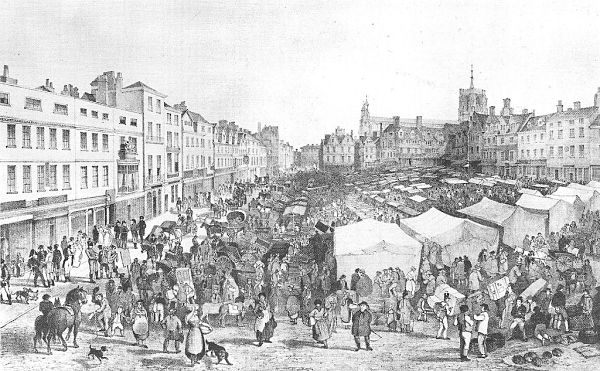
British universities are changing at rapid pace, notes Daniel Nehring in the first of a new series of article on the so-called corporate university. The consequences of these changes are cause of concern for many academics, who worry about their working conditions and the future of academic freedom.

[We’re pleased to welcome Mary Dickey of the University of Oklahoma Health Sciences Center. Dr. Dickey recently published “Program Evaluation of a […]
America’s own ‘nudge unit’ celebrates its first birthday with a report outlining the low-cost ways that applied social and behavioral research is improving government services, saving money and raising revenue.
Psychology is still digesting the implications of a large study published last month, in which a team led by University of Virginia’s […]
Well-known for his work in organization theory, Gareth Morgan explored the use of metaphors to help examine organization problems in his 1986 […]
[We’re pleased to welcome Lena Steinhoff of the University of Paderborn in Germany. Dr. Steinhoff recently collaborated with Andreas Eggert of University […]

The use of humor in public discourse about science has grown remarkably over the past few years, and when used in science […]

Even when the news is good — women win grants from the ESRC at the same rate as men, and those grants are actually a bit larger on average — it’s tinged with bad — because there are so few senior women in academic social sciences men still get majority of the money.

Euan Adie, the founder of Altmetric and later of Overton, discusses the reasons the led to Overton’s focus on showing researchers how […] Here’s a couple of quick questions for you. What is the smallest of the eight discipline-based directorates at the United States’ National […] Sage’s 10-Year Impact Awards recognize academic papers appearing in Sage-published journals that have achieved lasting impact. The winning papers are the most […] I was adding some final flourishes on the topic of ‘iatrocracy’ to my forthcoming book with Natewindé Sawadogo – Sickness and Social […] How is AI changing the shape and space of higher education? Critical thinking continues to rank highly among key skills and attributes […] My colleagues and I recently spoke with a group of talented, interesting students who just completed their first year of college about […]
EXPLORE
Impact

Quick Insight: Euan Adie on Getting Academics Credit for Their Impact
READ MORE

NSF’s Embattled SBE Directorate Shown as Agency’s Policy Heavyweight
READ MORE

Sage’s 10-Year Impact Awards Capture Longer-Term Significance
READ MORE
Innovation

AI and ‘Iatrocracy’ – A Cautionary Tale
READ MORE

The Critical Student: How GenAI Reshapes Critical Skills and Higher Education’s Role Preparing Students For It
READ MORE

AI Doesn’t Drive Student Cheating. It Just Hitches a Ride
READ MORE