


Could Distributed Peer Review Better Decide Grant Funding?
The landscape of academic grant funding is notoriously competitive and plagued by lengthy, bureaucratic processes, exacerbated by difficulties in finding willing reviewers. Distributed […]

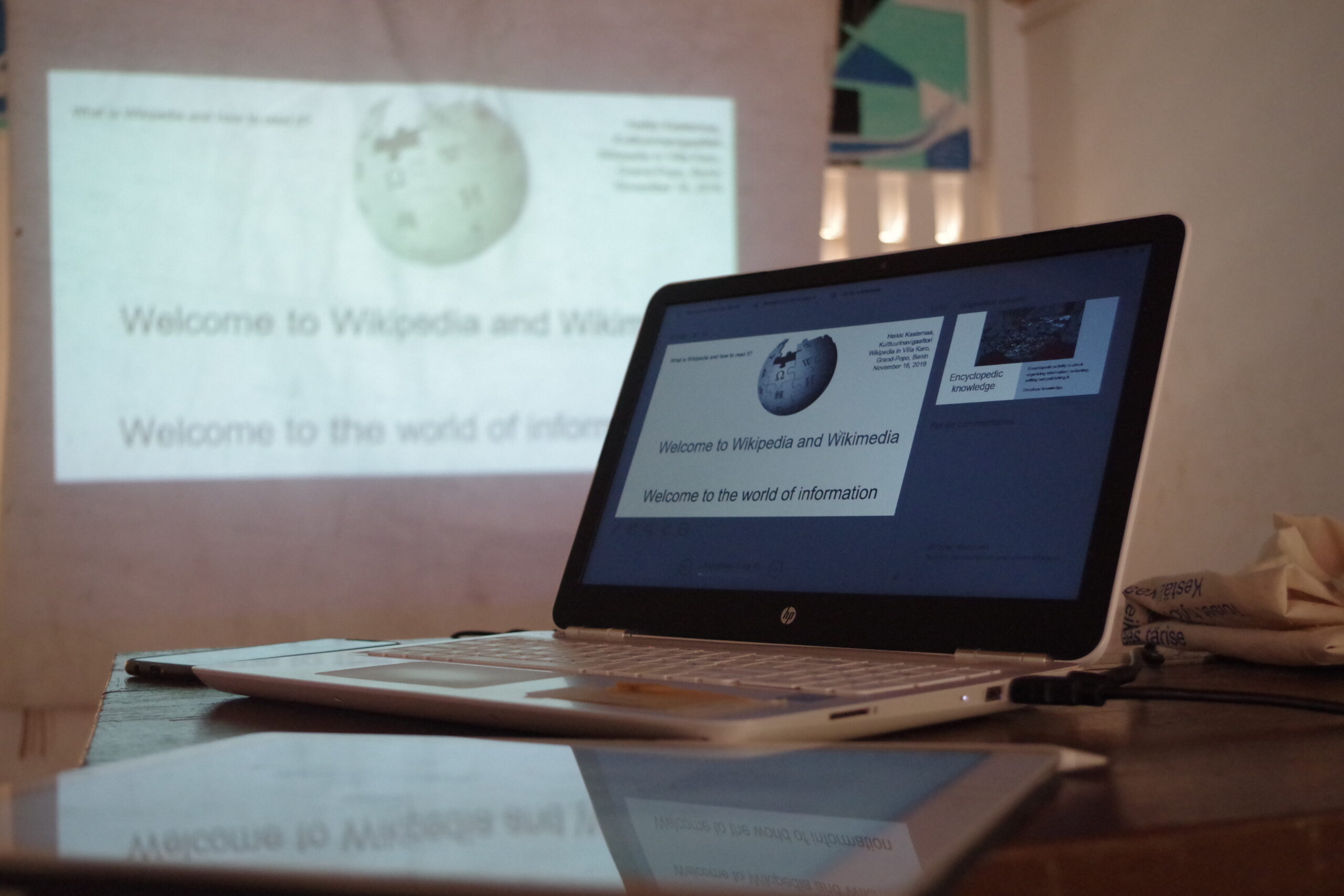
Reflecting on their work on Sage’s recent Wikipedia edit-athon, Mariah John-Leighton and Hannah Jane Pearson discuss how the project has increased the representation of women social scientists on the platform.

The Great Mask Debate is limping towards closure. While there is no single conclusive piece of evidence, the best research points towards […]

Few topics in education have dominated the news over the past few years as much as efforts to ban critical race theory from the nation’s schools. The topic is so pervasive that researchers at the UCLA School of Law Critical Race Studies Program have created a new database to track attempts by local and state government to outlaw the teaching of the theory, which holds, among other things, that racism is not just expressed on an individual level, but rather is deeply embedded in the nation’s laws and policies. The Conversation asked Taifha Natalee Alexander, director and supervisor of the database, about the overarching purpose of the database and what it has shown thus far.

With this research, we provide evidence for an intervention strategy that can improve the service quality that consumers experiencing vulnerabilities face in the marketplace.
In the latest of its centennial year lecture series, the Social Science Research Council asks “What are the Long-Run and Inter-Generational Impacts […]
This article is the first in a series celebrating the 100th anniversary of the Social Science Research Council—a New York City-based independent […]

The San Francisco Declaration on Research Assessment, or DORA, has released a strategic plan to reinforce the organization’s vision “to advance practical and robust approaches to research assessment globally and across all scholarly disciplines.”

The main goal of our study was, hence, to complement the current technical knowledge on benefits management with an in-depth understanding of the social practices that constitute benefits management.
People often see science as a world apart: cool, rational and untouched by persuasion or performance. In this view, scientists simply discover […] “Research impact” means different things to different people. Some refer broadly to how science changes behaviors, beliefs, or practices outside academic institutions. […] One researcher studies how war affects children, another took a literal worm’s eye view to examine rural development, while two others scrutinized […] David Canter considers informal places where people socialize, suggesting they’re an arena ChatGPT and other LLMs can’no’t replicate. As someone who lives […] It’s become cliche since Clive Humbly coined it in 2006, but data is indeed the new oil. It’s a mantra repeated by […] In September 2025, The Guardian reported about a lawyer in Australia having faced sanctions due to false citations. These citations were not […]
EXPLORE
Impact

Scientists Should Keep in Mind It’s Called the ‘Marketplace of Ideas’ for a Reason
READ MORE

Survey Finds Social Scientists Feel Unsupported in Seeking Societal Impact
READ MORE
Canada’s SSHRC Names 2025 Impact Winners
READ MORE
Innovation

Reaching Parts to Which AI Has No Access
READ MORE

Andrea Medina-Smith on Making Research Data More FAIR
READ MORE

A Status Check on Hallucinated Case Law Incidents
READ MORE