


Could Distributed Peer Review Better Decide Grant Funding?
The landscape of academic grant funding is notoriously competitive and plagued by lengthy, bureaucratic processes, exacerbated by difficulties in finding willing reviewers. Distributed […]

This free-to-watch webinar, subtitled “A Decade of DORA: Lessons Learned for Social and Behavioral Science ,” hosts panelists from the U.S. Social Science Research Council, Canada’s Social Sciences and Humanities Research Council, and Georgia Tech (and formerly the National Science Foundation).
The paper “The Nature and Organization of Individual Differences in Executive Functions: Four General Conclusions,” published in Current Directions in Psychological Science in 2012, is a recipient of Sage’s fourth annual 10-Year Impact Awards. The paper has been cited 2,172 times.
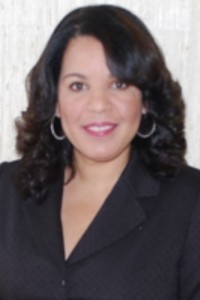
Leslie T. Fenwick, dean emerita of the Howard University School of Education, will deliver the 2023 Brown Lecture in Education Research.
The paper “What Makes Online Content Viral,” published in the Journal of Marketing Research in 2012, is a recipient of Sage’s fourth annual 10-Year Impact Awards. The paper has been cited 1,333 times.
The paper “What We Know and Don’t Know About Corporate Social Responsibility: A Review and Research Agenda,” published in the Journal of Management in 2012, is a recipient of Sage’s fourth annual 10-Year Impact Awards. The paper has been cited 1,970 times.

Social Science Space caught up with Walter Greason to discuss hisjourneys, the new book ‘Illmatic Consequences’ he co-edited with Danian Darrell Jerry’, and the current political upheaval circling around the term ‘critical race theory.’

American high school students interested in the social, behavioral and economic (SBE) sciences won’t have to wait until college to gain hands-on research experience thanks to a new National Science Foundation initiative.

Jaya Addin Linando discusses discrimination against Muslims and answers questions about his new paper, “A relational perspective comparison of workplace discrimination toward Muslims in Muslim-minority and Muslim-majority countries,” published in International Journal of Cross Cultural Management.

Euan Adie, the founder of Altmetric and later of Overton, discusses the reasons the led to Overton’s focus on showing researchers how […] Here’s a couple of quick questions for you. What is the smallest of the eight discipline-based directorates at the United States’ National […] Sage’s 10-Year Impact Awards recognize academic papers appearing in Sage-published journals that have achieved lasting impact. The winning papers are the most […] I was adding some final flourishes on the topic of ‘iatrocracy’ to my forthcoming book with Natewindé Sawadogo – Sickness and Social […] How is AI changing the shape and space of higher education? Critical thinking continues to rank highly among key skills and attributes […] My colleagues and I recently spoke with a group of talented, interesting students who just completed their first year of college about […]
EXPLORE
Impact

Quick Insight: Euan Adie on Getting Academics Credit for Their Impact
READ MORE

NSF’s Embattled SBE Directorate Shown as Agency’s Policy Heavyweight
READ MORE

Sage’s 10-Year Impact Awards Capture Longer-Term Significance
READ MORE
Innovation

AI and ‘Iatrocracy’ – A Cautionary Tale
READ MORE

The Critical Student: How GenAI Reshapes Critical Skills and Higher Education’s Role Preparing Students For It
READ MORE

AI Doesn’t Drive Student Cheating. It Just Hitches a Ride
READ MORE