

Could Distributed Peer Review Better Decide Grant Funding?
The landscape of academic grant funding is notoriously competitive and plagued by lengthy, bureaucratic processes, exacerbated by difficulties in finding willing reviewers. Distributed […]

“Sensing,” the authors have written, “is indispensable for constructing knowledge and should be employed on par with the intellect, particularly in today’s complex and uncertain context. Yet, we have observed learners’ reluctance to engage with sensing and attempted to understand the reasons for it.”
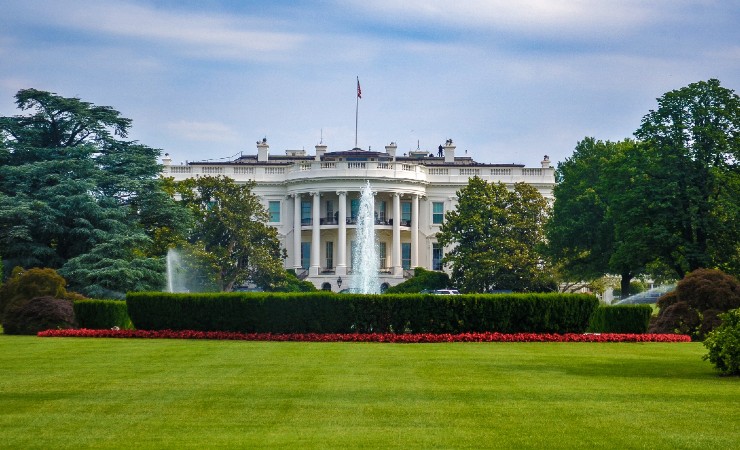
The White House announced last week that the Office of Science and Technology Policy’s National Science and Technology Council will re-commission the Social and Behavioral Sciences Subcommittee of the Committee on Science.
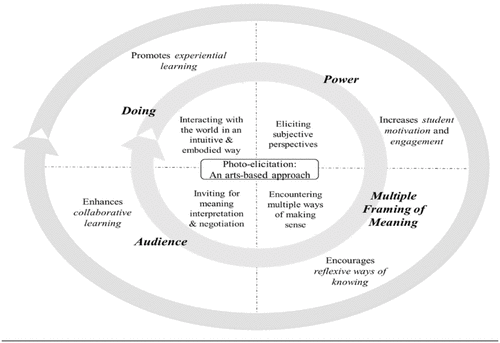
The authors provide a conceptualization of photo-elicitation as an (experiential) learning and teaching tool which shows the interaction between photo-elicitation’s arts-based elements and relevant learning processes and outcomes.
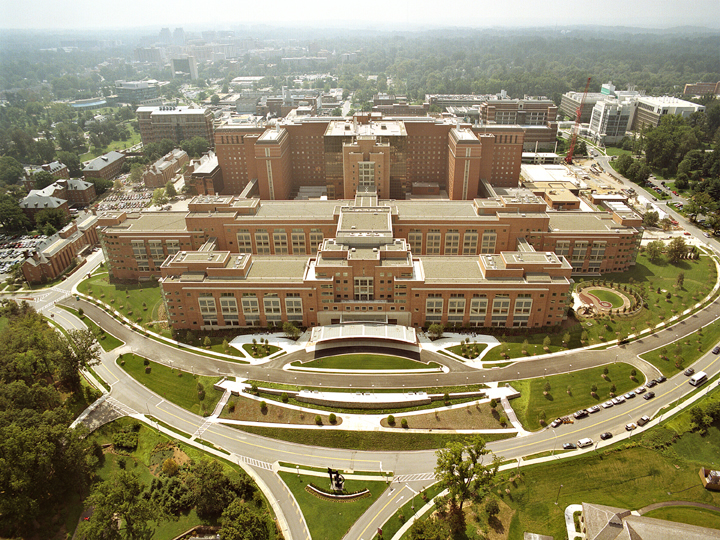
Starting on Jan. 25, 2023, many of the 2,500 institutions and 300,000 researchers that the U.S. National Institutes of Health supports will need to provide a formal, detailed plan for publicly sharing the data generated by their research.
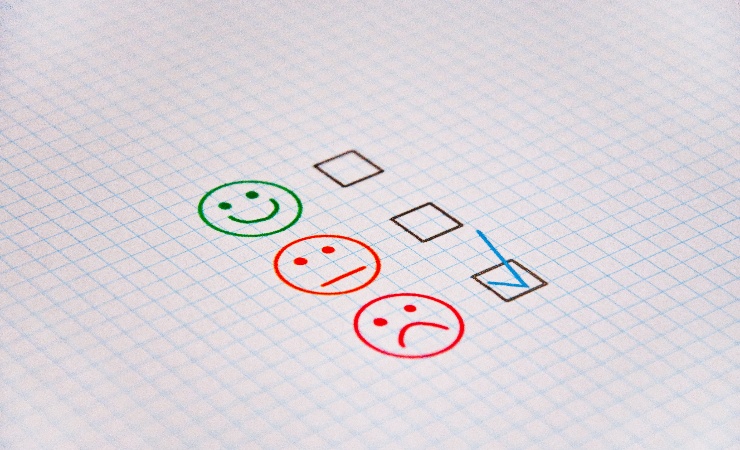
Quantification can reformulate something as complex and multidimensional as teaching into a one-dimensional score. And such a score gives the possessor a sense of control and understanding. But, given the implications of quantification, this is an illusion.

In the third and final panel in “Democracy in the Balance,” a series of virtual discussions about democratic vulnerability and resilience in the United States, “Frontiers of Democratic Reform” on April 20 will explore the practical steps that can be taken to guard against democratic backsliding in the United States and bolster the integrity of a functional national government.
SAGE Publishing, the parent of Social Science Space, is inviting applications for the 2022 SAGE Concept Grant, which provides funding for new software tools for social science research.

Researchers need to observe ethical standards during a pandemic, say Ben Kasstan, Rishita Nandagiri and Siyane Aniley, and journals should hold them to these standards.
People often see science as a world apart: cool, rational and untouched by persuasion or performance. In this view, scientists simply discover […] “Research impact” means different things to different people. Some refer broadly to how science changes behaviors, beliefs, or practices outside academic institutions. […] One researcher studies how war affects children, another took a literal worm’s eye view to examine rural development, while two others scrutinized […] David Canter considers informal places where people socialize, suggesting they’re an arena ChatGPT and other LLMs can’no’t replicate. As someone who lives […] It’s become cliche since Clive Humbly coined it in 2006, but data is indeed the new oil. It’s a mantra repeated by […] In September 2025, The Guardian reported about a lawyer in Australia having faced sanctions due to false citations. These citations were not […]
EXPLORE
Impact

Scientists Should Keep in Mind It’s Called the ‘Marketplace of Ideas’ for a Reason
READ MORE

Survey Finds Social Scientists Feel Unsupported in Seeking Societal Impact
READ MORE
Canada’s SSHRC Names 2025 Impact Winners
READ MORE
Innovation

Reaching Parts to Which AI Has No Access
READ MORE

Andrea Medina-Smith on Making Research Data More FAIR
READ MORE

A Status Check on Hallucinated Case Law Incidents
READ MORE