

Could Distributed Peer Review Better Decide Grant Funding?
The landscape of academic grant funding is notoriously competitive and plagued by lengthy, bureaucratic processes, exacerbated by difficulties in finding willing reviewers. Distributed […]

Rebecca Windemer, a lecturer at the University of the West of England who studies renewable energy amid the communities where it is generated, received the Economic and Social Research Council’s 2021 Celebrating Impact Prize for the Outstanding Early Career Impact.
Author Stefanie Beninger discusses the perspective of sustainability within university settings and the pros of having macro-sustainability efforts throughout

Reporting on their recent survey of websites cited in REF 2014 impact case studies, Kayvan Kousha, Mike Thelwall and Mahshid Abdoli, discuss which websites are most commonly used as supporting evidence for impact and how these vary across academic disciplines.

A psychologist whose work helped create our understanding or implicit bias and a linguist who helped us computationally model language have won the 2022 Atkinson Prize in Psychological and Cognitive Sciences from the National Academy of Sciences.
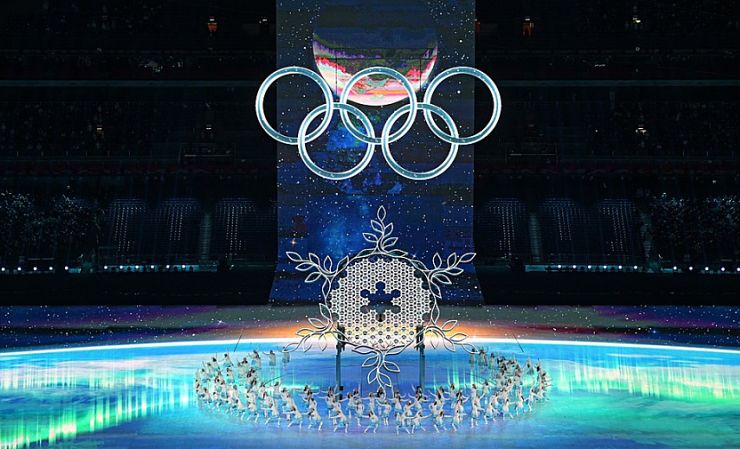
The Beijing 2022 Winter Olympics are here and in full swing. From serene skaters on ice to dramatic showdowns on the ski […]

During the dramatic halt to in-person events in 2020, the use of video call software skyrocketed, transforming Zoom into a household name, […]
Olimpia C. Racela and Amonrat Thoumrungroje reflect on their paper, “Linking SME international marketing agility to new technology adoption,” published in the […]
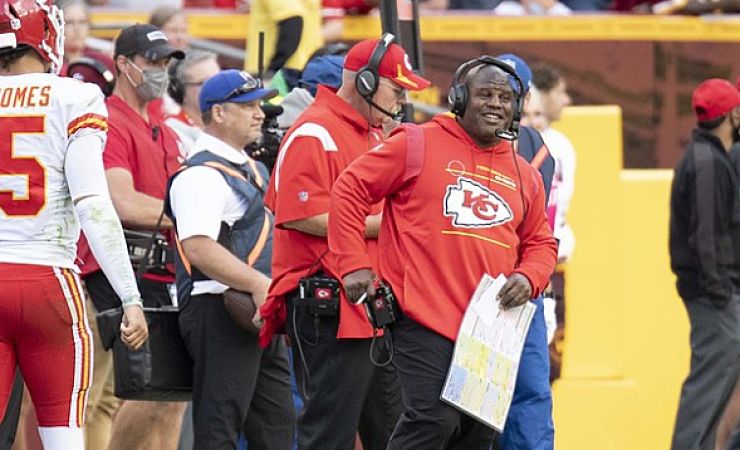
There are a lot of factors that play into deciding on who to hire as a head coach in the NFL. Looking at the data, race is one of them.
People often see science as a world apart: cool, rational and untouched by persuasion or performance. In this view, scientists simply discover […] “Research impact” means different things to different people. Some refer broadly to how science changes behaviors, beliefs, or practices outside academic institutions. […] One researcher studies how war affects children, another took a literal worm’s eye view to examine rural development, while two others scrutinized […] David Canter considers informal places where people socialize, suggesting they’re an arena ChatGPT and other LLMs can’no’t replicate. As someone who lives […] It’s become cliche since Clive Humbly coined it in 2006, but data is indeed the new oil. It’s a mantra repeated by […] In September 2025, The Guardian reported about a lawyer in Australia having faced sanctions due to false citations. These citations were not […]
EXPLORE
Impact

Scientists Should Keep in Mind It’s Called the ‘Marketplace of Ideas’ for a Reason
READ MORE

Survey Finds Social Scientists Feel Unsupported in Seeking Societal Impact
READ MORE
Canada’s SSHRC Names 2025 Impact Winners
READ MORE
Innovation

Reaching Parts to Which AI Has No Access
READ MORE

Andrea Medina-Smith on Making Research Data More FAIR
READ MORE

A Status Check on Hallucinated Case Law Incidents
READ MORE